- Indian Institute of Technology Gandhinagar scientists unveil ultrasound-activated molecules in game-changing non-antibiotic strategy against AMR
- Estrone-linked BODIPY compound combined with microbubble-assisted sonodynamic therapy proves lethal to resistant bacteria
- Breakthrough offers hope for treating deep wounds, implant infections, and hard-to-reach bacterial hotspots
- Innovation aligns with India’s national mission to combat antimicrobial resistance through advanced science
NE SCIENCE & TECHNOLOGY BUREAU
GANDHINAGAR, FEB 25
In a landmark scientific breakthrough that could redefine the global fight against antibiotic-resistant infections, researchers at the Indian Institute of Technology Gandhinagar (IITGN) have developed ultrasound-activated molecules capable of destroying 99.9% of harmful bacteria—without relying on conventional antibiotics.
Published in Chemistry – An Asian Journal, the research introduces a pioneering “non-antibiotic” therapeutic approach using estrone-linked BODIPY molecules activated through ultrasound, offering a powerful new weapon against antimicrobial resistance (AMR)—one of the most pressing public health threats worldwide.
Antibiotics have long been the backbone of modern medicine, treating infections ranging from common throat ailments to life-threatening diseases like meningitis and tetanus. However, the rapid rise of drug-resistant bacteria has significantly reduced their effectiveness, forcing scientists to explore innovative alternatives.
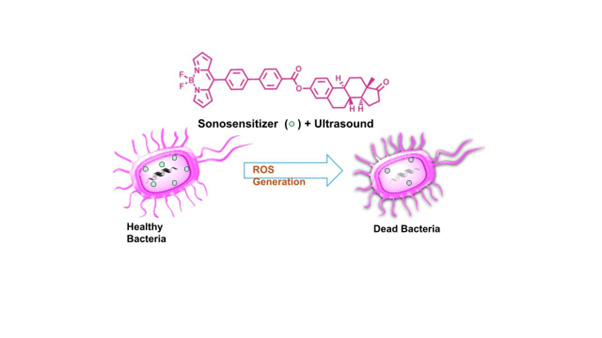
The IITGN team’s breakthrough leverages antimicrobial sonodynamic therapy (SDT), a cutting-edge method that uses ultrasound to activate specialized molecules called sonosensitizers. Once activated, these molecules generate reactive oxygen species (ROS)—highly destructive compounds that attack and destroy bacteria through multiple pathways.
A key advantage of ultrasound is its ability to penetrate several centimetres deep into tissues, making it uniquely suited to target infections buried deep within the body, including implant-associated infections and chronic wounds that are otherwise difficult to treat.
The researchers focused on Escherichia coli (E. coli), a bacteria known to cause diarrhoea, fever, and urinary tract infections and often resistant to antibiotics due to its protective double-layered cell wall.
To overcome this defence, the team designed four estrone-linked BODIPY derivatives to enable deeper penetration into bacterial cells. Among them, one molecule—EBD-1—emerged as the most effective.
Dr Iti Gupta, Professor in the Department of Chemistry at IITGN and Principal Investigator at the Synthetic Pigments Lab, explained the significance of the findings: “Our experiments showed that EBD-1 was the best performing derivative as it generated a significant amount of ROS capable of killing bacteria after exposure to ultrasound. Antibacterial activity against the Escherichia coli bacteria revealed that a combination of ultrasound, EBD-1, and clinically approved microbubbles eliminated 99.9% of the bacteria.”
Microbubbles—tiny gas-filled bubbles with protective shells—play a crucial role in enhancing this process. When ultrasound waves interact with these bubbles, they rapidly collapse in a process called cavitation, releasing intense bursts of energy that amplify bacterial destruction while minimizing damage to surrounding tissues.
Highlighting the broader potential of the discovery, Dr Himanshu Shekhar, Associate Professor in the Department of Electrical Engineering at IITGN and Principal Investigator at the Medical Ultrasound Engineering Laboratory, said: “This research shows the feasibility of using a combination of cell-penetrable BODIPY and ultrasound-driven cavitation for antibacterial SDT. If these laboratory findings show similar trends in future clinical trials, this approach could develop as an encouraging alternative to treat localised resistant bacterial infections.”
The implications of this breakthrough extend far beyond laboratory success. In the long term, ultrasound-activated antibacterial therapy could provide a safer and more effective solution for treating deep-seated infections, surgical implant contamination, and chronic wounds—areas where antibiotic treatments often fail.
Importantly, the research aligns with India’s National Action Plan on Antimicrobial Resistance (2025–2029), a major government initiative aimed at tackling drug-resistant infections through innovation, surveillance, and interdisciplinary collaboration.
Future studies will focus on refining molecule design, optimizing ultrasound parameters, and conducting animal and clinical trials to translate this promising technology into real-world medical applications.
Supported by funding from IITGN, the Anusandhan National Research Foundation, the Department of Biotechnology, and the Ministry of Education’s STARS programme, the breakthrough underscores India’s growing leadership in cutting-edge biomedical innovation.
As antibiotic resistance continues to rise globally, IIT Gandhinagar’s ultrasound-activated molecular therapy offers a bold new frontier—where sound, not drugs, may become the ultimate weapon against deadly superbugs.