- From the ‘$8 Men’ to Building Billion-Dollar Networks, Rekhi Shares a First-Principles Playbook for India’s Startup Future
- At a Fireside Chat, the Veteran VC Calls Failure a Competitive Advantage and Accountability the Real Career Insurance
- Challenges Campus Placement Culture, Champions Risk, Resilience and Radical Self-Reliance
- Paints a Bold Vision: 10 Million Entrepreneurs by 2047 Fuelled by Faith, Not Fear
NE EDUCATION BUREAU
GANDHINAGAR, JAN 27
In a powerful address that cut through the comfort of campus placements, Silicon Valley pioneer and venture capitalist Kanwal Rekhi delivered a clarion call to students at IIT Gandhinagar, urging them to rethink success itself.
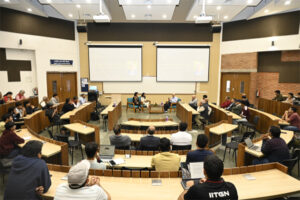
“Stop being job takers and start being job makers,” Rekhi told a packed Jagdish Patel Learning Theatre, challenging India’s brightest minds to trade certainty for creativity and ownership.
The student-led fireside chat, titled “Thinking Big, Building Bold,” evolved into a masterclass on entrepreneurship, resilience, failure, and first-principles thinking, as Rekhi reflected on a journey that began with just $8 in his pocket and culminated in building some of Silicon Valley’s earliest high-performance networking companies.
Failure, Discomfort and the Power of Responsibility
Recalling his upbringing as a first-generation learner, Rekhi spoke candidly about growing up amid financial uncertainty, frequent relocations, and the pressure of limited resources. These early experiences, he said, shaped his ability to endure risk and uncertainty.
“I internalised early in life not to blame anyone else or my circumstances,” Rekhi said, adding that being underestimated as a young immigrant—one of the so-called ‘$8 Men’—became a hidden advantage rather than a handicap.
The message struck a chord with students navigating academic pressure, family expectations, and an increasingly competitive job market.
From IIT Bombay to Silicon Valley
Tracing his academic journey from IIT Bombay to the United States, Rekhi described himself as a quiet, abstract thinker who found his calling in computing and systems design. Setbacks—including being laid off early in his career—became defining moments.
“After my layoff, I decided that nobody would ever own my career, except myself,” he said, underscoring how failure pushed him toward independence and entrepreneurship.
That resolve led to the founding of Excelan, among the first companies to commercialise high-performance Ethernet networking—laying foundations for modern data networks.
Entrepreneurship Begins with ‘Why Not Me?’
Speaking about leadership under pressure and innovation in uncertain environments, Rekhi urged students to return to fundamentals.
“Ask why is that so? Understand how the systems work, and ask what you need to do to make it work,” he advised, stressing that first-principles thinking is more powerful than trend-following.
He encouraged students to view global challenges—from infrastructure and sustainability to artificial intelligence—not as distant problems, but as personal invitations to innovate.
India’s Startup Moment
Looking beyond individual careers, Rekhi shared an expansive vision for India’s innovation ecosystem, rooted in confidence and collective belief.
“We began with 500 startups and have almost 200,000 of them now! Hopefully, we might have 10 million entrepreneurs by 2047!” he said.
According to Rekhi, India’s greatest transformation lies not just in policy or capital, but in a growing faith in its own people—and their willingness to take responsibility, embrace risk, and create value locally and globally.
A Living Memoir of Courage
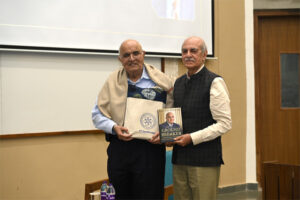
The fireside chat also offered a window into Rekhi’s recently released memoir, The Groundbreaker: Risks, Rewards and Lessons from a Legendary Entrepreneur, which chronicles his evolution from a shy student to the “Godfather of Silicon Valley.”
As Rekhi concluded, the defining question at every crossroads remains simple yet radical: “Why not me?”
For the students at IIT Gandhinagar, the evening served as a reminder that India’s next technology revolution will be written not by those who play safe—but by those bold enough to bet on themselves.