R ARIVANANTHAM
CHENNAI, SEPT 3
For a 30-year-old auto driver whose life changed irreversibly after a road accident, a carefully delivered stream of electrical impulses is opening a new window of possibility—not by repairing the damaged spinal cord overnight, but by helping the nervous system reconnect with movement.
MGM Healthcare, Chennai, has performed the city’s first spinal cord stimulation electrode implantation to support neurological recovery in a road accident survivor who suffered a severe cervical spinal cord injury, resulting in paralysis of both legs and severely restricted movement of his hands.
- MGM Healthcare performs Chennai’s first spinal cord stimulation electrode implantation to help restore hand movement in road accident survivor
- 30-year-old Vellore auto driver, paralysed in both legs and with severely restricted hand movement, shows measurable improvement after advanced intervention
- 16-contact electrode implanted at C5 to modulate spinal cord activity and support neurological recovery
- Patient records one-grade improvement in distal hand power over six months, with recovery expected to continue for 12–18 months
- Doctors stress that stimulation works best alongside structured physiotherapy, rehabilitation and regular electrode programming
- Procedure approved under CGHS, while Tamil Nadu is processing its inclusion under Chief Minister’s Comprehensive Health Insurance Scheme
The procedure represents a significant advance in the treatment options available for carefully selected patients with spinal cord injuries, offering renewed hope where conventional treatment and rehabilitation may produce limited or delayed motor recovery.
The patient, a 30-year-old auto driver from Vellore, sustained a major spinal cord injury in a road traffic accident about a year ago. The injury left him without movement in both legs and with severely limited hand movement below the elbows.
Following the procedure, however, doctors have observed gradual improvement in hand muscle strength. Over six months, the patient has demonstrated an excellent improvement of one MAR grade in distal hand power, an encouraging functional gain for someone living with severe spinal cord injury.
A targeted electrical bridge
Spinal cord stimulation uses small electrodes placed near the spinal cord to deliver controlled electrical impulses. These impulses are designed to modulate spinal cord activity and nerve signalling, potentially supporting the recovery of movement and function in appropriately selected patients.
When the patient was admitted, the medical team conducted an MRI of the cervical spine to determine the extent of spinal cord damage.
Clinical examination and imaging confirmed an ASIA Grade B spinal cord injury, indicating a severe injury in which sensation is preserved below the level of injury while normal motor function is largely absent.
After detailed assessment, the medical team opted for spinal cord stimulation as part of the strategy to support neurological recovery.
A 16-contact spinal cord stimulation electrode system was implanted, with the electrodes carefully positioned over the dura—the protective outer covering of the spinal cord—at the C5 level of the cervical spine.
The placement was specifically planned to target the region associated with the patient’s impaired motor function.
The electrodes deliver controlled electrical impulses to modulate spinal cord activity, while stimulation settings are periodically adjusted according to the patient’s neurological examination and clinical progress.
Recovery is a process, not a single procedure
Doctors emphasise that implantation is not the end of treatment.
The patient will require frequent programming of the stimulation electrodes as his neurological function evolves. His recovery is expected to continue over the next one to one-and-a-half years, with regular medical follow-up and intensive rehabilitation playing a crucial role in maximising functional recovery.
The procedure was performed by the neurosurgical team led by Dr. Roopesh Kumar, Director of Neurosurgery, and Dr. Ajinkya Rewatkar, Consultant Neurosurgeon, who led the electrode implantation and spinal cord stimulation treatment.
Dr. Ajinkya Rewatkar also explained the procedure through a detailed PowerPoint presentation, outlining how spinal cord stimulation works and its potential role in appropriately selected spinal cord injury patients.
“A new ray of hope”
Dr. Roopesh Kumar said spinal cord stimulation could offer an important new option for patients whose recovery remains limited despite conventional treatment and rehabilitation.
“Spinal cord stimulation offers a new ray of hope for patients with spinal cord injuries who continue to struggle with weakness, severe pain or spasticity, particularly when there is little or delayed motor recovery despite conventional treatment and rehabilitation.”
Describing the outcome in the present case as encouraging, he said:
“In this patient, the treatment has already translated into measurable improvement in hand movement, which is encouraging.”
He stressed that patient selection and rehabilitation remain critical to the success of the approach.
“Stimulation is not a standalone treatment. It works best when combined with structured physiotherapy and rehabilitation.”
He added that regular programming of the electrodes would be undertaken in response to the patient’s clinical improvement.
“With regular programming of the electrodes based on clinical improvement, we hope to maximise his neurological recovery over the coming months.”
Dr. Kumar said the technology could prove particularly valuable for carefully selected patients.
“This technology can be a boon for carefully selected patients, offering an opportunity to regain function that may otherwise remain severely impaired.”
From hospital procedure to public health access
Answering media queries, Dr. Roopesh Kumar said the procedure has been approved under the Central Government Health Scheme (CGHS) for its employees and pensioners.
He added that the Tamil Nadu Government is in the process of approving the procedure under its flagship Tamil Nadu Chief Minister’s Comprehensive Health Insurance Scheme.
He stressed that wider public awareness is now essential, particularly because advanced spinal cord stimulation is available in Tamil Nadu.
“The need of the hour is to create awareness among the public that this simple and advanced procedure is available in Tamil Nadu,” he said.
The development could therefore have significance beyond a single patient’s recovery. Greater awareness among patients, families and healthcare professionals could help identify suitable candidates earlier and enable them to explore advanced treatment and rehabilitation options.
Chennai achievement, wider message
The Chennai-first procedure comes at a time when spinal cord injury continues to pose one of the most difficult challenges in neurological rehabilitation.
For patients with severe injuries, recovery can be uncertain, prolonged and highly dependent on the location and extent of damage, neurological status and rehabilitation.
Spinal cord stimulation does not constitute an instant cure for paralysis. Instead, it represents an advanced neuromodulation approach that seeks to influence the functioning of surviving neural pathways and support recovery when used in carefully selected cases.
For the Vellore auto driver, the measurable improvement in hand function offers a tangible sign of progress.
For the medical community, the achievement demonstrates the growing possibilities of combining neurosurgery, neuromodulation, programming and rehabilitation.
And for families confronting the devastating consequences of spinal cord injury, it carries perhaps the most important message of all: where movement appears to have stopped, medicine may still find new ways to help the nervous system move forward.
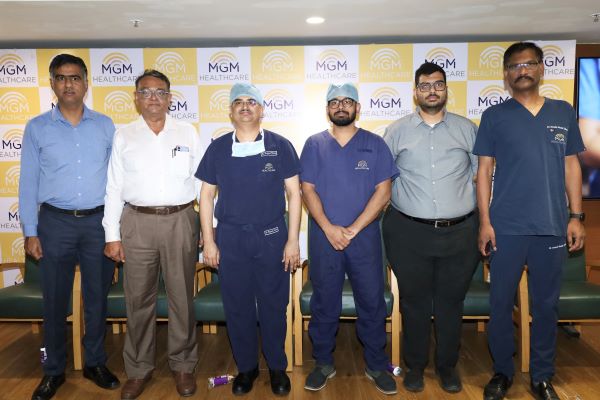
Mr. Narasimhan, General Manager – Operations, Dr. Ratanlal Rajesh Agarwal, Medical Director, Dr. Vigneshwar K S , Consultant, Department of Neurosurgery, Dr. Senathi Nanda Kishore, Clinical Director and Clinical Lead, Department of Anaesthesiology and Surgical Intensive Care Unit, MGM Healthcare were also present at the media briefing.