- ‘Lithics and Lives’ workshop decodes prehistoric intelligence through hands-on stone tool science
- From handaxes to blades, scholars rediscover the technologies that shaped human survival
- Experts call it among India’s most significant archaeology trainings for young researchers
- Ancient craftsmanship meets modern science with 3D scanning and morphometrics
- Workshop bridges past and present to nurture the next generation of archaeologists
NE EDUCATION BUREAU
GANDHINAGAR, JAN 23
How did early humans think, adapt and survive long before writing or metallurgy existed? At IIT Gandhinagar, the answers are being unearthed—quite literally—through stone.
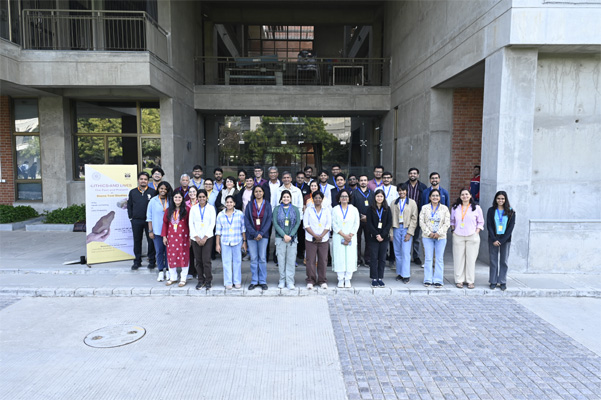
The Archaeological Sciences Centre, IIT Gandhinagar, has commenced a three-day intensive archaeology workshop, titled “Lithics and Lives: The Past and Present in Stone Tool Studies”, offering participants a rare and immersive gateway into the science of prehistoric stone tool technologies and their role in decoding human evolution.
Indian prehistory holds one of the world’s longest and most dynamic records of human existence, stretching back over 1.5 million years. Stone tools—among the earliest material expressions of human ingenuity—offer critical clues to how early humans interacted with landscapes, developed technology, and shaped cultural behaviour. The workshop explores these themes by seamlessly blending theoretical frameworks with hands-on lithic training.
A Nationally Significant Training Platform
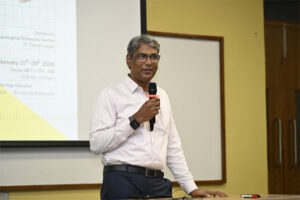
Addressing participants, Dr Kumar Akhilesh, Director, Sharma Centre for Heritage Education, described the programme as one of the most important archaeology workshops currently underway in the country.
“This workshop will help young scholars identify the lithic assemblage better. Especially when they go into the field, they will be able to relate different mapping strategies and various techniques, which will help them a lot in understanding lithic technology. It is truly a very important workshop for young students in terms of comprehending Palaeolithic Archaeology,” he remarked.
Learning by Making: The Science of Knapping
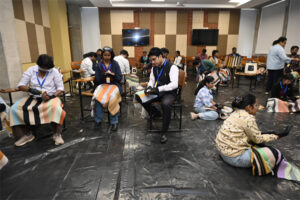
Conducted by experts from the Sharma Centre for Heritage Education, Chennai, the workshop brings together students and researchers for a deeply engaging learning experience focused on both traditional and contemporary approaches to stone tool analysis.
Participants are introduced to the central role of stone tool knapping—the controlled shaping of stone—in understanding prehistoric technologies. The workshop’s practical sessions cover a wide spectrum of techniques, including:
- Bipolar methods for splitting pebbles
- Flake production strategies
- Bifacial techniques used to create handaxes
- Laminar technology for blade production
- Ground stone tool technologies
These sessions offer first-hand insight into the planning, skill and craftsmanship required to produce tools that sustained early human life.
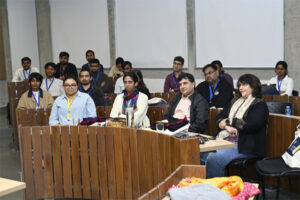
Why Lithics Still Matter
Speaking on the enduring relevance of stone tools, Prof Shanti Pappu, Founder and Secretary, Sharma Centre for Heritage Education (Adjunct Professor, Krea University), underscored the broader intellectual value of lithic studies.
“Lithics, or stone artifacts, are crucial even today. Studying ancient technologies, stone tools, pottery or metal, helps us understand how we became what we are. Forgetting the past would be foolish, and even if these technologies are no longer part of daily life, they contribute to our knowledge of human evolution,” she said.
Highlighting the cognitive dimension of prehistoric technology, she added: “Participants learn about the cognitive complexity of early humans and how they transformed a simple rock into tools that supported daily life and adaptation.”
From Prehistory to High-Tech Analysis
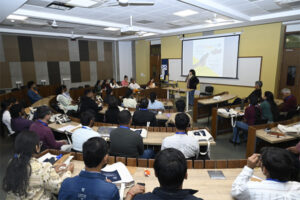
Complementing the knapping sessions are interactive thematic lectures on human evolution and the broader relevance of lithic technologies. Participants are also introduced to cutting-edge analytical tools, including 3D scanning and Geometric Morphometrics, which allow researchers to study stone tools with unprecedented precision.
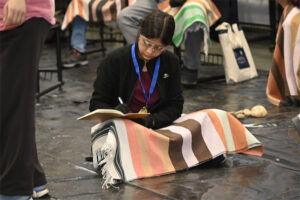
These modern methods will be explored in greater depth during advanced sessions, demonstrating how archaeology today bridges ancient material culture with contemporary scientific innovation.
Beyond Textbooks, Into Time
Emphasising the workshop’s academic value, Prof Sharada Channarayapatna, Assistant Professor, Earth Sciences & Humanities and Social Sciences, IIT Gandhinagar, said the programme offers an experience rarely available to students.
“This workshop is distinct from our regular training programmes as it takes participants back to prehistoric times and introduces them to stone tool technologies that evolved over nearly three million years. Such workshops are rare and demand close interaction between participants and experts.”
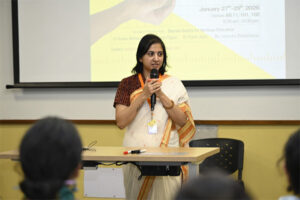
She added: “By collaborating with the Sharma Centre for Heritage Education, we aim to strengthen prehistoric research by combining hands-on training with contemporary scientific methods, enabling young scholars to carry this learning forward in their future research.”
Reflecting on its broader pedagogic impact, she noted: “Workshops take archaeology beyond textbooks into hands-on experience. They clarify misconceptions about lithic tools, encourage exploration of different viewpoints, and develop essential skills for students and researchers, who can then apply this understanding in their fieldwork.”
Cultivating Curiosity, Craft and Critical Thought
Designed as a novel, immersive learning experience, the workshop aims to equip participants with advanced practical skills, deepen engagement with current archaeological debates, and foster a lasting spirit of curiosity and critical thinking—essential traits for the next generation of archaeologists seeking to interpret humanity’s deepest past.