
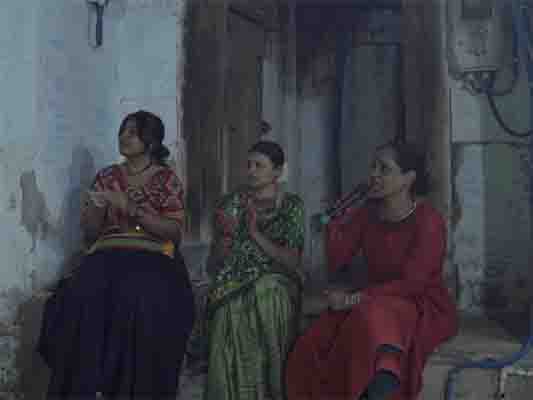
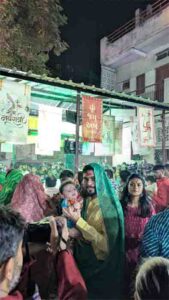
- Living heritage: Sadu Maa na Garba keeps an unusual Navratri tradition alive in Ahmedabad’s historic pols
- A distinctive custom: Men dressing as women remains a striking feature of the community celebration
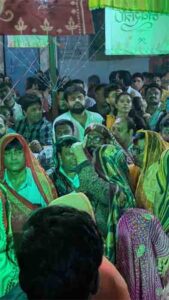
- An emotional response: Audience members don saris and join the dancing during an immersive storytelling performance
- Seven years of preservation: Preeti Das and her team bring Sadu Maa’s story to new audiences with Tell Tales India
PREETI DAS
AHMEDABAD, NOV 1
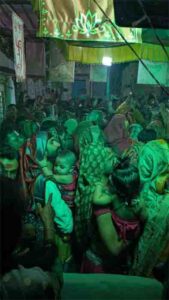
What happens when a nearly 200-year-old tradition is not merely narrated but experienced in the very place where its memories live? At an immersive storytelling performance outside Sadu Maa’s house in Ahmedabad, the answer unfolded through music, dance and an unexpected audience response: some spectators donned saris and joined the dancing, becoming part of a living cultural legacy.
The occasion brought renewed attention to Sadu Maa na Garba, a distinctive Navratri tradition whose story has travelled through generations. Rooted in the historic pols of Ahmedabad, the celebration preserves a community’s inherited customs and collective memories, offering a glimpse of the city’s cultural life beyond its better-known festival spectacles.
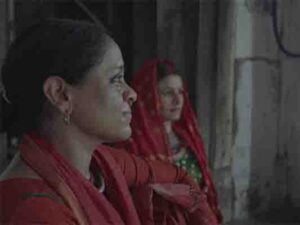
One of the tradition’s most striking features is the sight of men dressing as women to participate in the Garba. This distinctive custom sets the celebration apart from more familiar, large-scale Navratri events and invites a closer look at the diverse cultural practices that continue to enrich Gujarat’s festive heritage.
For the past seven years, storyteller Preeti Das and her team have returned every Navratri to retell Sadu Maa’s story and help keep the tradition alive. This year, in collaboration with Tell Tales India, they brought the narrative to life through an immersive performance outside Sadu Maa’s house.
As Das, singer Reema Gadani and dancer Mansi Modi unfolded the story in the old pol, the setting became integral to the experience. Rather than moving the performance to a conventional stage or auditorium, the team brought the audience into the neighbourhood associated with the tradition.
The response was deeply engaging. Some audience members, moved by the performance, decided to wear saris and join the dancing. Their spontaneous participation transformed the gathering from a storytelling session into a shared cultural experience, allowing spectators to connect with the tradition in a personal and memorable way.
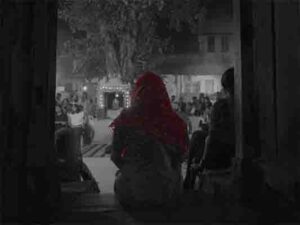
When the setting becomes part of the story
The choice of venue gave the performance a significance beyond its artistic presentation. Sadu Maa’s house and the surrounding lanes were not merely a backdrop; they connected the narrative to the place where its memory continues to endure.
In Ahmedabad’s historic pols, cultural heritage is often woven into everyday spaces, neighbourhood relationships and traditions practised across generations. Presenting Sadu Maa’s story in this setting brought these connections into focus, allowing the audience to encounter the narrative within its community context.
The combination of storytelling, singing and dance also demonstrated how traditional narratives can be presented in engaging contemporary formats without losing their connection to the places and people that sustain them.
Beyond the glitter of mainstream Navratri
Ahmedabad’s Navratri celebrations are widely associated with expansive venues, elaborate arrangements and energetic Garba performances. Yet the festival also encompasses smaller, community-centred traditions whose significance lies in their continuity rather than their scale.
Sadu Maa na Garba represents this less-publicised dimension of the celebrations. Its distinctive customs and enduring narrative offer a reminder that Gujarat’s Garba traditions are diverse, shaped by the histories and practices of individual communities.
The custom of men dressing as women is among the celebration’s most recognisable features. Understanding such practices within their cultural context is essential to appreciating the variety of traditions that coexist within the broader festival.
The performance also raises a larger question: how many such local traditions remain unfamiliar to people beyond the neighbourhoods that have preserved them for generations?
Seven years of keeping a story alive
Oral traditions survive because people continue to tell them. Unlike histories preserved in formal archives, community narratives often depend on storytellers, recurring gatherings and the willingness of successive generations to remember and participate.
For seven years, Das and her team have made the retelling of Sadu Maa’s story part of their Navratri efforts. Their work illustrates how cultural preservation can begin with a simple but sustained commitment: returning to a story, bringing people together and creating opportunities for new audiences to encounter it.
The collaboration with Tell Tales India added another dimension to this effort by presenting the narrative through an immersive performance. The use of music and dance, combined with the setting and audience participation, helped create an experience that went beyond listening to a story.
The spectators who donned saris and joined the dancing offered a particularly memorable moment. Their response demonstrated how a community tradition can resonate with people who may initially encounter it as observers but gradually become participants.
Ahmedabad’s heritage lives through its people
A city’s cultural identity is not defined by monuments and historical records alone. It also lives in its neighbourhoods, inherited rituals, oral narratives and the people who continue to practise them.
Sadu Maa na Garba illustrates why preserving intangible cultural heritage matters. As cities change and lifestyles evolve, traditions sustained through community participation can become vulnerable to fading from collective memory. Storytelling, documentation and opportunities for younger generations to participate can help keep them relevant.
The efforts of Das and her team show how a tradition can be brought into contemporary public consciousness without separating it from its roots. By returning to Sadu Maa’s story each Navratri, they help sustain a cultural connection that extends beyond a single performance.
The larger challenge is to ensure that such traditions continue to find listeners and participants in the years ahead. Their survival depends not only on those who remember the past but also on those willing to carry its stories forward.
As Navratri celebrations conclude, Sadu Maa’s story remains a reminder that some of Ahmedabad’s most meaningful cultural treasures are found not on grand stages but in its old lanes, where communities continue to gather, remember and celebrate.
Preeti Das is an award-winning journalist-turned-storyteller and academician.