NE HEALTH BUREAU
CHENNAI, DEC 24

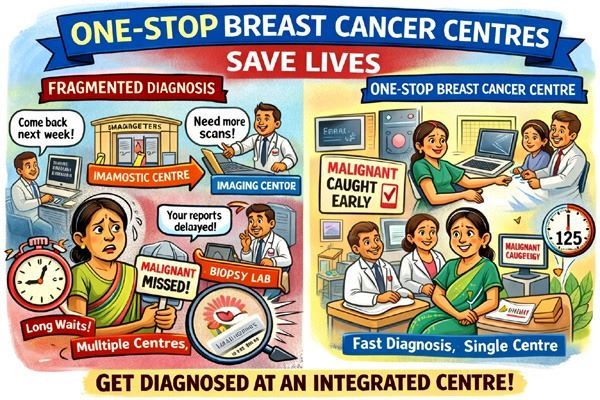
A compelling new study by the Chennai Breast Centre, a leading one-stop breast cancer facility, has revealed a disturbing reality in breast cancer diagnosis across India: one in four breast biopsies conducted through fragmented, multi-centre pathways are either missed or misdiagnosed. The findings strongly reinforce the urgent need for women to undergo breast cancer evaluation at integrated one-stop centres, where diagnosis is faster, more accurate and life-saving.
The 2024 audit, which analysed 12,156 patients, found that 25% of external biopsies required repeat testing, and alarmingly, 62.5% of these repeat biopsies were confirmed malignant. The study was recently presented at the San Antonio Breast Cancer Symposium, the world’s largest and most prestigious breast cancer conference, placing India’s diagnostic challenges firmly in global focus.
- One in four external breast biopsies required repeat testing, exposing missed or delayed cancers
- Over 62% of repeat biopsies turned malignant, underscoring diagnostic risk
- Fragmented multi-centre testing fuels delays, errors and patient dropouts
- Integrated ‘triple assessment’ completed in just 125 minutes at one-stop centres
- Experts call for policy push, accreditation and nationwide adoption of integrated care
According to the study, fragmented diagnostic pathways—where clinical examination, imaging and biopsy are conducted at different locations—lead to delays, inconsistencies and high rates of diagnostic discordance. In contrast, a one-stop integrated model completes the entire triple assessment—clinical examination, imaging and biopsy—within a median time of just 125 minutes, with biopsy reports available in 72 hours, enabling treatment planning in 2–3 visits.
The study was led by Dr. Selvi Radhakrishna, Senior Consultant Oncoplastic Breast Surgeon, and Dr. Debashri Shankarraman, Consultant Breast Surgeon, Chennai Breast Centre.
Highlighting the real-world impact of fragmented care, Dr. Selvi Radhakrishna said: “In India awareness about breast cancer is limited and many women hesitate or do not prioritise their health, late diagnosis is common. Even when women do come forward, the current fragmented diagnostic pathway is not effective. Typically, a woman notices a lump, visits a clinic for a check-up, is sent elsewhere for imaging, and then to another lab for a biopsy. Each step requires separate appointments, long waits, travel, and paperwork, which delays diagnosis, increases the risk of errors, and can result in patients dropping out before completing all necessary tests.”
Read Also:
IIT Madras–Australia breakthrough promises safer, sharper breast cancer treatment
The study revealed serious diagnostic gaps in external testing. Among the patients evaluated, over 50% required repeat imaging, including 495 cases where earlier scans had to be reassessed. Age-appropriate imaging was frequently missed—only 11% of women under 40 received mammograms, while 51% of women over 40 did not undergo mammography at all.
The biopsy data was even more concerning. Among 479 patients with prior external biopsies, 120 (25.1%) required repeat biopsies, of which 75 (62.5%) were malignant and 45 (37.5%) benign. Overall, 25% of external biopsies were discordant, with nearly two-thirds proving malignant on repeat testing, highlighting how fragmented diagnostics can miss life-threatening cancers.
Read Also:
Calling for systemic change, Dr. Selvi emphasised the need for strong policy backing for integrated centres. She said: “It is high time single, integrated breast cancer centres are promoted through healthcare policies, with clear quality standards and accreditation systems to ensure accurate and reliable diagnostic processes. In a typical one-stop centre, all diagnostic steps—clinical examination, imaging, and biopsy if needed—are completed under one roof in a single coordinated visit. The complete triple assessment could be achieved in a median of 125 minutes, with biopsy reports available within 72 hours, enabling definitive treatment planning within just 2–3 visits.”
She added that this approach is particularly critical in India, where travel, cost and time constraints often prevent women from completing diagnostic pathways.
“This model reduces waiting times, minimises errors by having the same team review all results, and provides women with access to life-saving care within days rather than weeks,” she said.
The urgency is underscored by India’s growing breast cancer burden. In 2024 alone, nearly 2.5 lakh new cases and over 1 lakh deaths were reported, with rising incidence across urban and semi-urban populations.
Welcoming recent legislative momentum, Dr. Selvi noted: “Recognising this urgency, the government is taking steps to promote early detection. The introduction of ‘The Breast Cancer (Awareness, Early Detection and Diagnosis) Bill, 2025’ in Parliament by Ms. Kanimozhi MP is heartening and it is in the right direction of strengthening awareness and early diagnosis efforts. However, while legislative support is crucial, India urgently needs single, integrated one-stop centres with strong policy oversight and quality standards to ensure accurate and timely breast cancer diagnosis.”
The Chennai Breast Centre study makes a clear case: where a woman gets diagnosed can be just as critical as when—and one-stop breast cancer centres may be the difference between early cure and delayed tragedy.