- Landmark workshop empowers engineers to fuse Artificial Intelligence with metallurgy, polymers, and ceramics for next-gen manufacturing excellence
- Over 80 innovators from academia and industry unlock real-world AI applications to transform industrial workflows and quality control
- Expert-driven sessions decode how Machine Learning, digital twins, and neural networks are redefining Industry 4.0 manufacturing ecosystems
- Hands-on training equips India’s future engineers to harness AI as a strategic force for smarter, faster, and more resilient production
NE SCIENCE & TECHNOLOGY BUREAU
GANDHINAGAR, FEB 18
In a decisive stride toward Industry 4.0 leadership, the Advanced Materials Processing Research Group (AMPRG) at the Indian Institute of Technology Gandhinagar (IITGN) successfully conducted a pioneering one-day workshop on “AI in Materials Processing” on Monday—equipping engineers, researchers, and industry professionals with cutting-edge Artificial Intelligence (AI) and Machine Learning (ML) capabilities to transform industrial manufacturing.
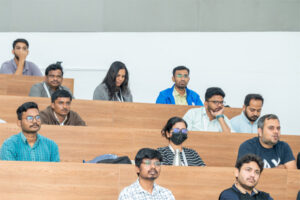
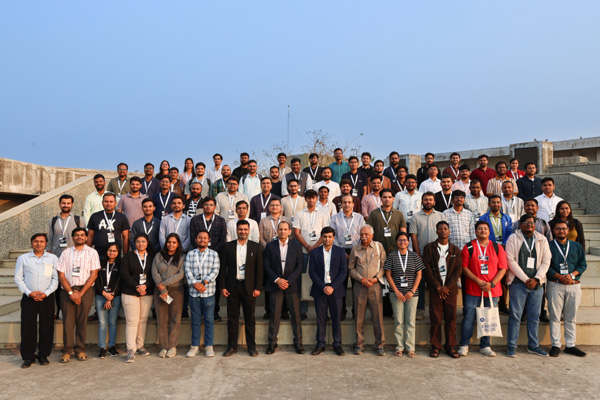
The immersive workshop brought together over 80 participants—including graduate students, scientists, industry professionals, and early-career faculty from across India—who explored how AI is revolutionizing materials science across metals, polymers, and ceramics. Through expert lectures, real-world case studies, and hands-on sessions, participants gained practical exposure to deploying AI algorithms, leveraging simulation and experimental data, and building intelligent, optimized industrial workflows.
Delivering a powerful message on the evolving industrial landscape, Prof. Asim Tewari emphasized, “As artificial intelligence reshapes Industry 4.0, the real challenge is not adopting AI tools, but using them with deep domain understanding. Future engineers who combine strong fundamentals in materials and manufacturing with data-driven approaches will be the ones who truly unlock the transformative potential of AI for industry.”
Highlighting the critical role of collaboration between academia and industry, Dr. Jitesh Vasavada, Manager, R&D, Danieli India Ltd., said, “As AI continues to revolutionize diverse sectors, understanding its application in materials processing starting from defining scalable problems to achieving the final results is more important than ever. This workshop provides a critical platform that brings together experts from industry and academia to discuss the challenges and corresponding solutions for implementing the AI in manufacturing industries.”
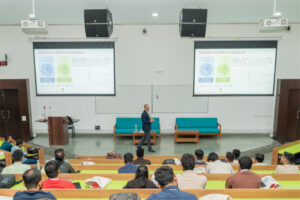
Prof. Amit Arora, Associate Professor of Materials Engineering and leader of the Advanced Materials vertical for the Centre for AI-driven Innovation at IITGN, underscored AI’s immense potential while addressing professional concerns. He stated, “It’s a tool. If we learn to use the tool, then we will be able to take a lot of benefit from it.”
Drawing a compelling parallel with the computer revolution, he added, “Once people learn how to use AI, you will have companies providing services on how to use AI in different industrial applications.” Stressing the inevitability of AI adoption, he further remarked, “AI is coming, whether we like it or not. The key is to understand it and make the most out of it.”
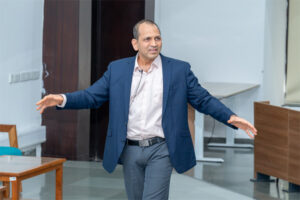
The workshop featured intensive hands-on sessions led by Prof. Asim Tewari of IIT Bombay and Dr. Vasavada, enabling participants to run AI algorithms directly on their laptops and solve real-world industrial challenges. A highlight was Dr. Vasavada’s advanced session, “Beyond Prediction: Engineering Actionable AI into Materials Processing,” which demonstrated how Physics-Informed Neural Networks (PINNs), Neural Operators, and AI-driven diagnostics are enabling intelligent, closed-loop manufacturing systems that enhance productivity, quality control, and operational efficiency.
Real-world case studies from the iron and steel sector illustrated how AI-powered digital twins and startup-led innovations are already reshaping industrial performance benchmarks.
The workshop received overwhelming appreciation, with participants calling for extended training. Responding to this enthusiasm, Prof. Arora announced plans for an advanced 2–4 day workshop this summer, featuring expanded expert sessions and deeper hands-on engagement.
By bridging AI and materials science, IITGN has positioned itself at the forefront of India’s manufacturing transformation—empowering engineers to harness intelligent technologies and drive the next era of industrial innovation.