


- Building legal awareness before careers begin
- POSH Act, rights, redressal & responsibility explained
- Creating safer campuses, stronger workplaces
NE EDUCATION BUREAU
GANDHINAGAR, DEC 31
In a strong step towards creating informed, confident and legally aware professionals, Swarrnim Startup & Innovation University organised a focused seminar on “Laws & Regulations Related to Sexual Harassment at Workplace”, reinforcing the message of zero tolerance and proactive prevention.
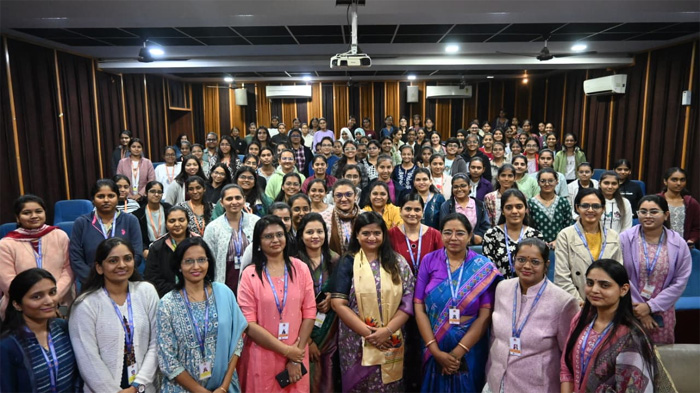
Held at the university’s Seminar Hall, the session witnessed the participation of 94 students and faculty members from diverse streams including Agriculture, Pharmacy, Management, Computing & IT, Nursing, Ayurveda, Homeopathy, Science and Physiotherapy, underscoring the cross-disciplinary relevance of workplace safety and gender justice.
The seminar was jointly organised by the Women Development Cell (WDC) and the Internal Quality Assurance Cell (IQAC), with the objective of equipping students—especially young women—with knowledge of their rights, responsibilities and legal safeguards even before they step into professional environments.
POSH Act Demystified: Law, Process and Protection
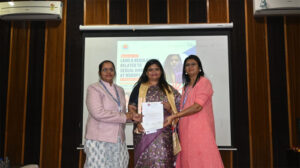
The programme commenced with the formal welcome of the resource person, Advocate Sonal Joshi, by WDC Convener Dr Nivedita Dwivedi and Academic Director Dr Kavita Kshatriya, both of whom stressed the importance of early legal sensitisation.
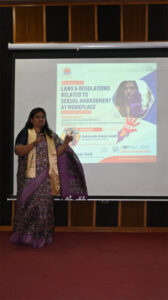
Addressing the gathering, Advocate Sonal Joshi delivered an in-depth and practical overview of the Sexual Harassment of Women at Workplace (Prevention, Prohibition and Redressal) Act, 2013, commonly known as the POSH Act.
“Awareness is the first line of defence. Every student must know what constitutes sexual harassment, how the law protects them, and where to seek redressal without fear or stigma,” Advocate Joshi said.
She elaborated on different forms of workplace harassment, employer obligations, the role and functioning of Internal Complaints Committees (ICC), and the correct legal procedures for reporting complaints. She also highlighted the importance of preventive measures, early reporting, confidentiality, and institutional accountability.
“The POSH Act is not just a law—it is a commitment to dignity, safety and equality at the workplace,” she added.
Institutional Commitment to Safer Spaces
Highlighting the university’s proactive approach, WDC Convener Dr Nivedita Dwivedi stated that creating awareness among students is essential in shaping responsible professionals.
“Our aim is to empower students—especially young women—with knowledge, confidence and clarity, so they can assert their rights and contribute to safer, more respectful workplaces,” Dr Dwivedi said.
Echoing this sentiment, Academic Director Dr Kavita Kshatriya emphasised the role of educational institutions in building socially conscious citizens.
“Universities must go beyond academics. Sensitisation on laws related to safety, dignity and equality is vital to prepare students for real-world challenges,” Dr Kshatriya observed.
The seminar concluded with an interactive question-and-answer session, where students and faculty actively engaged with the speaker, raising queries and sharing observations—reflecting a growing willingness among youth to discuss and address workplace safety issues openly.