
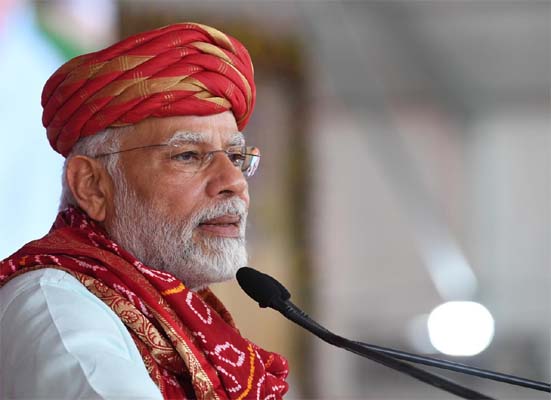
- Prime Minister to release 24th PM-KISAN instalment from Banaskantha, Gujarat, on October 30
- More than 9.34 crore eligible farmer beneficiaries set to receive funds directly in their bank accounts
- Cumulative PM-KISAN disbursements to cross ₹4.65 lakh crore after the latest instalment, based on the announced figures
- 521 Agriculture Infrastructure Fund units to be dedicated to the nation to strengthen storage and processing
- 12 horticulture clusters to be inaugurated to promote high-value crops and expand farmers’ income opportunities
- Government pushes financial assistance, crop diversification and modern infrastructure towards a more resilient agricultural economy
NE AGRICULTURE BUREAU
AHMEDABAD, OCT 29
For millions of Indian farming families, timely financial support can make a meaningful difference when agricultural expenses compete with the everyday costs of running a household. The release of the 24th instalment of the Pradhan Mantri Kisan Samman Nidhi (PM-KISAN) on October 30 is set to put that support back in the spotlight, with more than ₹18,690 crore scheduled to be transferred directly to the bank accounts of over 9.34 crore eligible farmers.
Prime Minister Narendra Modi will release the instalment at Banaskantha in Gujarat, reinforcing the focus on direct income support as a key component of the Government’s agricultural welfare programme.
The event will also extend beyond financial transfers. The Prime Minister will dedicate 521 units developed under the Agriculture Infrastructure Fund (AIF) to the nation and inaugurate 12 horticulture clusters, combining immediate financial assistance with efforts to improve post-harvest infrastructure and expand opportunities in high-value agriculture.
Direct support, delivered to farmers
The PM-KISAN scheme provides eligible farmer families with income support through Direct Benefit Transfer (DBT), helping them meet agricultural and household expenses.
With the latest instalment, the Government aims to reach more than 9.34 crore beneficiaries through a transfer exceeding ₹18,690 crore. The emphasis on direct transfers is intended to deliver assistance to beneficiaries’ bank accounts without the need for intermediaries.
Before the 24th instalment, more than ₹4.47 lakh crore had been disbursed through the first 23 instalments, according to the figures provided for the programme. Adding the announced latest transfer would take cumulative disbursements beyond ₹4.65 lakh crore.
The scale of the transfer highlights the importance of predictable financial assistance to farming households. However, the longer-term impact on farm incomes also depends on factors such as input costs, crop prices, irrigation, access to credit, weather risks and market connectivity.
521 infrastructure units to strengthen the farm-to-market chain
Recognising that farmers’ returns depend not only on what they grow but also on how their produce is stored, processed and marketed, the Government is also focusing on agricultural infrastructure.
The 521 units being dedicated under the Agriculture Infrastructure Fund are intended to strengthen storage, processing and related facilities. Such infrastructure can help improve post-harvest management, reduce avoidable losses and enable better access to markets.
The AIF has supported investments in warehouses, cold-storage facilities, primary processing centres and other essential agricultural assets. According to the figures supplied for the programme, investments of approximately ₹1.75 lakh crore have been made across more than 2.28 lakh projects.
The central challenge is to ensure that these facilities are operational, accessible and commercially viable for farmers, including small and marginal cultivators and farmer-producer organisations.
Horticulture clusters to encourage high-value farming
The inauguration of 12 horticulture clusters will add another dimension to the programme by promoting high-value crops and strengthening horticultural value chains.
Crop diversification can create additional income opportunities, particularly where farmers have access to suitable growing conditions, reliable irrigation, quality planting material, cold chains, processing facilities and assured markets.
For horticulture to become a dependable source of higher earnings, infrastructure development must go hand in hand with price discovery, post-harvest management and market linkages.
Raisen programme to highlight farmers’ welfare initiatives
Union Agriculture and Farmers Welfare Minister Shivraj Singh Chouhan will participate in the programme marking the release of the 24th PM-KISAN instalment at Raisen in Madhya Pradesh.
The event is expected to bring together farmers and provide a platform to highlight PM-KISAN and other initiatives aimed at agricultural development and rural livelihoods.
The Government’s broader policy framework includes the Pradhan Mantri Fasal Bima Yojana, Kisan Credit Card, Minimum Support Price, Per Drop More Crop, the National Mission on Edible Oils, the Mission for Aatmanirbharta in Pulses and the National Mission on Natural Farming.
These initiatives address different dimensions of agricultural development, including financial assistance, crop-risk protection, access to credit, irrigation efficiency, domestic production and sustainable farming practices.
From financial relief to farm prosperity
Agriculture remains central to India’s food security and rural economy. Direct income support can help eligible families manage immediate expenses, while investment in infrastructure and diversification can address some of the structural challenges affecting agricultural returns.
The release of the 24th PM-KISAN instalment, alongside the dedication of infrastructure units and the inauguration of horticulture clusters, brings these priorities together in a single programme.
The larger test will be whether financial assistance, modern infrastructure and crop diversification translate into stronger farm incomes, lower post-harvest losses and greater resilience against market and climate uncertainties.
For India’s farmers, the ultimate measure of success will not be the amount transferred alone, but whether support today helps build a more secure and remunerative livelihood tomorrow.