

- ₹11,000-crore construction and infrastructure equipment scheme cleared by Cabinet to strengthen indigenous manufacturing and reduce import dependence
- PLI-Auto incentive disbursement touches ₹4,385.28 crore in FY 2026-27, taking cumulative payouts to ₹6,771.64 crore
- Auto PLI investments surge to ₹52,806 crore, surpassing the ₹42,500-crore target, with incremental sales of ₹82,993 crore
- Construction equipment industry, currently the world’s third largest, projected to more than double to ₹2.28 lakh crore by FY 2029-30
- New scheme offers graded incentives of 13% to 8% on incremental sales, alongside up to ₹375 crore for a dedicated testing facility
- Domestic value addition, advanced automotive technologies and high-end construction machinery at the heart of India’s global manufacturing ambitions
NE ECONOMIC BUREAU
NEW DELHI, NOV 25
India is stepping up its ambition to become a global manufacturing powerhouse, backing its automobile industry and construction equipment sector with a combined policy push of ₹36,938 crore. From advanced automotive technologies and indigenous auto components to tunnel-boring machines, mega cranes and hydraulic excavators, the twin initiatives seek to move Indian manufacturing up the global value chain, deepen domestic supply chains and strengthen the country’s competitiveness in strategic industrial sectors.
The two developments announced by the Ministry of Heavy Industries on Wednesday underline the government’s focus on expanding domestic production capabilities, attracting investments, generating employment and reducing dependence on imported industrial equipment.
While the Production Linked Incentive (PLI) Scheme for the Automobile and Auto Component Industry is recording substantial investment, incremental sales and incentive disbursements, the Union Cabinet has approved a new ₹11,000-crore Scheme for Enhancement of Construction and Infrastructure Equipment (CIE) Manufacturing Ecosystem.
Together, the initiatives represent a significant push to position India as a manufacturing and technology hub across automobiles, auto components and heavy infrastructure equipment.
Auto PLI: Incentives gain momentum
The Ministry of Heavy Industries continues to implement the PLI-Auto Scheme, which has an approved budgetary outlay of ₹25,938 crore, to strengthen domestic manufacturing of Advanced Automotive Technology (AAT) products and establish India as a global automobile manufacturing destination.
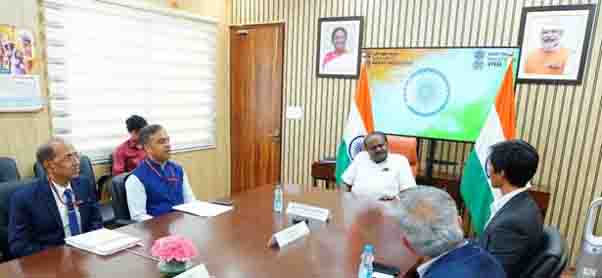
Union Minister for Heavy Industries and Steel H.D. Kumaraswamy chaired a review meeting with Dr. Hanif Qureshi, Additional Secretary, Ministry of Heavy Industries, to assess the scheme’s implementation and progress.
The incentive disbursement during FY 2026-27 reached ₹4,385.28 crore as of November 25, 2026. With this, cumulative disbursements since the scheme’s inception have touched ₹6,771.64 crore.
The investment figures are equally significant. As of September 30, 2026, approved applicants had reported cumulative investments of ₹52,806 crore, exceeding the targeted investment of ₹42,500 crore.
The scheme has also facilitated incremental sales of ₹82,993 crore over the FY 2019-20 base year and generated 77,755 employment opportunities, reflecting its contribution to expanding India’s automotive manufacturing ecosystem.
50% domestic value addition: The indigenous push
A key feature of the PLI-Auto Scheme is its emphasis on domestic value addition, with eligible products required to meet a minimum Domestic Value Addition (DVA) threshold of 50% to qualify for incentives.
As of November 25, 2026, DVA certificates had been issued to nine Champion Original Equipment Manufacturers (OEMs), covering 139 products and variants, and 10 Component Champions, covering 53 products and variants.
The certification progress reflects the growing domestic capabilities in manufacturing advanced automotive products and components, while encouraging deeper localisation of critical technologies and supply chains.
The initiative is aligned with the vision of Aatmanirbhar Bharat, with the objective of making India a competitive destination for advanced automotive manufacturing.
₹11,000-crore bet on construction equipment
In a parallel development, the Union Cabinet, chaired by Prime Minister Narendra Modi, approved the ₹11,000-crore Scheme for Enhancement of Construction and Infrastructure Equipment Manufacturing Ecosystem.
To be implemented by the Ministry of Heavy Industries, the scheme aims to incentivise domestic manufacturing of construction and infrastructure equipment and components, besides establishing a dedicated state-of-the-art testing facility in India.
The scale of the opportunity is substantial. India’s construction and infrastructure equipment industry is currently the world’s third largest, after China and the United States, with a market size of approximately ₹97,500 crore in FY 2024-25.
Driven by investments in roads, ports, housing and other infrastructure, the domestic market is projected to more than double to approximately ₹2,28,100 crore by FY 2029-30.
The scheme specifically seeks to encourage the manufacture of technologically advanced equipment, including Ship-to-Shore Cranes, Tunnel Boring Machines, Hydraulic Excavators and Off-Highway Trucks.
These are critical to large infrastructure projects, port operations, urban development, mining and industrial construction.
Two incentive windows, one manufacturing objective
The eight-year CIE scheme, beginning FY 2026-27, has been structured around two principal components.
The first is a Sales-linked Incentive programme for approved Original Equipment Manufacturers (OEMs) and Component Manufacturers. Graded incentive rates ranging from 13% to 8% will be provided on incremental sales value over a five-year disbursement period.
The second component provides a grant of up to ₹375 crore, in the nature of Viability Gap Funding, for establishing a dedicated CIE testing facility in the country.
The implementation framework provides for a two-year gestation period from FY 2026-27 to FY 2027-28 for setting up manufacturing facilities, followed by five years of incentive disbursement from FY 2028-29 to FY 2032-33. The final year, FY 2033-34, will be used for settlement of incentives on incremental sales achieved during FY 2032-33.
This phased approach is intended to provide manufacturers with time to establish production infrastructure before moving into the incentive-linked growth phase.
From domestic capacity to global competitiveness
The two initiatives address complementary segments of India’s industrial economy.
The automobile PLI scheme seeks to accelerate the transition towards advanced automotive technologies, strengthen component manufacturing and increase domestic value addition. The new construction equipment scheme seeks to build indigenous capabilities in machinery that is essential to the country’s infrastructure expansion.
Together, they could create opportunities for manufacturers, component suppliers, technology developers, testing facilities and skilled workers across the industrial ecosystem.
The emphasis on domestic manufacturing is also expected to improve supply-chain security, encourage technology development and expand India’s ability to compete in international markets.
The broader objective is to build a technologically self-reliant, globally competitive and sustainable industrial base in line with the vision of Viksit Bharat @2047.
For India, the challenge now lies in converting policy incentives and investment commitments into globally competitive products, stronger domestic supply chains and sustained export growth.