
- ‘Old City, New Narratives’ exhibition showcases imaginative adaptive-reuse proposals for two historic buildings in Raikhad
- Space Design students demonstrate how research, architectural sensitivity and innovative thinking can breathe new life into forgotten heritage spaces
- Two-day exhibition during Ahmedabad Heritage Week highlights the potential of young designers to bridge the city’s architectural past with contemporary needs
NE EDUCATION BUREAU
AHMEDABAD, NOV 25
Can a 150-year-old building find a new identity without losing its soul? Anant National University’s budding designers believe it can — and their creative explorations offer a compelling glimpse of how youthful imagination, backed by research and design thinking, can turn forgotten architectural spaces into possibilities for the future.
Bringing their latent talent and innovative ideas into the public domain, students of the Space Design programme at Anant National University showcased a series of adaptive-reuse proposals during Ahmedabad’s Heritage Week, demonstrating how historic structures can be given a fresh lease of life without compromising their architectural and cultural character.
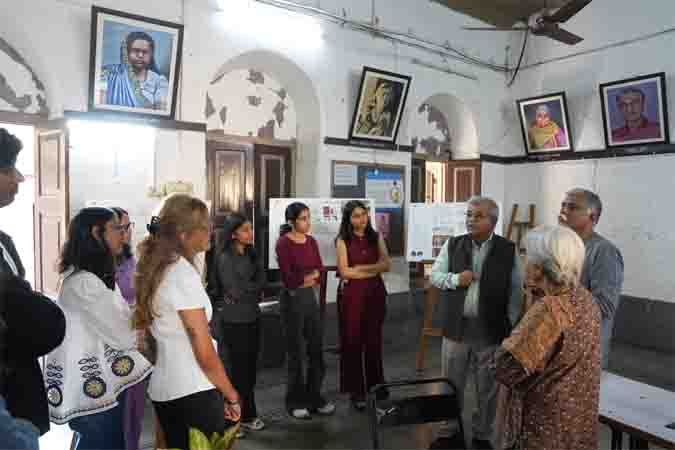
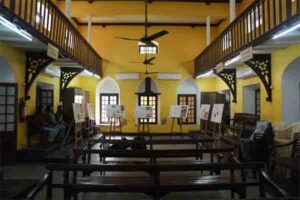
Titled ‘Old City, New Narratives’, the two-day exhibition, held on November 24 and 25, 2026, featured selected projects from the students’ recently completed Adaptive Re-use Studio (Semester VII). The proposals explored two approximately 150-year-old heritage buildings in Raikhad — the National Indian Association (NIA) and the Ishwar Prarthana Samaj (IPS).
The exhibition offered visitors an opportunity to look beyond the age and existing use of these buildings and discover how emerging designers interpret heritage, identify possibilities and develop context-sensitive interventions to make historic spaces relevant to contemporary society.
Beyond classrooms: Creativity meets heritage
The projects reflected the students’ ability to combine observation, research, critical thinking and creative problem-solving. Rather than treating heritage structures merely as architectural relics, the young designers explored their potential for continued use through thoughtful adaptations.
Their work highlighted an important principle of adaptive reuse: conservation need not mean preserving a building as a static monument. It can also involve finding appropriate contemporary functions while respecting the structure’s historical identity, architectural character and cultural significance.
For the students, the exercise provided an opportunity to translate classroom learning into real-world design challenges, demanding an understanding of the relationship between built heritage, community needs and changing urban environments.
Two historic buildings, new possibilities
The National Indian Association and Ishwar Prarthana Samaj buildings in Raikhad formed the focus of the studio’s explorations.
Through their proposals, students examined how these historic structures could continue to remain relevant in a rapidly changing urban landscape. Their interventions sought to balance the preservation of existing character with contemporary requirements, bringing fresh perspectives to the question of how Ahmedabad can safeguard its architectural inheritance.
The exhibition also encouraged visitors to appreciate the intellectual and creative process behind design — from understanding a building’s context to envisioning alternative uses and translating ideas into spatial possibilities.
Design education with a real-world purpose
The initiative reflects Anant National University’s emphasis on experiential and interdisciplinary design education.
The university’s Bachelor of Design curriculum places Heritage and Adaptive Re-use within the Semester VII Space Design programme, alongside working drawings, research and critical thinking. This academic approach encourages students to move beyond conventional design solutions and engage with complex spatial environments.
Anant’s Space Design programme also encompasses a wider understanding of habitable and experiential spaces, including heritage sites, urban interiors, exhibitions and other environments requiring creative and socially responsible interventions.
The Heritage Week exhibition thus provided a public platform for students to demonstrate how design education can contribute to conversations about urban conservation, sustainable development and the future of historic cities.
Young minds, a city’s living legacy
Ahmedabad’s Walled City, recognised as a UNESCO World Heritage City, carries an extraordinary architectural and cultural legacy. Preserving this inheritance while accommodating contemporary urban needs calls for innovative approaches and informed public participation.
The students’ work brought this challenge into sharper focus, showing how the next generation of designers can contribute fresh ideas to heritage conservation.
More importantly, the exhibition demonstrated that the value of design education lies not merely in producing attractive concepts but in nurturing young minds capable of questioning existing practices, identifying overlooked possibilities and developing meaningful solutions.
The larger message from the two-day showcase was unmistakable: the future of heritage conservation may depend as much on the imagination of young designers as on the preservation of old walls.