NE ECONOMIC BUREAU
CHENNAI, SEPT 15
Tamil Nadu is seeking to turn London into a launchpad for its next industrial leap, combining advanced manufacturing, automotive engineering, renewable energy, power infrastructure and Global Capability Centres (GCCs) to move further up the global value chain. The State government has secured formal investment commitments of about ₹12,300 crore, while a separate ₹3,000-crore expression of interest from a European auto-component major takes the wider investment pipeline beyond ₹15,300 crore, with the initiatives expected to create thousands of jobs in Tamil Nadu.
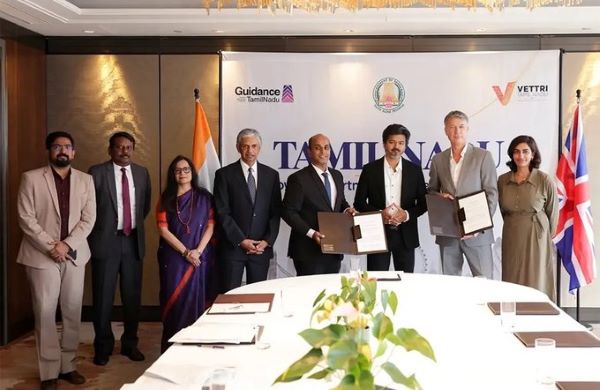
மாண்புமிகு தமிழ்நாடு முதலமைச்சர் திரு.ச.ஜோசப் விஜய் அவர்கள் முன்னிலையில், தமிழ்நாட்டில் உற்பத்தி ஆலைகள், உலகளாவிய திறன் மையங்கள், ஆராய்ச்சி மற்றும் மேம்பாட்டு வசதிகளை நிறுவி விரிவுபடுத்துவதற்காக, தமிழ்நாடு அரசுக்கும் முன்னணி உலகளாவிய நிறுவனங்களுக்கும் இடையே புரிந்துணர்வு… pic.twitter.com/YXlYKUGBpY
— CMOTamilNadu (@CMOTamilnadu) September 15, 2026
- · Motherson anchors London drive with ₹11,000-crore expansion plan and 7,000 jobs across design, engineering, manufacturing and logistics
- · ₹12,300 crore in formal investment commitments, plus ₹3,000-crore European auto-component LoI, deepen Tamil Nadu’s global industrial footprint
- · GCCs, renewable energy, power equipment and advanced manufacturing widen the State’s economic diversification
- · EY, Sigma Technology and Wilson Power Solutions bring high-value technology and engineering jobs to Tamil Nadu
- · Hindujas reaffirm investment commitment as Chennai strengthens its pitch for auto exports, renewables and global business
- · CETA opens a new runway for UK-Tamil Nadu trade, investment and deeper integration into global supply chains
The agreements were signed on September 14 in London in the presence of Chief Minister C Joseph Vijay between Guidance Tamil Nadu and leading global companies. The projects span auto components, design and engineering, R&D, renewable energy, electrical equipment and GCCs. Recent reports also put the formal investment package at ₹12,300 crore and the expected employment impact at more than 9,400 high-value jobs.
The investment push comes as Tamil Nadu seeks to position itself not merely as a manufacturing destination but as a global platform for design, engineering, technology, production, exports and high-skilled services.
Motherson delivers the mega-ticket investment
The biggest commitment comes from Samvardhana Motherson International Ltd, which, together with its UK and European joint-venture companies and technology partners, plans to invest about ₹11,000 crore in Tamil Nadu.
The investment will support two D.E.M.A.L. facilities spanning Design, Engineering, Manufacturing, Assembly and Logistics, with around 7,000 jobs expected to be generated.
The project is significant because it could deepen Tamil Nadu’s integration with global automotive and advanced-manufacturing value chains rather than simply add conventional production capacity. The MoU was signed in London by Motherson Global Head of Marketing and Communications Barrie Painter and Guidance Tamil Nadu Managing Director Deepak Jacob in the presence of the Chief Minister.
The proposed investment is expected to bring advanced manufacturing capabilities, global engineering expertise and new technology partnerships to the State.
Powering the next industrial cycle
UK-headquartered Wilson Power Solutions will invest ₹300 crore in a transformer manufacturing facility in Tamil Nadu’s Tiruvallur district, creating about 400 jobs.
Also Read:
The expansion is expected to strengthen Tamil Nadu’s capabilities in advanced power and distribution transformer manufacturing while increasing local value addition.
The project also fits into the State’s broader ambition to build an ecosystem around renewable energy and power-grid equipment, as demand for electricity infrastructure rises alongside industrial expansion.
GCCs shift the investment story from factories to knowledge
Tamil Nadu is simultaneously pursuing a second growth engine—high-value global services.
Sweden’s Sigma Technology Group, through its Indian entity Sria Solutions, has signed an agreement with Guidance Tamil Nadu to expand its GCC presence in Chennai and Tiruchirappalli, with around 600 high-value jobs envisaged in areas including embedded systems, electrification and industrial digitalisation.
💢💢EY setting GCC for UK Client💢💢#TamilNadu Govt signed MoU with Ernst & Young (#EY) to help a #UK-headquartered ICT company set up a Global Capability Centre (#GCC) in #Chennai’s new GCC Corridor (Mount-Poonamallee Road)
🔺Investment: ₹1,000 crore
🔺Jobs: over 2,000… pic.twitter.com/eIxGjRZDKB— TN Industrial & Investment Updates (@TnInvestment) September 14, 2026
In another major GCC initiative, Ernst & Young (EY) has entered into an agreement to establish a Global Capability Centre in Tamil Nadu for an international company under a Build-Operate-Transform-
The proposed centre is expected to involve around ₹1,000 crore in investment and create more than 2,000 high-value jobs. It will form part of the GCC corridor emerging along the Mount-Poonamallee Road region of Chennai.
This combination of manufacturing and knowledge-intensive services is significant: Tamil Nadu is attempting to capture value not only from what the world manufactures, but also from what the world designs, engineers, digitises and manages.
European auto major eyes ₹3,000-crore Tamil Nadu play
Adding another major potential investment to the pipeline, a leading European auto-component manufacturer submitted a letter of intent for a proposed ₹3,000-crore investment in Tamil Nadu.
The company has identified the State as its preferred location for a new manufacturing facility in India and is expected to receive the necessary support from the Tamil Nadu government to facilitate the project.
If realised, the investment could further strengthen Tamil Nadu’s position as a preferred destination for high-value automotive manufacturing and export-oriented supply chains.
Hindujas reaffirm long-term Tamil Nadu bet
The London meetings also brought the State’s existing investors into the investment conversation.
Ashok Leyland Chairman Dheeraj Hinduja, Finolex Industries Chairman Prakash P. Chhabria, Director Reeta Hinduja Chhabria and other senior representatives of the Hinduja Group met the Chief Minister in London.
Also Read:
From London to Tamil Nadu: Hinduja weighs bigger bets on renewables, EVs and exports
The group briefed him on the progress of its investments in Tamil Nadu, including follow-up action on the ₹2,500-crore MoU signed during the VETTRI Tamil Nadu Investors’ Conference in August 2026.
The group reiterated its commitment to expanding its business and investments in Tamil Nadu, including greater interest in renewable energy, particularly wind power.
Discussions also covered expanding exports of commercial vehicles manufactured in Tamil Nadu and strengthening the State’s role as an export hub for the automotive industry.
CETA gives Tamil Nadu a larger global canvas
India–UK CETA strengthens market opportunities for India’s agricultural and processed food sector, supporting greater access and competitiveness in the UK market.
From farm produce to food processing, the agreement creates new avenues for Indian businesses to expand their global… pic.twitter.com/tpqBfaUIGJ
— Dept of Commerce, GoI (@DoC_GoI) September 14, 2026
The Chief Minister used the London platform to highlight opportunities emerging from the India-UK Comprehensive Economic and Trade Agreement (CETA), encouraging British and European companies to use the agreement to deepen investment, trade, sourcing and business partnerships with Tamil Nadu.
The India-UK CETA was formally presented to the UK Parliament in July 2026, providing the institutional backdrop for the State’s renewed investment push.
The State’s pitch is increasingly clear: CETA should not merely expand trade flows; it should become a catalyst for investment, manufacturing partnerships, technology transfer and integration with global supply chains.
The Chief Minister urged British and European companies to invest in Tamil Nadu and assured them of the State government’s support in establishing and operating businesses.
From investment announcements to an industrial ecosystem
Guidance Tamil Nadu and senior government officials also held discussions with 10 leading companies and stakeholders across aerospace and defence, chemicals, logistics, construction, financial services, retail and legal services.
Potential outcomes include raw-material sourcing agreements between British trading companies and Tamil Nadu’s textile and garment manufacturers; a possible UK aerospace and defence delegation visit to Hosur; a UK Mayor’s Office delegation visit to Chennai in October; financial-services skill-development partnerships; a UK trade and export workshop later this year; and a report mapping opportunities for Tamil Nadu under CETA.
These follow-up initiatives could prove as important as the headline MoUs because they seek to create business-to-business linkages and supply-chain integration beyond individual investment projects.
Tamil Nadu’s pitch: From factory floor to global command centre
The Chief Minister said the investments reflected the aspirations of Tamil Nadu’s youth and would strengthen the State’s position as a global hub for advanced manufacturing, GCCs, R&D and technology-led industries.
The emerging model is broader than attracting factories. It is about building a complete economic ecosystem—from engineering and design to manufacturing, logistics, exports, digital services and global corporate functions.
That could become Tamil Nadu’s competitive advantage as global companies diversify supply chains and seek locations that combine skilled talent, manufacturing depth and access to international markets.
London has therefore delivered Tamil Nadu more than a collection of MoUs. The bigger prize is the possibility of moving the State deeper into the architecture of global production and knowledge—and turning investment attraction into sustained economic value creation.