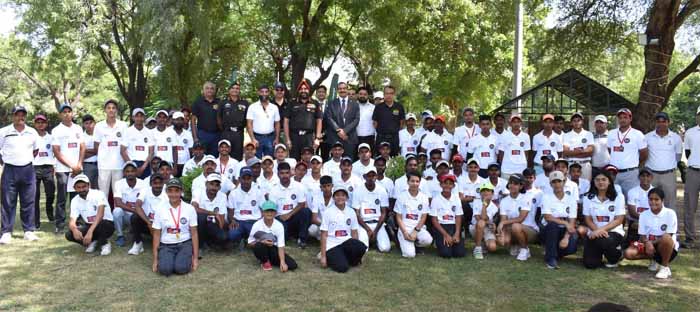
- India is asserting itself globally through sports, making waves in hockey, cricket, wrestling, and a few other sports
- In fact, most notable international sports persons are from the Army
- Politics invaded sports, and selection for team members was marred by parochialism based on fringe attributes rather than talent
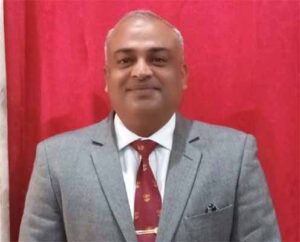
COL HIMMAT VERMA (RETIRED)
India has been a multicultural and multilingual nation since time immemorial and has stood as an epithet of strength. Many power-hungry empires, both within India and external, have pursued an expansionist policy, but still could neither achieve ethnic cleansing nor genocide could eradicate the local population, and had to reconcile with the existing customs and traditions. Hence, multiplicity persisted.
Making waves in hockey, cricket, wrestling etc
In the pre-independence era, the unified terminal objective of freedom, kept differences in linguistic and religious proclivity at the fringes. At the same time, India was asserting itself globally through sports, making waves in hockey, cricket, wrestling, and a few other sports. Although the teams were mainly managed by royal patronage, they had little to no space for ethnic preference over performance. They reflected secularism to a large extent.
The spectacular culture of troop games keeps ethnicity at bay

In the post-independence era, divisive politics took birth and blatantly attempted to divide India based on any agenda that got political mileage. Sports were growing slower than the GDP, but the future appeared promising. The Indian Army stood like a monolithic institution that resisted and detested anti-secularism agendas. In fact, most notable international sports persons were from the Army. The spectacular culture of troop games kept ethnicity at bay. The model could not be fathomed then, that sports blur ethnic fault lines.

Sports and games got structured more with rules, regulations, and policies, and a greater international presence, though we hardly performed well owing to the lack of seriousness for winning. Politics invaded sports, and selection for team members was marred by parochialism based on fringe attributes rather than talent. The poor performance was frozen for India at international events. Communal clashes, though sporadic, were not ruled out in domestic inter-club tournaments.
Sports is crying hoarse for its rightful place in the nation
India is at the precipice of the global stage, sharing, be it economy, IT, or politico-social domineering. Sports is crying hoarse for its rightful place and legitimacy as one huge factor in bringing our nation to the global podium and stage sharing with developed countries. Hence, it’s high time we get our act together and address the red herrings in the proliferation of sports and democratise the whole process.
The frenzied crowds at stadiums, the ear-tearing slogans by fandom, seriously overlook these minor caste and religious anathemas. The joy that sweeps the nation when our players stand at the podium with the Tricolour appears to be most uniting, and the national fervour runs deep and soars high. Thus, these events must be seen introspectively for the overall image and global standing of our nation. Whenever our teams are performing within India or abroad, the amalgam of players present in the teams is not only a true representation of India, but the feeling of inclusivity amongst fans from diverse ethnic backgrounds is invigorating. There is a Baljinder, DeCosta, Prem Sagar, Sakib, Chinnappa, maybe be entire cross culture is represented.
Give prominence to sports
Sports have to be given prominence, especially since we are the youngest democracy, with 65 crore people under the age of 25 years. This can be achieved by undertaking the necessary steps. These steps may invite a rebuttal or a counter-argument, but the nay-sayers can hold it for a few years to see what is being foreseen now; the devil’s advocate obviously has a free run.
Catch them young with 7 positive steps
Firstly, in the school curriculum, up to Xth grade,30% weightage must be given to sports, and one sport must be made mandatory for assessment. Predetermined physical tests must be part of the overall assessment and for promotion to the next higher class. It needs due diligence to cater to children with disabilities or incurable diseases. Secondly, in classes XI and XII, one sport must be made compulsory, apart from clearing the prescribed physical parameters. Thirdly, colleges and professional institutes must have higher weightage for students who are into sports, which may give a marginal but distinct advantage in admission. Fourthly, team games must be given primacy over individual sports, as they have proven benefits in leadership, camaraderie, and better social adaptability, etc. Fifthly, all professions must compulsorily have sports dovetailed in their employee engagement policy. Sixthly, all society parks must have sports facilities being developed by respective RWA (a law binding it mandatory to have these facilities will resolve the issue ab initio). Seventhly, strengthen the rural infrastructure of sports with additional facilities on a YoY basis, thereby democratising the entire process.
The overall implementation may appear tardy and a near no-go, but implementing even 10% every year will have benefits, and we may soon get to see a more vibrant and fitter India, and more Olympic medals soon.
Author Col Himmat Verma (Retired), Director, 100 Medals Targeted Foundation, Jaipur