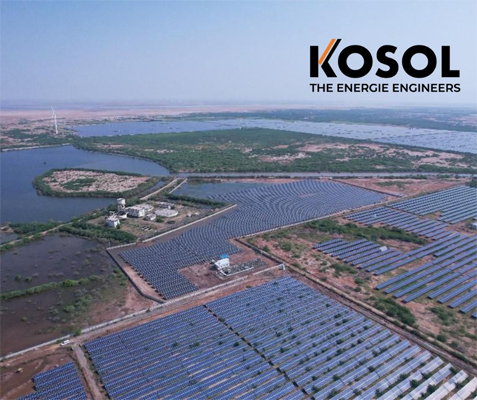
- Commissioned for GSECL at Chhadavada, the plant deploys bifacial modules and advanced tracker technology to boost efficiency and reliability.
NE BUSINESS BUREAU
AHMEDABAD, SEPT 29
Kosol Energie Pvt. Ltd., a leading solar EPC and module manufacturing company, has commissioned and charged a 38 MW (DC) solar power project for Gujarat State Electricity Corporation Limited (GSECL) at Chhadavada, Gujarat.
Equipped with 550 WP bifacial solar modules and state-of-the-art tracker-based Module Mounting Structures (MMS), the project is designed to deliver higher energy yield, enhanced efficiency, and long-term reliability. This installation strengthens Gujarat’s reputation as a frontrunner in renewable energy adoption and directly supports India’s national target of achieving 500 GW of non-fossil fuel capacity by 2030.
Commenting on the commissioning, Kalpesh Kalthia, CMD, Kosol Energie Pvt. Ltd., said: “At Kosol Energie, we believe in engineering solutions that not only meet today’s energy requirements but also shape the future of sustainable power in India. The successful commissioning of the 38 MW Chhadavada plant is a testament to our team’s innovation, dedication, and engineering excellence.”
Strategic significance
- For Gujarat: The Chhadavada project underlines the state’s leadership in solar power generation, building on its strong ecosystem of solar parks and renewable infrastructure.
- For India: Projects of this scale are pivotal in cutting carbon emissions and reducing dependence on fossil fuels, while also aligning with the government’s broader energy independence goals.
- For GSECL: The addition of advanced solar assets enhances grid reliability and adds momentum to the utility’s renewable portfolio.
Kosol Energie has steadily expanded its footprint across utility-scale solar projects, EPC solutions, and module manufacturing, positioning itself as one of India’s most reliable partners in the clean energy transition. The company aims to continue driving innovation through advanced technologies that improve project performance, economics, and sustainability.
As India accelerates towards a net-zero future, the Chhadavada solar plant stands as a shining example of how engineering innovation and policy ambition can converge to build a resilient, green energy landscape.