
- Policy inconsistency, stalled reforms and Adani’s exit cast shadow despite post-crisis growth
- Sri Lanka’s GDP grew 5 per cent in 2024, buoyed by improved political stability following the sweeping victory of President Anura Kumara Dissanayake and his National People’s Power (NPP) coalition
NE BUSINESS BUREAU
COLOMBO, SEPT 30
The US State Department has warned that Sri Lanka’s investment climate remains fraught with uncertainty, despite signs of economic recovery from its 2022 financial meltdown. In its 2025 Investment Climate Statements, Washington pointed to policy inconsistency, regulatory unpredictability, and poor bureaucratic responsiveness as major deterrents for foreign investors.
Sri Lanka’s GDP grew 5 per cent in 2024, buoyed by improved political stability following the sweeping victory of President Anura Kumara Dissanayake and his National People’s Power (NPP) coalition. While the government’s backing of the USD 3 billion IMF program has reassured markets, the US noted that investment inflows remain constrained, with most deals still in the USD 3–5 million bracket.
Adani exit highlights risks
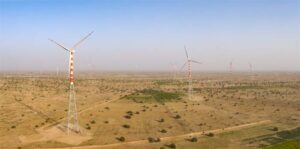
The report cited the Adani Group’s withdrawal from a proposed USD 400 million wind energy project earlier this year as a case study of Sri Lanka’s investment woes. Despite offering the lowest tariff bid of 8.26 cents per unit, prolonged renegotiations and the government’s push to cut the rate below 5 cents forced Adani Green Energy to exit.
Industry insiders said Adani preferred to redeploy resources in India, where renewable projects face more transparent regulation. The pullout deprived Sri Lanka of an investment exceeding USD 1 billion, including transmission infrastructure.
Structural bottlenecks remain
The State Department said the Board of Investment (BOI) has failed to function as a “one-stop shop,” with fragmented authority across government agencies creating lengthy approval processes. Investors continue to flag opaque procurement, high transaction costs, and frequent policy reversals, while the stalled privatisation of state-owned enterprises such as the Ceylon Electricity Board undermines energy sector reforms.
Although the NPP government has promoted inward investment, its mixed signals have unsettled foreign firms. The commitment to a USD 3.7 billion Sinopec oil refinery at Hambantota in January 2025 was followed just a month later by Adani’s withdrawal. Similarly, the government shelved privatisation plans for debt-laden SOEs in favour of state-led “turnaround” strategies.
Reform push needed
“Despite positive rhetoric, institutional capacity to encourage an open investment environment remains limited,” the US report observed, stressing the need for structural reforms in trade facilitation, digitisation and governance.
For now, American firms remain interested in ICT, energy, aviation and defence, but a broader influx of large-scale foreign investment may hinge on Colombo’s ability to deliver policy stability and transparent regulation.