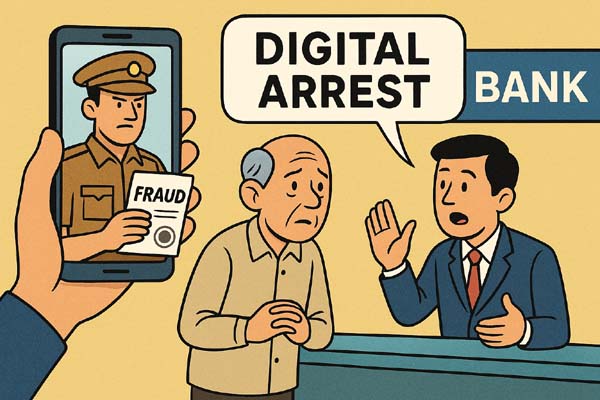
- HDFC Veraval team spots red flags during RTGS request
- Senior citizen saved after staff intervene, block fraud numbers
- Case highlights rising threat of fake ‘police’ video calls, arrest warrants in India
NE LAW & BUSINESS BUREAU
AHMEDABAD, NOV 28
An alert team at HDFC Bank’s Veraval branch prevented a senior citizen from losing ₹20 lakh to a cybercriminal gang using the notorious ‘Digital Arrest’ scam, a fast-spreading fraud technique in India.
The customer, appearing visibly anxious, approached the branch to execute a large RTGS transaction. Noticing his discomfort and the unusual payment pattern, a staff member discreetly probed further. Upon learning that the customer had received a video call from fraudsters posing as police officers, the staff immediately identified the signs of a digital arrest attempt.
The criminals had falsely claimed that the customer’s account was linked to money-laundering activities and demanded he transfer ₹20 lakh as a “verification amount,” promising it would be returned if he was found innocent. During the video call, they even appeared in police uniforms and displayed a fake arrest warrant to coerce him.
Realising the danger, the bank staff counselled the customer, stopped the transfer, and helped him block the fraud numbers, effectively saving him from a massive financial loss.
WHAT IS DIGITAL ARREST?
Digital arrest scams involve fraudsters impersonating police, tax officials, regulatory authorities or government officers. Victims are threatened with fabricated cases—ranging from tax evasion to financial misconduct—and are told to pay a ‘settlement fee’ to avoid arrest. Once the money is transferred, the scammers disappear.
HOW TO PROTECT YOURSELF
- Government agencies never ask for payments, passwords, or banking details.
- Do not panic—fraudsters deliberately create urgency.
- Never share passwords, OTPs, PINs, or KYC information.
- Verify an officer’s identity by independently contacting the relevant authority.
- Check for document errors; avoid suspicious links or calls.
- Report suspicious activity via:
- Chakshu Portal: sancharsaathi.gov.in
- Cybercrime Helpline: 1930
- National Cybercrime Portal: cybercrime.gov.in
Victims must immediately inform their bank to block cards, UPI, and net banking access to prevent further losses.