- Ancient Metals, Modern Science
- Interdisciplinary Minds Decode 5,000 Years of Indian Metallurgical Knowledge
- From Archaeological Artefacts to Living Traditions
- Conference Seeks to Take India’s Scientific Heritage Beyond Academia
NE EDUCATION BUREAU
GANDHINAGAR, JAN 7
The second day of the International Conference-cum-Workshop on the History, Science and Technology of Indian Civilisation at IIT Gandhinagar turned the spotlight on Indian metals and metallurgy, uniting archaeologists, scientists, historians, and traditional knowledge practitioners from India and across the world.
The week-long international gathering, which commenced on January 5, will continue till January 9, 2026, fostering dialogue that bridges ancient wisdom and contemporary scientific inquiry.
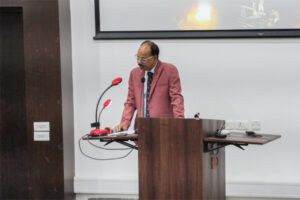
Underscoring the power of scientific analysis in decoding India’s past, Prof Alok Tripathi, Additional Director General, Archaeological Survey of India, said,
“India has an exceptionally rich cultural heritage, and scientific analysis enables researchers to go beyond physical examination to understand the composition, provenance, trade networks, and technological advancements associated with ancient objects. These approaches help us gain a deeper and more accurate understanding of our past.”
Stressing the need for wider public engagement, he added,
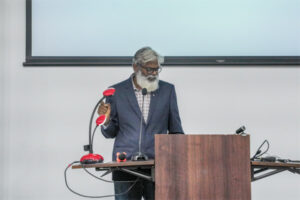
“Research should not remain confined to academic journals. Significant findings must reach society so that people can understand, value, and actively participate in preserving our heritage.”
He also noted that scientific techniques provide insights that traditional methods alone cannot fully reveal.
Highlighting the importance of interdisciplinary collaboration, Prof K Rajan of the Tamil Nadu State Department of Archaeology observed,
“The conference has brought together archaeologists, geochemists, and scientists from different disciplines on a single platform, enabling meaningful interaction and collaboration. Such interdisciplinary engagement is essential for advancing archaeological science in a more forward-looking and future-oriented manner.”
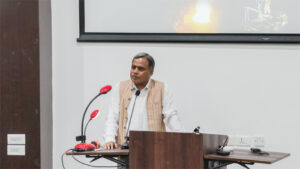
He emphasised that partnerships between archaeologists and scientists help decode not only metallurgy, but also emerging research areas such as ancient DNA, palaeobotany, and archaeogeology, offering a holistic understanding of past societies.
Reflecting on the depth of India’s metallurgical traditions, Dr V Selvakumar said,
“India has a very old and complex metallurgical tradition dating back more than 5,000 years, which forms an important part of the Indian knowledge system. This tradition has been nurtured by local communities over generations and continues to survive even today.”
He stressed that integrating scientific analysis with traditional knowledge systems is crucial for reconstructing India’s metallurgical history and for training the next generation of researchers.
Explaining the broader vision behind the conference series, Dr Alok Kumar Kanungo, Convener, stated,
“While civilizations worldwide have documented their scientific achievements, India’s tools, techniques, and craft technologies remain underexplored. HSS–IIT Gandhinagar’s conferences aim to address this gap, bringing together leading scholars, inspiring new researchers, and applying modern scientific methods to study metallurgy, textiles, and subsistence patterns.”
He added, “It is encouraging to see collaborative research flourish across borders, reflecting not only a vibrant India but also an increasingly inclusive and integrated one.”
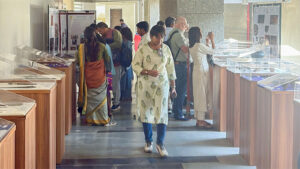
A major highlight of the day was a rare archaeological exhibition showcasing over 4,000-year-old metal artefacts, including anthropomorphics, iron tools, and ceremonial objects unearthed from 11 key archaeological sites across India.
The exhibition features finds from Gujarat (Prabhas Patan, Rojdi, Shikarpur), Tamil Nadu (Kilnamandi, Mayiladumparai, Sasthapuram, Thirumalapuram), Uttar Pradesh (Ganeshpura, Harinagar, Sakatpur Must), along with the latest discoveries from Lothal (2024–25). The exhibition will remain open to participants and visitors till January 9, 2026.
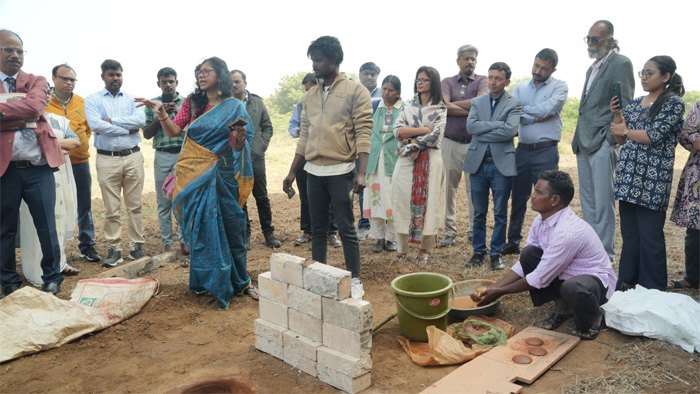
Adding a living dimension to the academic discourse, the day also featured a hands-on workshop, where Agaria and Kutia Kondh knowledge practitioners demonstrated traditional metal extraction techniques preserved through oral traditions. The session offered participants a rare, immersive glimpse into ancient metallurgical practices still alive today.
The conference is being organised in collaboration with the Anusandhan National Research Foundation, Archaeological Survey of India, Indira Gandhi Manav Sangrahalaya, Gujarat State Directorate of Archaeology and Museums, Gujarat Council on Science, Technology, and the French National Centre for Scientific Research.
Beyond scholarly exchange, the initiative continues to promote mentorship, student engagement, professional collaboration, and a renewed commitment to preserving and popularising India’s technological heritage.