- From Mandate to Moral Imperative: CSR emerges as a frontline tool against malnutrition
- Partnerships that Deliver: IDBI Bank and SAIL roll out nutrition programmes for children
- Milk as a Mission: NFN demonstrates scalable CSR models with cooperative strength
NE BUSINESS BUREAU
ANAND, JAN 9

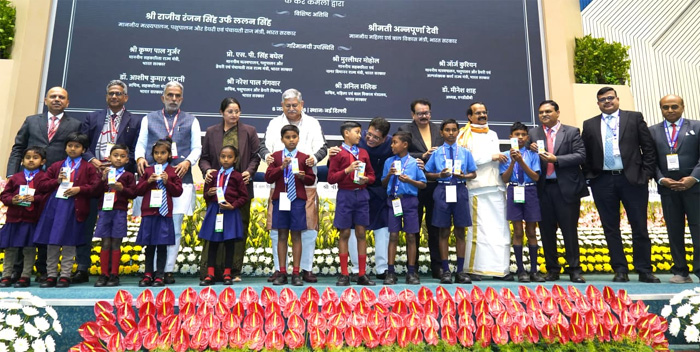
The National CSR Conclave of the NDDB Foundation for Nutrition (NFN) on “Role of Corporate Social Responsibility in Nutrition Security & Malnutrition Mitigation”, held on 6 January 2026 at Vigyan Bhawan, New Delhi, put Corporate Social Responsibility firmly in focus as a transformative force in India’s fight against malnutrition.
The conclave was inaugurated by Piyush Goyal, Rajiv Ranjan Singh (Lalan Singh) and Annpurna Devi, in the presence of Krishan Pal Gurjar, S. P. Singh Baghel, George Kurian, Ashish Kumar Bhutani, Naresh Pal Gangwar, Meenesh Shah and other senior policymakers and sector leaders.

Bringing together ministers, secretaries to the Government of India, leaders from corporates and PSUs, dairy cooperatives, development institutions and key stakeholders, the conclave served as a platform to deliberate on collaborative, CSR-led approaches to strengthen nutrition security and mitigate malnutrition across the country.
CSR Initiatives with Direct Community Impact
Reinforcing CSR as an action-oriented commitment, two flagship nutrition programmes were launched during the conclave.
The Shishu Sanjeevani Programme, supported under the CSR initiative of IDBI Bank, aims to support around 3,000 children at anganwadi centres in rural Nagpur through an energy-dense, fortified nutritional supplement developed by NDDB.
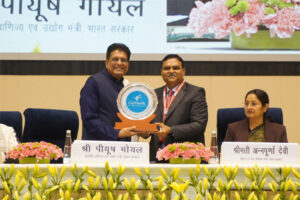
The third phase of the Giftmilk Programme, supported under the CSR initiative of SAIL–Bhilai Steel Plant, will benefit about 4,000 government school children in mining-affected areas of Chhattisgarh. The fortified flavoured milk, enriched with Vitamins A and D, will be supplied by the NDDB-managed Chhattisgarh Milk Federation. CSR partners supporting NFN’s nutrition initiatives were felicitated during the event.
CSR Beyond Compliance
Addressing the conclave, Piyush Goyal said, “CSR must go beyond statutory obligations and reflect India’s deep-rooted cultural ethos of giving back to society.” He highlighted the whole-of-government approach, noting the synergy of multiple ministries working together with NDDB to address malnutrition, and underscored that “investing in nutrition is an investment in India’s future,” aligned with the Sustainable Development Goals.
Rajiv Ranjan Singh underlined the pivotal role of the dairy sector in ensuring nutrition security, stating that “with a per capita milk availability of about 485 grams per day, milk remains a vital source of nutrition for children.” He noted that through NFN initiatives such as Giftmilk and Shishu Sanjeevani, “nutritional support is being extended to school and anganwadi children across the country.”
Annpurna Devi highlighted that “adequate nutrition is fundamental to building a strong and empowered India, with children at the centre of this vision,” and appreciated the Giftmilk Programme as “an effective model for delivering nutrition benefits at scale.”
Krishan Pal Gurjar, S. P. Singh Baghel and George Kurian underscored the importance of cooperatives, CSR and inter-ministerial collaboration in strengthening nutrition outcomes and advancing the Prime Minister’s vision of Sahkar se Samriddhi.
NFN: Scaling CSR for Nutrition Security
Welcoming the dignitaries, Meenesh Shah said that NFN was established during NDDB’s Golden Jubilee in 2015 to support nutrition for school children and vulnerable groups. He noted that “since 2016, NFN has distributed about 44 lakh litres of milk to over 1.5 lakh children in 900 government schools and anganwadis across 19 States and Union Territories,” adding that “the programme is more than just a glass of milk and symbolises a promise towards access to essential nutrition.”
The inaugural session was followed by two technical sessions focusing on public interventions in nutrition and corporate–cooperative collaboration for nutrition security, with participation from around 1,200 stakeholders, reaffirming CSR’s role as a catalyst for sustainable nutrition outcomes.