- From Bhajans at Dawn to Children’s Cheers at Dusk, the Salt March Reenactment Breathes Life into India’s Freedom Legacy
Veteran Walkers, NCC Cadets and Villagers Unite Along the 24-km Route, Echoing Mahatma Gandhi’s Call for Self-Reliance
Bharuch Leg Concludes Where Gandhiji Halted in 1930, Before the March Moves into Surat District
NE NEWS SERVICE
AHMEDABAD, jAN 12
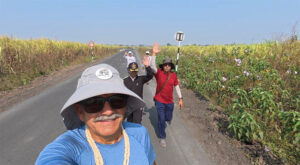
The historic reenactment of the Dandi March gathered emotional and patriotic momentum on Sunday as ten veteran walkers traversed 24 km from Ankaleshwar to Mangrol, taking the cumulative distance of the Dandi Path walk to 275 km. The day unfolded not merely as a physical journey, but as a living tribute to Mahatma Gandhi’s ideals of truth, sacrifice and self-reliance.
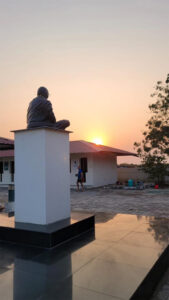
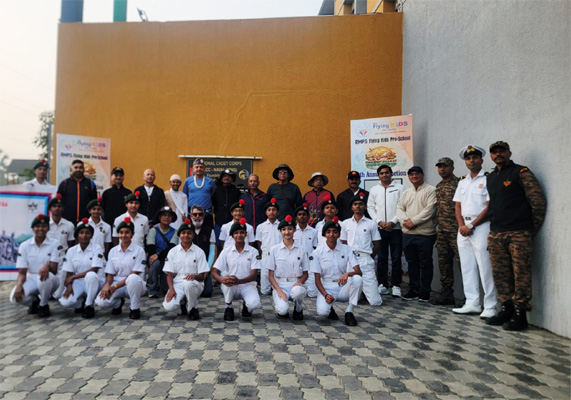
The walkers set out at 07:45 hrs from RMPS School, Ankaleshwar, amid an atmosphere charged with devotion and nationalism. Soul-stirring renditions of “Raghupati Raghav Raja Ram” and “Vaishnav Jan To”, followed by the National Anthem, set a distinctly Gandhian tone—solemn, resolute and deeply Indian.
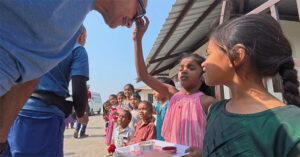
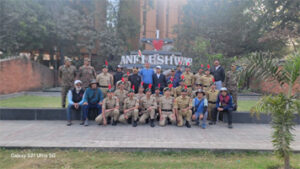
Adding youthful vigour to the march, Naval NCC cadets—both boys and girls—walked alongside the veterans for a considerable stretch, raising spirited slogans of “Bharat Mata ki Jai” and “Vande Mataram”. Their discipline and enthusiasm symbolised the seamless passing of Gandhian values from one generation to the next, energising the walkers at every step.
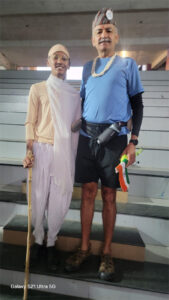
An unscheduled yet meaningful pause occurred when a passing car stopped on the highway. The occupant—a local reporter—was keen to learn about the walkers, the purpose of the march and its culmination. A veteran walker eloquently explained the significance of retracing the historic Salt March, turning a chance encounter into a moment of public awareness and reflection.
Throughout the route, the trustee and director of the host institution walked with the veterans, acting as a living guide to history. He led the group to the exact spot where Mahatma Gandhi had addressed the people on 27 March 1930, during the original Dandi March. Morning walkers and later more NCC cadets spontaneously joined in, engaging with the veterans and reinforcing the shared national purpose behind the journey.
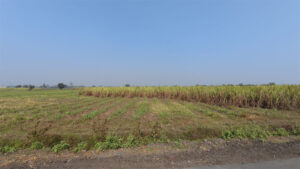
The landscape itself mirrored Gandhiji’s India. Bustling market stretches preparing colourful kites and manja for the festive season gave way to expansive sugarcane fields. Trucks loaded with freshly harvested cane, farmers at work, and the calm rhythm of rural life evoked scenes that Gandhiji himself would have witnessed nearly a century ago—unchanged in spirit, rooted in resilience.
Village children along the route welcomed the walkers with smiles and gestures of respect. These simple, spontaneous moments proved more rejuvenating than any halt, reaffirming that the Dandi Path has always been about people, not merely miles.
As the midday sun intensified and the tarmac grew warm, the walkers instinctively quickened their pace, reaching Mangrol Yatri Nivas at 13:30 hrs—the very place where Gandhiji had halted on 27 March 1930. A heartfelt reception by village children and the local sarpanch bhai made the arrival both memorable and moving.
The historical resonance of Mangrol lent profound depth to the day. During the original march, Gandhiji had urged people to reject economic exploitation by boycotting foreign cloth, alcohol and unjust taxes—especially the salt tax—and to embrace khadi as a way of life. Here, he had further called upon every household to make its own salt and commit fully to self-reliance, asserting that freedom would be woven through cotton yarn and courage.
The veterans stayed the night at the Yatri Nivas, carrying with them Gandhiji’s message and the quiet strength drawn from the day’s encounters—children, farmers, cadets and fellow travellers becoming inseparable threads in the march.
With this, the Bharuch district leg of the Dandi Path concluded. The following morning, the walkers were set to move towards Umrachi in Surat district, their steps steady, their resolve firm, and their feet—true to the spirit of the march—happy.