- Karuna Abhiyan showcases community power in saving birds and wildlife
- Students gain first-hand exposure to rescue, treatment and rehabilitation
- JCT Panjrapol emerges as a hub of empathy-driven conservation
- Education, ethics and sustainability converge beyond classrooms
NE EDUCATION BUREAU
GANDHINAGAR, JAN 18
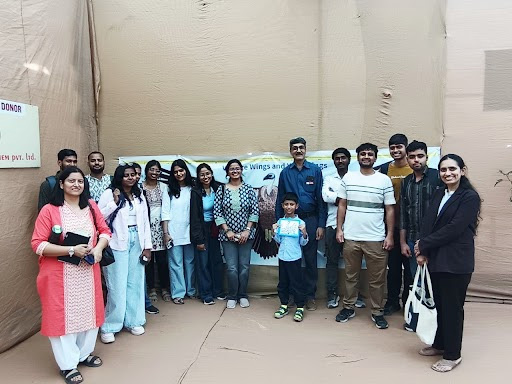
Students of IIT Gandhinagar stepped beyond textbooks to experience community-led biodiversity conservation under Karuna Abhiyan, during an immersive visit to Jivdaya Charitable Trust (JCT), Panjrapol, on Thursday. The visit, coordinated by the Kiran C Patel Centre for Sustainable Development (KPCSD), aimed to sensitise students to compassion, ethical responsibility and care for all living beings.
JCT, an animal welfare organisation operating since 2007, provides free medical treatment to stray animals and birds across Ahmedabad and surrounding regions. Over the years, it has rescued nearly 20 lakh animals and birds across a 200-km radius, emerging as a cornerstone of Gujarat’s grassroots conservation efforts.
Karuna Abhiyan: A Gujarat Model of Community Conservation
Karuna Abhiyan, led by the Forest Department of Gujarat, focuses on rescuing, treating and rehabilitating birds injured during Uttarayan, particularly due to hazardous glass-coated kite strings. Built on a unique framework of government support and citizen participation, the initiative brings together animal welfare organisations, volunteers, veterinary professionals and communities.
The programme has evolved into a nationally recognised model for biodiversity conservation, blending public awareness, capacity building and on-ground rescue infrastructure with long-term sustainability goals.
Learning Through Experience at JCT Panjrapol
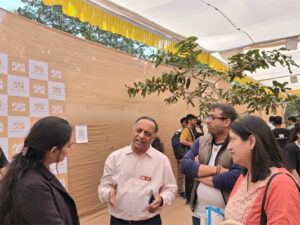
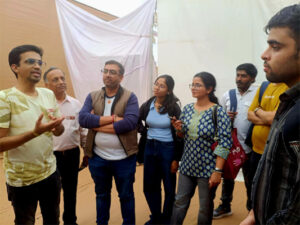
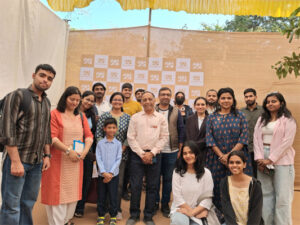
Nearly 15 students and staff members participated in the visit, engaging closely with JCT’s facilities, rescue operations and volunteer teams. Known for its long-standing commitment to sheltering abandoned, injured and aged animals, JCT offered students a rare, experiential learning opportunity rooted in service and empathy.
Students observed bird rescue and rehabilitation, hygiene and welfare practices, and community awareness initiatives. During the peak rescue season, JCT mobilises more than 60 doctors, 150 volunteers and 100 staff members, deploying systematic and technology-supported efforts to release affected migratory birds back into the wild.
“The team guiding us was highly disciplined and experienced. They patiently engaged with every group, from young children to elderly participants. The awareness sessions were thoughtfully designed, making complex ideas easy to understand,” students noted during the interaction.
Voices from the Field: Responsibility Beyond Celebration
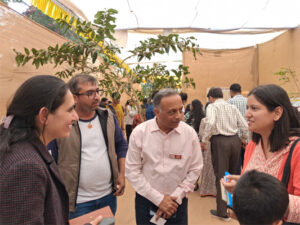
Pandey highlighted the uniqueness of the initiative, saying, “Karuna Abhiyan is one of the best examples worldwide of spontaneous community participation for saving birds and biodiversity conservation. It brings together volunteers, doctors, students, government agencies and private organisations. Government support and deep community participation play a vital role in this programme, which began more than a decade ago.”
Shastri underlined the ethical dimension of the festival, stating, “Uttarayan is a festival of joy, but it also comes with a collective responsibility towards nature. Each member of the community can contribute to bird conservation. The impact of kite strings extends far beyond Uttarayan, which is why discarded strings must be removed from terraces, trees and public spaces.”
He added, “There is an urgent need to enhance community awareness, especially around wetlands and ponds. Awareness and education are key to protecting birds and preserving fragile ecosystems for the future.”
Shah reflected on education and values, saying, “Our education is also about building value for society. The knowledge we gain should translate into real goodness—solving societal problems, serving communities and contributing meaningfully to people and the planet.” He stressed that values of coexistence between humans, wildlife and biodiversity must be nurtured early to restore disturbed natural harmony.
Vinay Shah echoed this sentiment, noting, “Conservation does not have to begin far away—it can start right on the institutional campus. If each of you takes responsibility for protecting biodiversity at IIT Gandhinagar through small, consistent actions, you will create a powerful example.” He added that JCT is keen to explore collaborations with IIT Gandhinagar students and faculty for campus- and community-based initiatives.
Aligning Conservation with Global Goals
Karuna Abhiyan and JCT’s work align strongly with multiple Sustainable Development Goals (SDGs). The initiative contributes to SDG 15 (Life on Land) through wildlife rescue, SDG 3 (Good Health and Well-being) via emergency veterinary care, and SDG 4 (Quality Education) through training and awareness programmes. It also supports SDG 11, SDG 12, SDG 13 and SDG 17, reflecting an integrated approach to sustainable development.
As a follow-up, students will participate in a poster competition, encouraging reflection on their learning and the role of citizen participation in conservation. The initiative aims to deepen ethical responsibility, empathy for wildlife and active environmental citizenship.