- Apollo Hospitals’ International Health Dialogue 2026 positions patient safety as a leadership mandate, not a checklist
- Global clinicians, policymakers and accreditors converge in Hyderabad as India’s care-at-scale experience guides global thinking
- Equity, governance and disciplined digital transformation emerge as the three pillars of modern patient safety
- From zero-harm ambition to AI-enabled decision support, Day 1 pushes safety from intent to execution
- India’s healthcare systems increasingly inform how the world designs trust, accountability and outcomes
NE HEALTH BUREAU
HYDERABAD, JAN 30
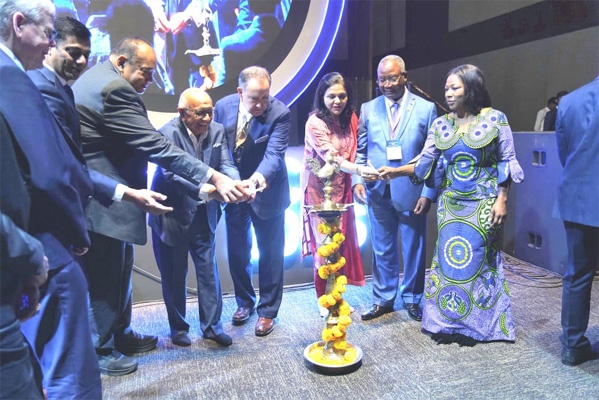
India stepped into a defining global leadership role in patient safety on Day 1 of the Apollo Hospitals International Health Dialogue (IHD) 2026, as Hyderabad hosted clinicians, health system leaders, accreditation experts and policymakers from across the world under a shared theme: Global Voices. One Vision.
Placing patient safety firmly where it belongs—at the centre of leadership, governance and equity—the opening day underscored a powerful global shift. India’s lived experience of delivering healthcare at scale, while progressively strengthening standards and accountability, is no longer a domestic case study—it is fast becoming a reference point for the world.
Across sessions, the message was unambiguous: patient safety is not an operational afterthought. It is a strategic, system-wide responsibility, shaped by equity and enabled by responsible digital transformation.
Sharing Learning Beyond Silos
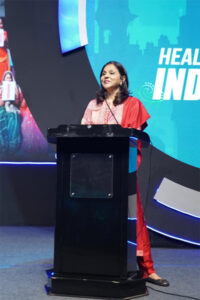
Opening the conference, Dr Sangita Reddy, Joint Managing Director, Apollo Hospitals Group, reflected on the founding philosophy of IHD—as a platform created to ensure that learning does not remain trapped within individual systems.
“So much innovation is happening within our hospitals, within our systems. We are learning every day. But why is this knowledge staying within our own ecosystem? Why are we not sharing it more openly?”
She reiterated that the intent has always been to “take what we have learned and make it useful for others.”
Reflecting IHD’s growing global relevance, Dr Reddy noted that IHD 2026 received over 5,000 registrations, 300+ paper submissions, and 120+ award entries from 75+ institutions worldwide, signalling a widening international trust in India-led dialogue on healthcare quality and safety.
Why Equity Is the First Safety Design Principle
Setting the tone for real-world impact, Dr Jayesh Ranjan, Special Chief Secretary for Industries & Commerce and Information Technology, Government of Telangana, highlighted why patient safety frameworks must begin with equity.
“When we talk about sharing learning and improving systems, we have to start with the truth that patients are not homogeneous. Different patients live in different worlds, and safety means different things in each.”
He stressed that equity forces better design: “An equity lens forces a design lens. If we want patient safety to hold up in the real world, we must design for those who are most vulnerable, and we must plan for continuity, access, and how people actually behave.”
On digital inclusion, he offered a critical insight:
“The digital divide is not only infrastructure. Often, the mindset divide is bigger.”
Safety as an Organisational, Not Departmental, Responsibility
A recurring theme across the day was shared ownership. In the opening plenary, Dr Madhu Sasidhar, President and CEO, Hospitals Division, Apollo Hospitals Enterprise Limited, emphasised that safety outcomes depend on ecosystem-wide alignment.
“Patient safety cannot be solved by one stakeholder alone. It requires regulators, governments, accreditors, providers, and technology firms to work as one.”
He added: “Patient safety is not a departmental responsibility. It is in fact an organisational leadership responsibility.”
From Reactive Care to Preventive Systems
Speakers repeatedly underlined the urgency of moving away from reactive models of care. Addressing the pressure on health systems globally, Dr Sangita Reddy observed:
“Healthcare demand is rising. We cannot solve exponential problems with linear solutions.”
Discussions connected this reality to sharper prevention strategies, disciplined digital deployment, and outcome measurement that moves beyond compliance to impact.
Global Quality Lens: Reducing ‘Safety Clutter’
Bringing an international perspective, Dr Carsten Engel, CEO, International Society for Quality in Health Care (ISQua), cautioned against mistaking activity for improvement.
“Patient safety has been on the agenda for decades, but we still have to say we are not there yet.”
He warned: “We risk creating safety clutter, procedures and activities done in the name of safety that do not improve safety.”
Calling for systems thinking, he urged leaders to reframe accountability: “Don’t ask why people didn’t do what they should have done. Ask why it made sense for them to do what they did.”
Zero Harm as the Only Acceptable Target
Reinforcing the need for execution over intent, Dr Atul Mohan Kochhar, CEO, National Accreditation Board for Hospitals & Healthcare Providers (NABH), framed patient safety as a multidimensional imperative.
“Patient safety is not only a technical issue. It is a moral, social, and economic imperative.”
He added pointedly: “Policies alone do not improve safety. Implementation efficiency does.”
On ambition, his message was unequivocal:
“We must be ambitious when it comes to patient safety. Zero harm is the only number that can be accepted for patient safety risk.”
AI, Accountability and Safer Decisions
Underscoring its implementation-first approach, Apollo Hospitals signed a Memorandum of Understanding with Roche Diagnostics India on Day 1 to explore the integration of advanced artificial intelligence into clinical decision-making.
The collaboration will focus on translating AI-enabled insights into clinician-friendly decision support, strengthening consistency in judgement, enabling earlier risk identification, and delivering safer, more standardised care at scale.
Culture Before Technology
Speaking on culture-led transformation, Dr Rohini Sridhar, Chief of Medical Services, Apollo Hospitals, stressed that systems improve only when people move together.
“Unless clinicians walk with you, zero harm cannot be achieved. If one unit experiences harm, every unit must learn immediately.”
She added: “Technology accelerates learning, but culture determines action.”
Startups, Scale and Safety Innovation
Later in the day, IHD 2026 hosted a dedicated spotlight session for digital health startups, with curated pitches to investors focused on real clinical and operational gaps—from safer workflows and decision support to early risk identification and scalable patient engagement.
The session reinforced IHD’s emphasis on translating innovation into validated, implementable tools that strengthen safety, outcomes, and trust.
What’s Next
IHD 2026 continues on January 31 in Hyderabad, with further sessions focused on patient safety, digital transformation, healthcare operations, and clinical learning—deepening India’s role in shaping the future of safe, equitable, and trusted healthcare worldwide.