

- Industry leaders see Union Budget 2026 reinforcing India’s long-term growth architecture
- Strong thrust on skills, education-to-employment linkage and domestic manufacturing welcomed
- Cooperative dairy, clean energy and textiles emerge as big gainers
- Digital infrastructure and data centres get long-term investment visibility
- Policy clarity seen accelerating inclusive, sustainable and innovation-led growth
NE BUSINESS BUREAU
AHMEDABAD, FEB 2
The Union Budget 2026 has drawn a largely positive response from industry leaders, who view it as a multi-sector blueprint for workforce readiness, domestic manufacturing and inclusive rural growth. With education, renewable energy, textiles, digital infrastructure and the cooperative dairy sector identified as key pillars, stakeholders believe the Budget reinforces India’s long-term economic strategy aligned with the vision of Viksit Bharat 2047.
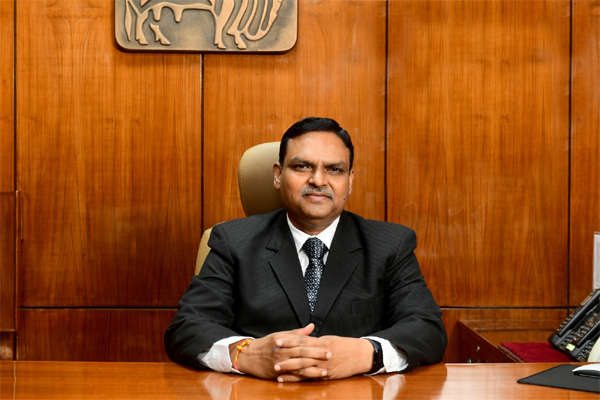
Welcoming the strong focus on the cooperative dairy and animal husbandry sector, Dr Meenesh Shah, Chairman, National Dairy Development Board (NDDB), said the Budget delivers both income and tax relief for farmer-led institutions.
“The initiatives would enhance farmers’ incomes, promote entrepreneurship in animal husbandry and dairying and strengthen cooperatives, a key step toward realising the vision of Viksit Bharat 2047. Tax relief for cooperatives was another highlight. The extension of full deduction benefits to cattle feed, would significantly reduce their tax burden, ensuring better returns for farmer members,” Dr Shah said.
Highlighting opportunities emerging from the government’s push on digital infrastructure, Rushabh Dedhia, Managing Director, JIKA EPC Services Limited, said the Budget sends a decisive signal on India’s global ambitions in data centre development.
“India’s data centre capacity may rise five-fold to 8 GW by 2030, with the Budget sending a strong signal on India’s intent to emerge as a global hub for data centre infrastructure. The proposed tax holiday till 2047 for foreign cloud service providers using data centres based in India significantly improves long-term investment visibility and positions the country as a competitive destination for hyperscale capacity, which is expected to accelerate investment momentum and strengthen India’s position in the Asia-Pacific. He added that the creation of more data centres is expected to spur allied investments in power, including renewables, real estate and optical fibre infrastructure.”

On the manufacturing and sustainability front, Ronak Chiripal, Promoter, Chiripal Group, said the Budget adopts a practical approach to strengthening India’s clean energy manufacturing ecosystem.
“The Union Budget has taken a pragmatic step towards strengthening India’s clean energy manufacturing ecosystem, with targeted customs duty exemptions that support energy transition and security.”
Elaborating further, he added: “Extending the basic customs duty exemption to capital goods used in Lithium-ion cells for battery energy storage systems will help accelerate domestic capacity creation in grid-scale storage while exemptions on key inputs such as sodium antimonate support localisation in the solar value chain.”
Turning to the textile sector, Chiripal said the Budget finally provides long-awaited policy direction for one of India’s most labour-intensive industries.
“The Union Budget 2026 provides a clear policy roadmap for the labour-intensive textile sector, with a welcome focus on fibre self-reliance, cluster modernisation and sustainability. The proposed integrated programme covering natural and man-made fibres, technology upgradation in traditional clusters, targeted support for handlooms and handicrafts, and the Tex-Eco initiative addresses long-standing structural gaps and also aids in improving India’s export competitiveness.”

In the education sector, industry and academia alike welcomed the emphasis on employability-linked learning outcomes. Rishabh Jain, President, Swarrnim Startup and Innovation University, said the proposals strengthen the education-to-employment continuum.
“The Union Budget 2026 proposes several important measures to strengthen the education-to-employment pipeline by recognising services and skills as core drivers of India’s growth story. The proposal to set up a high-powered ‘Education to Employment and Enterprise’ Standing Committee, noting that it reflects a structured approach to aligning curricula with industry needs, particularly in emerging areas such as AI, services exports and technology-led jobs.”
Overall, industry leaders believe Budget 2026 lays the groundwork for sustainable growth, skill creation and cooperative-led development, while improving India’s competitiveness across manufacturing, services and emerging technology sectors.