

R MANICKAVASAGAM
A novel that dares to humanise history beyond borders
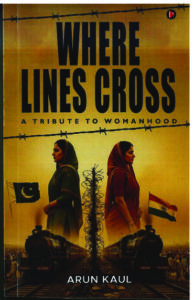
Where Lines Cross by Wg Commander Arun Kaul (Retd) is not merely a work of historical fiction—it is a deeply felt meditation on womanhood, displacement and the invisible scars of Partition that continue to shape generations long after the lines were drawn on maps.
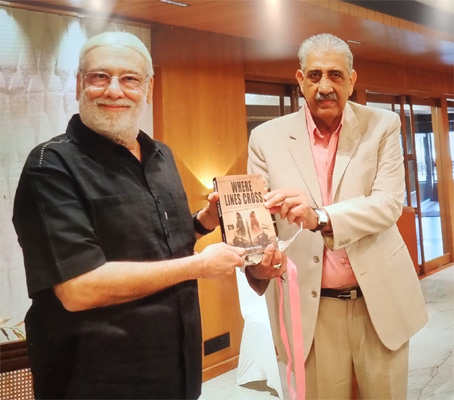
Formally launched by Sanjay Lalbhai, Chairman & MD of Arvind Ltd, the novel carries the quiet authority of lived memory, unfolding the intertwined destinies of two families across India, Pakistan and Kashmir, bound together by loss, resilience and an unyielding search for belonging.
Partition seen through the eyes of women, not statistics
What truly distinguishes Where Lines Cross is its empathetic gaze on women, whose lives absorb the harshest shocks of history while remaining largely unacknowledged. Mothers, daughters and silent survivors emerge as the novel’s moral anchors, enduring upheaval with dignity rather than despair.

The trauma of the 1947 Partition, and the prolonged anguish of Kashmiri Pandits, are rendered not as political abstractions but as intimate human experiences, lingering in memory, shaping identities and influencing choices long after the violence subsides.
A mother’s memories that shaped a soldier—and a storyteller
At the emotional core of the book lies the profound influence of the author’s mother, whose first-hand recollections of Partition formed the bedrock of Arun Kaul’s imagination. As a young boy, he grew up listening to her accounts of displacement, loss, courage and survival, stories that left an indelible imprint on his values.
Those narratives, steeped in pain yet suffused with grace, not only moulded him into a Defence veteran committed to service and sacrifice, but later found literary expression in his writing. Where Lines Cross can thus be read as both a novel and a tribute—an attempt to preserve a mother’s memories and honour a generation that endured history’s cruellest rupture with quiet fortitude.
Author’s inspiration: memory, belonging and lived empathy
Responding to a query on what inspired him to write on Partition and the suffering of Kashmiri Pandits, Arun Kaul explained that the novel emerged from deeply personal memory, shaped by family narratives and the inherited pain of exile.
He noted that the story was his way of giving voice to those whose grief remained unspoken, especially women who bore the consequences of Partition without ever being recognised as its primary victims.
A measured voice on contemporary political questions
When asked whether Pakistan-occupied Kashmir would be annexed with India, the author maintained a statesmanlike restraint, observing that such matters rest with the administration, and declining to offer personal views—reinforcing that his book seeks understanding and healing, not political commentary.
From the cockpit to corporate leadership—and now literary depth
After a distinguished career in the Indian Air Force, Arun Kaul transitioned into the corporate world with Arvind Mills, serving as Group Head – Human Resources. Where Lines Cross is his second book, following his first publication in 2014, and reflects a writer who brings discipline, empathy and reflective maturity to his craft.
Why Where Lines Cross deserves a place on your bookshelf
Published by NotionPress and spanning 343 pages, the novel is available across Amazon, Flipkart and leading bookstalls. It speaks equally to young readers discovering history through fiction and older generations revisiting memories they believed time had softened.
At its heart, Where Lines Cross is a tribute to womanhood, to mothers who remember so their children may understand, and to stories that cross borders long after maps are redrawn. It affirms that while nations may be divided by lines, human memory—and love—inevitably transcends them.