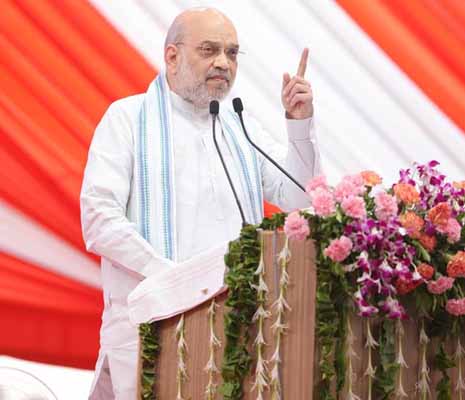
- Historic Gandhinagar summit to script next-gen reforms in PACS, dairy, banking and digital transformation
- 2 lakh new cooperative societies, world’s largest grain storage plan to empower farmers and stabilise rural markets
- NCEL, NCOL and BBSSL to drive exports, organic farming and seed sovereignty under unified national vision
- Computerisation, legal reforms and cooperative federalism to unlock grassroots prosperity and rural self-reliance
NE BUSINESS BUREAU
GANDHINAGAR, FEB 16
Inspired by Prime Minister Narendra Modi’s transformative vision of “Sahkar se Samriddhi”, Union Home and Cooperation Minister Amit Shah will chair a landmark ‘Manthan’ Meeting of Cooperation Ministers of States and Union Territories at Mahatma Mandir in Gandhinagar on February 17, in a decisive push to reposition India’s cooperative sector as a powerful engine of rural prosperity, economic self-reliance and grassroots empowerment.
The high-level summit, bringing together Cooperation Ministers and senior bureaucrats from across States and Union Territories, aims to accelerate structural reforms and chart a coordinated national roadmap to modernise cooperative institutions and maximise their economic impact.
Mega Push for 2 Lakh New PACS, Dairy and Fisheries Cooperatives
A central focus of the Manthan meeting will be the ambitious rollout of 2 lakh new Multi-Purpose Primary Agricultural Credit Societies (PACS) along with expansion of dairy and fisheries cooperative societies, designed to provide fresh momentum to India’s rural economy.
These cooperatives are expected to significantly enhance farmers’ access to affordable credit, strengthen supply chains, improve incomes and expand rural employment opportunities.
Simultaneously, discussions will examine the rollout of the world’s largest grain storage plan, which will create a nationwide network of modern cooperative warehouses. This initiative will improve storage infrastructure, ensure price stability and enable farmers to access better markets, thereby enhancing income security.
National Cooperative Giants to Drive Exports, Organics and Seed Sovereignty
The Manthan deliberations will also review the progress and strategic expansion of newly formed national cooperative institutions, including:
- National Cooperative Exports Limited (NCEL)
- National Cooperative Organics Limited (NCOL)
- Bharatiya Beej Sahkari Samiti Limited (BBSSL)
These national-level bodies are designed to empower cooperatives in exports, promote organic agriculture, and strengthen quality seed supply chains, enabling India’s farmers to compete globally while enhancing sustainability and productivity.
Amul, NDDB Collaboration to Expand Dairy Economy and Sustainability
The meeting will also explore strategies to strengthen India’s globally renowned dairy cooperative ecosystem through new partnerships with Amul and the National Dairy Development Board (NDDB).
Key priorities include:
- Formation of new dairy cooperative societies
- Enhancing viability of cooperative sugar mills
- Promoting circular economy and sustainability in dairy production
- Boosting pulses and maize production through cooperative frameworks
These initiatives are expected to reinforce India’s position as the world’s largest dairy producer while ensuring sustainable growth.
Digitisation, Legal Reforms and Cooperative Banking Revamp on Fast Track
A major reform thrust will focus on digitisation and modernisation of cooperative institutions nationwide.
Critical areas of discussion include:
- Computerisation of PACS and Registrar of Cooperative Societies (RCS) offices
- Integration with the National Cooperative Database
- Strengthening Shared Service Entities (SSE) and umbrella cooperative structures
- Legal reforms aligned with the 97th Constitutional Amendment
- Resolution of operational challenges faced by cooperative banks
These reforms aim to enhance transparency, operational efficiency and financial stability across cooperative institutions.
Cooperative Federalism to Unlock Rural Prosperity and Employment
The Manthan Meeting is expected to foster deeper Centre–State coordination, enabling States to share best practices and accelerate cooperative reforms.
Under Prime Minister Modi’s “Sahkar se Samriddhi” framework, the cooperative sector is being repositioned as a key pillar of India’s economic transformation—empowering farmers, strengthening rural livelihoods, generating employment and accelerating grassroots development.
With comprehensive reforms spanning digitisation, infrastructure, legal modernisation and national cooperative expansion, the Gandhinagar Manthan is poised to mark a historic turning point in India’s cooperative movement—transforming cooperatives into modern, transparent and globally competitive economic institutions.