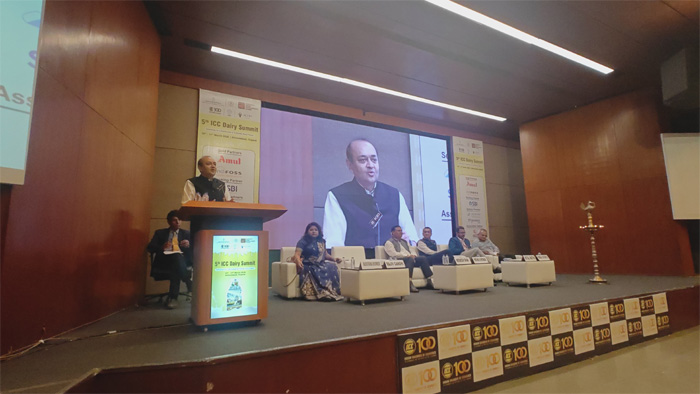
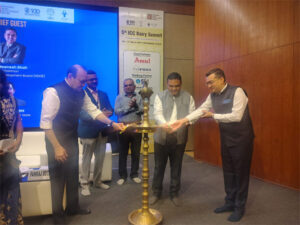
- 5th ICC Dairy Summit in Ahmedabad brings policymakers, bankers, scientists and industry leaders onto one platform
- Theme “Innovating for a Sustainable & Profitable Dairy Future” focuses on productivity, digital transformation and value addition
- Experts stress animal health, climate-resilient dairy practices and modern infrastructure as pillars of growth
- Cooperative model and farmer-centric policies highlighted as backbone of India’s dairy success story
- Innovation exhibition showcases smart dairy technologies, genetics, cold-chain systems and next-generation processing
NE BUSINESS BUREAU
AHMEDABAD, MAR 10
India’s dairy sector — the world’s largest milk producer and a lifeline for millions of rural households — is now preparing for its next big transformation powered by technology, sustainability and value addition.
This vision took centre stage at the 5th ICC Dairy Summit 2026, organised by the Indian Chamber of Commerce at the Ahmedabad Management Association on March 10–11. The summit, themed “Innovating for a Sustainable & Profitable Dairy Future,” brought together policymakers, financial institutions, scientists, cooperatives and industry leaders to chart a roadmap for the sector’s next growth phase.
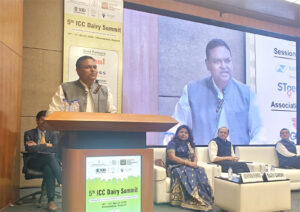
Delivering the welcome address, Pathik S Patwari, Chairman, ICC Gujarat State Council, highlighted the dairy sector’s role as a powerful engine of rural prosperity.
“India’s dairy sector has emerged as a powerful driver of rural prosperity and inclusive growth. As the world’s largest milk producer, the sector contributes significantly to agricultural GDP and provides stable income to millions of small and marginal farmers.”
Patwari noted that holding the summit in Gujarat carried both historical and strategic significance.
“Hosting the summit in Gujarat — birthplace of the White Revolution and home to the globally renowned cooperative movement led by the Gujarat Cooperative Milk Marketing Federation (Amul) — is both symbolic and strategic, offering an ideal platform to discuss innovations and collaborative opportunities for the sector’s next phase of growth.”
Finance and Credit as Growth Catalysts
Financial institutions highlighted the need for stronger credit ecosystems to modernise dairy infrastructure.
Atul Rathi, General Manager, State Bank of India, underscored the importance of accessible financing.
“Financial inclusion and access to affordable credit are essential for strengthening dairy infrastructure, encouraging entrepreneurship, and enabling farmers and dairy enterprises to invest in modern technologies and value-added processing.”
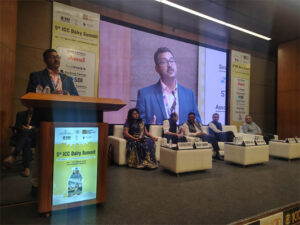
Strengthening Animal Health for Higher Productivity
Industry leaders stressed that improving animal health is key to raising milk productivity and ensuring sustainable growth.
Rajiv Gandhi, Managing Director and CEO of Hester Biosciences Ltd, pointed out that disease prevention and scientific livestock management are crucial.
“Strengthening animal health through disease prevention, advanced veterinary solutions, vaccination, and scientific herd management is essential for improving productivity and building a resilient, high-yielding livestock ecosystem.”
Global experts echo similar views, noting that livestock health management and genetics are critical for boosting milk yields and improving farm incomes across developing economies.
Government Initiatives to Boost Dairy Sustainability
From the government’s perspective, Falguni S Thakar, Director, Directorate of Animal Husbandry, Government of Gujarat, highlighted the state’s efforts to improve veterinary services and breed quality.
“Scientific breeding, balanced nutrition and farmer training are essential to enhance productivity and ensure long-term sustainability in dairy farming.”
She noted that expanding veterinary infrastructure and strengthening animal healthcare services remain key priorities for the state government.
Cooperatives Remain the Backbone
Reinforcing the strength of India’s cooperative dairy model, M P Pandya, Registrar of Co-operative Societies, Government of Gujarat, emphasised the role of cooperative institutions in supporting farmers.
“Cooperative institutions continue to be the backbone of the dairy ecosystem by ensuring transparent procurement systems, fair pricing for farmers and robust supply chains that connect rural producers to national and global markets.”
The cooperative model pioneered in Gujarat through organisations like Amul is widely regarded as one of the most successful rural development frameworks in the world.
Digital Transformation and Future Roadmap
Offering strategic insights into the sector’s future, Meenesh Shah, Chairman of the National Dairy Development Board (NDDB) outlined the priorities for the coming decade.
“The sector must focus on productivity enhancement, digital transformation, climate-resilient dairy practices and value-added products to strengthen India’s competitiveness in the global dairy market while ensuring higher incomes for farmers.”
Experts at the summit also highlighted how technologies such as data-driven herd management, automated milking systems, AI-based livestock monitoring and smart cold chains are beginning to reshape dairy farming globally.
Innovation Showcase
A major highlight of the summit was an exhibition showcasing innovations across the dairy value chain, including:
- smart dairy farming technologies
- genetics and breeding innovations
- advanced processing solutions
- cold-chain logistics systems
- digital platforms for dairy management
The exhibition demonstrated how technology, collaboration and sustainable practices can transform India’s dairy ecosystem into a globally competitive sector.
The ICC Dairy Summit 2026 aims to foster partnerships between government bodies, cooperatives, financial institutions and industry players — with the ultimate goal of building a technology-driven, climate-resilient and farmer-centric dairy economy.