NE NEWS SERVICE
CHENNAI, MAY 1
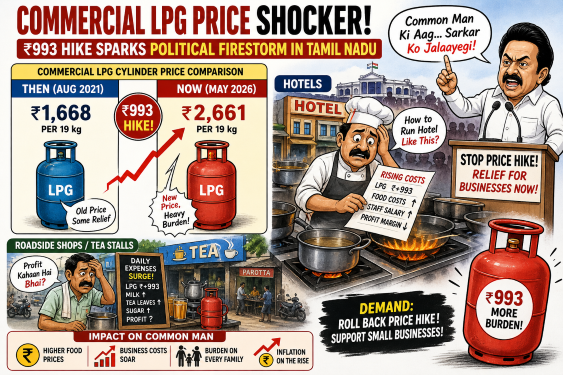
A steep ₹993 per 19-kg commercial LPG cylinder hike, effective May 1, has triggered a sharp political backlash in Tamil Nadu, with Chief Minister M K Stalin urging the Centre to immediately roll back the price increase, calling it “unjust and burdensome” for businesses and consumers.
- Stalin demands immediate rollback as commercial gas rates hit record spike amid global energy tensions
- Centre accused of “post-poll burden shift” as opposition parties intensify attack on fuel pricing policy
- TVK slams “anti-people economics”, AIADMK flags impact on MSMEs and small traders
- Third straight monthly hike fuels inflation concerns across hospitality and retail sectors
The increase—reportedly the third consecutive monthly revision—comes amid rising global energy volatility linked to tensions in West Asia, intensifying concerns over inflationary pressure on the commercial sector.
“BURDENING PEOPLE AFTER POLLS” – STALIN ATTACKS CENTRE
In a strong statement on social media platform X, Stalin alleged that the price hike was politically timed.
“When global crude oil prices fell, the benefits were not passed on to the people,” he said.
He further added: “The BJP-led Union Government is using the West Asia war crisis as an excuse to raise prices without regard for public welfare.”
Calling for urgent relief, the DMK leader demanded immediate intervention to protect livelihoods and business sustainability across Tamil Nadu.
OPPOSITION UNITY BUILDS PRESSURE
The DMK has intensified its criticism, framing the hike as part of a broader inflationary burden on households and enterprises.
The TVK reacted strongly, stating that repeated fuel price increases reflect “anti-people economic policies” and warned that rising input costs would severely impact small traders and service providers across the state.
Meanwhile, the AIADMK flagged concerns over the cascading effect on micro, small and medium enterprises (MSMEs), particularly in the hospitality and catering sectors, where LPG is a core operational input.
INFLATION PRESSURE MOUNTS
The latest revision has reignited debate over fuel pricing transparency and subsidy mechanisms, with industry observers warning of cost escalation across food services, hotels, and manufacturing units.
Commercial LPG, widely used in restaurants and small businesses, is seen as a key inflation driver when prices surge sharply in short intervals.
POLICY DEBATE INTENSIFIES
With global energy markets remaining volatile, the political discourse has shifted toward pricing fairness versus fiscal constraints, as opposition parties demand a more consumer-protective approach.
The Centre, however, has attributed the revision to international crude movements and supply-side pressures linked to geopolitical instability.