NE BUSINESS BUREAU
NEW DELHI, MAY 12
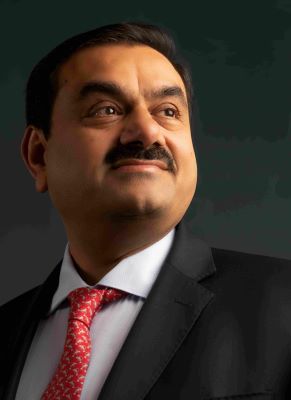
In a powerful and sweeping vision for India’s digital future, Gautam Adani on Tuesday declared that the country’s Artificial Intelligence revolution must not remain confined to elite corporate boardrooms but should become a transformative force for workers, farmers, nurses, technicians and small businesses across Bharat.
Gautam Adani Says AI Should Create Opportunity, Not Eliminate Workers
“A country can limit its own future by accepting someone else’s assumptions as truth.”
Speaking at the CII Annual Business Summit 2026, Adani called for an Indian AI model focused on empowerment,… pic.twitter.com/3KnF8dUTE9
— PIHU ARYA (@Pihushweta1) May 11, 2026
Addressing the prestigious Confederation of Indian Industry Annual Business Summit 2026 in New Delhi, the Adani Group Chairman Gautam Adani delivered a strong message against the growing global narrative that AI is primarily a tool for replacing human labour.
- Gautam Adani says India’s AI revolution must empower workers, farmers, nurses and small businesses
- Adani warns against AI becoming a tool for job elimination and corporate concentration
- Calls for sovereign AI infrastructure built on Indian soil with energy, data centres and compute capacity
- Compares AI opportunity to India’s transformational UPI revolution that democratised economic participation
- Adani Group reiterates massive $100 billion investment push across clean energy, AI infrastructure and data ecosystems
Instead, he argued, India must shape a distinctly Indian AI model focused on productivity expansion, employment generation and democratisation of opportunity.
“India must build AI as a force that expands productivity, creates jobs, empowers small enterprises and gives Indians the tools to compete globally,” Adani asserted.
‘AI Should Empower Bharat, Not Eliminate Jobs’
At a time when fears over automation and mass job displacement are intensifying globally, Adani called upon India to reject the assumption that artificial intelligence inevitably destroys livelihoods.
The billionaire industrialist stressed that the country’s AI strategy must be deeply rooted in inclusion, skilling and grassroots accessibility rather than merely technological dominance.
Political and industry observers described Adani’s speech as one of the clearest articulations yet of a “Bharat-first AI philosophy” — positioning technology not as a replacement for people, but as an enabler of human capability.
He emphasised that the benefits of AI must reach beyond metropolitan corporate ecosystems and become accessible to ordinary Indians working across agriculture, healthcare, logistics, education and small-scale enterprise sectors.
UPI Model Should Guide India’s AI Future
Drawing comparisons with India’s globally celebrated Unified Payments Interface revolution, Adani argued that the country’s greatest technological successes have emerged when innovation democratised participation and created trust at scale.
“UPI did not simply move money. It made small businesses visible, expanded trust and unlocked entirely new economic ecosystems,” he said.
According to Adani, AI now offers India a similar historic opportunity — not only to create new industries and economic ecosystems, but also to redefine how ordinary citizens participate in the digital economy.
Warning Over Digital Dependence and Data Sovereignty
In one of the most geopolitically significant sections of his address, Adani warned against India becoming dependent on externally controlled digital infrastructure.
“Semiconductors have become instruments of statecraft. Data is being treated as a national resource. Clouds are being weaponised,” he cautioned.
“For too long, digital worlds have been treated as places without a map. But in this fractured age, we must realise that data has a home and intelligence has a geography,” he added.
Adani strongly advocated the creation of sovereign AI infrastructure fully built, powered and controlled within India.
“India must not rent the infrastructure of its intelligence future. India must build it, power it and own it on its own soil,” he declared to loud applause.
$100 Billion Bet on India’s Intelligence Economy
Highlighting the enormous scale of investment required for the AI age, Adani reiterated the group’s previously announced $100 billion investment commitment spanning clean energy, digital infrastructure, data centres and next-generation compute ecosystems.
The Adani Group is also working alongside global technology giants including Google and Microsoft to help establish sovereign compute and AI infrastructure capabilities within India.
Adani stressed that AI leadership would not be built through algorithms alone, but through millions of workers supporting the physical backbone of the digital economy.
“The intelligence age cannot be built only through chips and servers. It will also be built by technicians, electricians, operators, cooling engineers and countless skilled workers,” he said.
‘The Future Does Not Arrive. It Is Built.’
Reflecting emotionally on his own entrepreneurial journey, Adani said he had spent decades building in regions where many once saw no possibility of development.
“From ports where there were only marshlands to power projects in regions that knew only darkness — the future does not arrive. It is built,” he remarked.
He concluded with a powerful vision of India’s next national mission.
“The next freedom struggle will be fought in our grids, our data centres, our factories, our classrooms, our laboratories and our minds,” Adani said.
“In the intelligence age, freedom will mean the capability to power ourselves, compute for ourselves and dream for ourselves.”