- Women officers to get equal opportunities in permanent induction and career progression
- Gender-neutral officer induction marks a historic shift in Coast Guard recruitment policy
- Families of personnel missing at sea to receive faster ex-gratia and terminal benefits
- Reforms to strengthen morale and operational readiness ahead of ICG’s Golden Jubilee in 2027
NE DEFENCE BUREAU
NEW DELHI, JULY 28
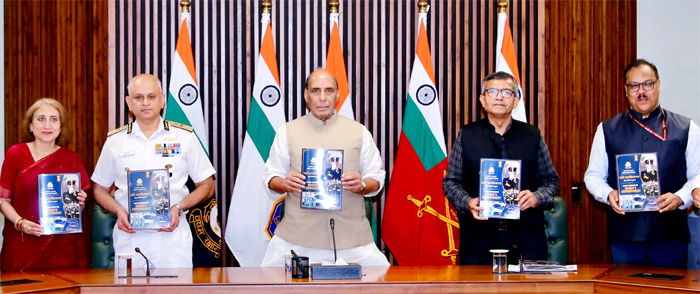
In a landmark step towards building a more inclusive, compassionate and future-ready maritime force, Defence Minister Rajnath Singh on Tuesday unveiled two transformative policy reforms for the Indian Coast Guard (ICG), introducing a gender-neutral framework for officer induction and career progression while streamlining ex-gratia benefits for families of personnel who go missing at sea in the line of duty.
The reforms, unveiled at Kartavya Bhavan-2 in New Delhi in the presence of Defence Secretary Rajesh Kumar Singh, Director General, Indian Coast Guard Paramesh Sivamani, and senior Ministry of Defence officials, are aimed at enhancing operational efficiency, improving personnel welfare and reinforcing the Coast Guard’s preparedness as it approaches its Swarnim Jayanti (Golden Jubilee) in 2027.
Lauding the Indian Coast Guard’s exemplary service over the past five decades, Rajnath Singh said the reforms reflected the government’s commitment to strengthening the force for emerging maritime challenges.
“These forward-looking policies will further strengthen the morale and operational efficacy of the force as it marches toward its Swarnim Jayanti in 2027,” Defence Minister said.
Reaffirming the Narendra Modi government’s vision, he added that it remained committed to making the Indian Coast Guard “a modern, capable and future-ready maritime force.”
Historic push for gender equality
The first policy introduces a comprehensive gender-neutral framework for the induction of officers into the Indian Coast Guard, marking one of the most significant reforms in the force’s human resource policies.
Women candidates will now be inducted into both Short Service Appointments (SSA) and Permanent Appointments (PA) on par with their male counterparts, while SSA has simultaneously been opened to male candidates, creating a uniform recruitment framework.
The policy also guarantees equal opportunities for career progression from the ab-initio training stage onwards. Existing women officers serving under Permanent Appointments will be eligible for promotion to higher ranks subject to fulfilling prescribed conditions, while women serving under Short Service Appointments will have the option of converting to Permanent Appointments after meeting stipulated eligibility criteria.
Describing the reform as a reflection of the government’s commitment to Nari Shakti, Rajnath Singh said the initiative would ensure equal opportunities for women in safeguarding the nation’s maritime frontiers.
Relief for families of personnel missing at sea
The second reform is designed to provide timely financial relief and administrative ease to the families of Coast Guard personnel who are reported missing while performing operational duties at sea.
Under the new policy, an ICG personnel missing at sea during duty can now be declared “presumed dead” exclusively for the purpose of granting ex-gratia compensation and terminal benefits, eliminating prolonged procedural delays.
The simplified mechanism is expected to accelerate the release of financial assistance to the Next of Kin, sparing bereaved families from avoidable administrative hardships during periods of emotional trauma.
Defence Minister said the reform underscored the government’s unwavering commitment to standing firmly with the families of personnel who make the ultimate sacrifice in protecting India’s maritime interests.