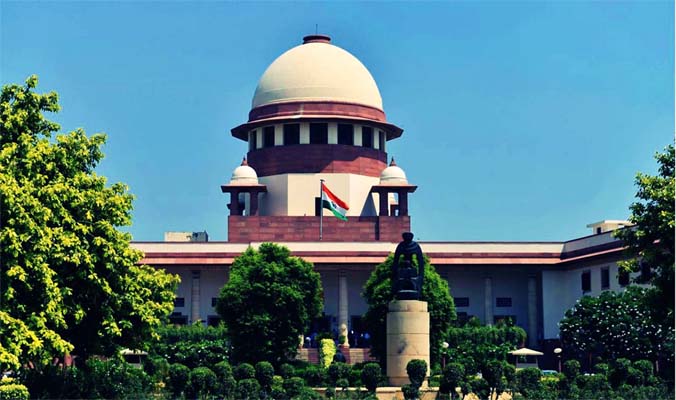

- Bhandari Scrap Traders ruling upholds constitutional validity of Section 16(2)(c) of CGST Act
- Businesses face higher compliance bar as ITC now hinges on actual tax payment by suppliers
- Genuine buyers could face greater exposure to vendor defaults despite invoice matching and GSTR-2B compliance
- Tax experts flag need for stronger vendor due diligence, contractual safeguards and closer monitoring of supplier compliance
NE LAW & BUSINESS BUREAU
AHMEDABAD, AUG 2
The GST promise of seamless input tax credit has entered a more demanding phase: a business may do everything right at its end and still face an ITC challenge if its supplier has not actually deposited the corresponding tax with the Government. The Supreme Court’s recent order in Bhandari Scrap Traders v. Union of India & Ors. has upheld the constitutional validity of Section 16(2)(c) of the CGST Act, reinforcing the link between a recipient’s credit entitlement and the supplier’s actual tax payment.
The Supreme Court, on July 24, dismissed the Special Leave Petitions in the matter, effectively affirming the Gujarat High Court’s position that Section 16(2)(c) is neither unconstitutional nor liable to be read down.
The ruling has potentially significant implications for businesses because the recipient ordinarily has visibility of invoice reporting through GSTR-1 and GSTR-2B, but not necessarily of whether the supplier has actually discharged the tax liability relating to a particular invoice.
ITC promise meets a new compliance reality
“ITC was one of the defining promises of the GST regime but, nearly a decade later, that promise after a long journey of compliance, litigation and evolution is being tested,” said Ruturaj Bhide, Associate Partner, Dhruva Advisors India Pvt. Ltd.
Bhide noted that most businesses have adapted to the GST framework and that prudent taxpayers have developed robust systems around invoice matching through GSTR-2B, verification of registrations, documentation and disciplined compliance.
“Most businesses have adapted and today, prudent taxpayers have built robust processes around invoice matching through GSTR-2B, verification of registrations, documentation and disciplined compliance; and are claiming ITC only after complying conditions that are within the recipient’s control. But is that enough? Perhaps not,” he said.
That question assumes greater significance after the Supreme Court’s ruling, which upheld the statutory condition that the supplier must actually pay the tax to the Government before the recipient can ultimately enjoy the credit.
The buyer’s blind spot
From the Revenue’s perspective, the rationale is straightforward: the Government cannot be expected to allow credit where the corresponding tax has not reached the exchequer.
But the business difficulty lies in the fact that the recipient may have limited visibility into the supplier’s actual tax payment.
As Bhide pointed out, the GST portal allows recipients to verify whether an invoice has been reported in GSTR-1 and reflected in GSTR-2B. However, it does not ordinarily provide the recipient with direct visibility into whether the supplier has ultimately paid the tax on that particular invoice.
The ruling therefore creates a challenging compliance equation: how can a genuine buyer guarantee an event that remains substantially outside its control?
The Supreme Court’s position nevertheless reinforces that ITC is conditional upon satisfaction of statutory requirements and that the recipient cannot claim the credit merely because the underlying transaction appears genuine. The framework also provides for reversal and subsequent re-availment in specified circumstances when the supplier later discharges the tax liability.
Litigation may now shift to the “how”
According to Bhide, the ruling may not be the final chapter in the debate.
“Several aspects of the matter are unaddressed – should the recipient suffer in case of supplier default and the consequences for bona fide purchasers, should the first port of call be the supplier rather than the recipient and, in that way procedural safeguards is built into the handling of such matters, what happens in case of retrospective cancellations,” he said.
These questions could move the next phase of litigation away from the constitutional validity of Section 16(2)(c) towards how the provision is administered and applied, particularly in cases involving bona fide purchasers, supplier defaults and retrospective cancellation of registrations.
Bhide cautioned that “litigation on this topic is therefore likely to focus on the manner in which the provisions is administered and applied.”
“One thing is certain, the litigation surrounding this issue has undoubtedly become much tougher for the taxpayer!” he added.
Vendor due diligence becomes business imperative
For companies, the immediate takeaway is clear: internal GST compliance alone may no longer provide sufficient comfort on ITC.
“The threshold for safeguarding ITC has become significantly higher. Completing every compliance requirement within one’s own control may no longer be sufficient,” Bhide said.
Businesses are consequently likely to intensify vendor due diligence, monitor supplier compliance more closely and strengthen contractual safeguards against tax defaults. Industry advisers have also pointed to the need for greater scrutiny of suppliers and appropriate contractual mechanisms to protect recipients against potential ITC losses.
The larger policy question now confronting the GST ecosystem is whether technology can bridge the information gap between invoice reporting and actual tax payment.
For businesses, the Supreme Court ruling has transformed ITC from a largely invoice-and-compliance exercise into a more demanding supply-chain compliance responsibility—where the tax behaviour of a vendor can potentially affect the financial position of an otherwise bona fide buyer.