- Sense International India’s West Regional Network Conclave puts empowerment, advocacy and independent living at the heart of inclusion
- Two-day gathering brings persons with deafblindness, families, educators and disability professionals from across Gujarat, Maharashtra, Goa and Madhya Pradesh together
- Capacity-building sessions focus on education, assistive technology, livelihood, social media advocacy and everyday skills for greater independence
- Four national networks—Udaan, Prayaas, Abhi-Prerna and Bandhan—seek to turn scattered voices into a stronger force for rights and inclusion
NE NEWS SERVICE
AHMEDABAD, AUG 2
What happens when people who are often spoken for begin speaking for themselves? In Ahmedabad, the answer was emerging as a collective call for dignity, independence and a decisive voice in shaping their own future. Persons with deafblindness and multiple disabilities, families, educators and disability professionals from across western India came together not merely to discuss inclusion, but to build the networks and skills needed to make inclusion real.
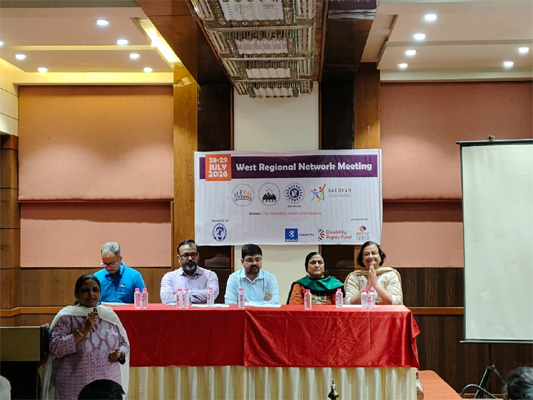
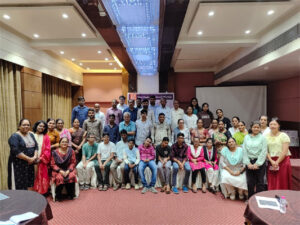
The two-day West Regional Networks’ Meeting, held on July 28–29 at The President Hotel, Ahmedabad, brought together representatives of partner organisations supported by Sense International India (Sense India) from Gujarat, Maharashtra, Goa, Madhya Pradesh and Pune.
Organised by the Deafblind Regional Centre (DbRC), established at the Blind People’s Association (BPA), Ahmedabad, with support from Sense India, the conclave placed an important proposition at the centre of its deliberations: independence begins when persons with deafblindness are recognised not as passive beneficiaries, but as equal participants in decisions that affect their lives.
From individual voices to a collective force
For a community that can encounter barriers in communication, education, mobility, employment and access to information, networks can be as transformative as individual interventions.
The Ahmedabad conclave provided a common platform for people with deafblindness, families, siblings, educators and professionals to exchange experiences, identify gaps and develop solutions rooted in lived realities.
“When persons with deafblindness, families and professionals come together, they move from being individual voices to a collective force for change,” said Uttam Kumar, CEO, Sense International India.
“These networks are critical because they enable people to learn from one another, advocate for their rights and create solutions rooted in their own lived experiences. Our aim is to ensure that persons with deafblindness are not merely recipients of support, but active participants in decisions that shape their lives,” he said.
That philosophy gave the gathering a larger significance: empowerment was not treated as an abstract ideal, but as a skill that can be learned, practised and strengthened through collective action.
Advocacy leaves the conference room
The conclave moved beyond speeches and discussions to practical capacity building, with sessions addressing advocacy networks, the role of parents under the National Education Policy, social media and storytelling for advocacy, media engagement, Activities of Daily Living (ADL), assistive technology, independent living, self-employment and livelihood opportunities.
The emphasis on practical skills was particularly significant.
Hands-on sessions, including cooking and daily-living activities, demonstrated how appropriate training, assistive support and confidence can enable persons with deafblindness and multiple disabilities to negotiate everyday life with greater independence.
The discussions also explored how social media, storytelling and media engagement can help communities articulate their concerns, challenge stereotypes and make their experiences more visible.
Four networks, one larger purpose
Sense India supports four national networks representing different stakeholders within the deafblind community.
Udaan brings together adults with deafblindness; Prayaas connects families of persons with deafblindness; Abhi-Prerna brings together educators working with persons with deafblindness; while Bandhan is a network of siblings.
Alongside these national platforms, local and State-level family networks offer spaces for peer support, experience-sharing and collective advocacy on education, rehabilitation, livelihood, rights and accessibility.
The regional conclave sought to strengthen these links so that concerns emerging from communities can travel more effectively to service providers, government systems and other stakeholders.
From discussion to action
The meeting concluded with four clear priorities: building stronger and more motivated regional networks; identifying regional needs and preparing action plans; strengthening capacities in advocacy, sustainability and network management; and improving linkages with existing support systems for persons with deafblindness and multiple disabilities.
The significance of the Ahmedabad gathering thus lies beyond the two days of meetings.
A stronger network can mean a parent no longer navigating a complex system alone, an educator finding a practical solution through peer experience, a person with deafblindness gaining confidence to advocate for a right, or a family discovering that independence can begin with something as fundamental as learning to cook, communicate or navigate daily life more independently.
The larger message from Ahmedabad was therefore unmistakable: true inclusion is not simply about opening doors for persons with disabilities; it is about ensuring that they have the voice, skills and collective strength to decide where those doors should lead.