

R ARIVANANTHAM
CHENNAI, AUG 1
The Cauvery, Tamil Nadu’s perennial lifeline and Karnataka’s fiercely guarded water resource, has once again become the centre of an intensifying inter-State confrontation, with political consensus in Tamil Nadu emerging as the latest demand amid the Mekedatu controversy and an immediate dispute over water releases.
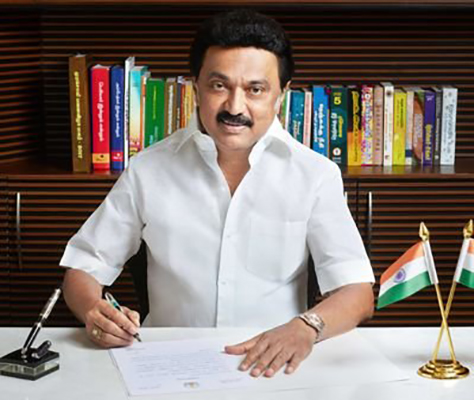
DMK president M K Stalin on Saturday called upon Tamil Nadu Chief Minister C Joseph Vijay to convene an all-party meeting immediately and evolve a united strategy on the Cauvery issue.
- DMK chief urges Vijay to forge consensus on Tamil Nadu’s Cauvery strategy
- Stalin says bilateral approach risks weakening State’s established legal position
- Karnataka to hold all-party meeting on August 2 amid water-sharing tensions
- Vijay’s proposed Bengaluru visit put on hold after Shivakumar seeks deferment
- CWRC directs 3,500-cusec release as Karnataka cites water stress
- Mekedatu remains a contentious flashpoint despite Supreme Court’s latest ruling
Stalin’s demand comes at a sensitive moment. Karnataka Chief Minister D K Shivakumar has sought postponement of Vijay’s proposed Bengaluru visit for talks on the Cauvery issue, citing the prevailing situation in Karnataka. At the same time, Karnataka is scheduled to hold an all-party meeting on August 2 to discuss its position on the dispute.
Stalin: Cauvery needs collective approach
தனி ஆவர்த்தனம் செய்ய நினைத்துத் தனிமைப்பட்டு நிற்கிறார் முதலமைச்சர்
தமிழ்நாட்டில் உள்ள அரசியல் கட்சித் தலைவர்கள், விவசாயிகள் சங்கத்தினர் எல்லோரும் #MekedatuDam விவகாரத்தில் கர்நாடகத்துடன் பேச்சுவார்த்தை நடத்துவது பயனளிக்காது என்று எச்சரித்தோம். கர்நாடகம் செல்ல வேண்டாம் என்று…
— M.K.Stalin (@mkstalin) August 1, 2026
Criticising Vijay’s proposed direct engagement with Karnataka, Stalin alleged that the Chief Minister’s attempt at a “solo political feat” had ended in isolation and rejection.
“By attempting a solo act, the chief minister now stands isolated,” Stalin said in a post on X.
He said political leaders and farmers’ organisations in Tamil Nadu had cautioned Vijay against travelling to Karnataka for direct talks.
“We urged the chief minister of Tamil Nadu not to visit Karnataka,” Stalin said, arguing that past experience showed that the State’s interests were better protected through the established legal and institutional mechanisms governing the Cauvery dispute.
“Past experience has taught us that a legal battle is the only way forward against a state that has unequivocally declared it will not release water to Tamil Nadu,” he said.
Stalin also alleged that Karnataka’s approach effectively treated Tamil Nadu as a destination for surplus water, claiming, “They view Tamil Nadu merely as a drainage basin for surplus water.”
Water release row adds fresh pressure
The political confrontation comes against the backdrop of a fresh water-sharing dispute.
The Cauvery Water Regulation Committee (CWRC) has directed Karnataka to release 3,500 cusecs of water daily to Tamil Nadu, triggering protests in Karnataka, including demonstrations by BJP leaders near the Krishna Raja Sagara reservoir. Karnataka has maintained that poor rainfall and depleted reservoir storage have placed pressure on its own drinking-water requirements.
The CWRC functions under the broader institutional framework of the Cauvery Water Management Authority (CWMA), created following the Supreme Court’s 2018 Cauvery judgment. The Supreme Court has already settled the broad inter-State water-sharing framework, while implementation and day-to-day regulation remain subjects of the statutory Cauvery mechanism.
For Tamil Nadu, however, the immediate concern is not merely the quantity of water released but the impact of inadequate inflows on the Cauvery delta, agriculture and drinking-water security.
Vijay says State rights will be protected
The ruling Tamilaga Vettri Kazhagam (TVK) government has rejected the criticism that it has been passive on the issue.
TVK ministers have maintained that the government is pursuing political, administrative and legal avenues to protect Tamil Nadu’s Cauvery rights and prevent the Mekedatu project from affecting the State’s interests. The government has also previously consulted water and legal experts and directed follow-up legal action on the Mekedatu issue.
Vijay had also urged Prime Minister Narendra Modi to withdraw a recent Union government position concerning Mekedatu, arguing that the rights of downstream States and the established legal framework governing inter-State rivers must be protected.
Mekedatu remains the bigger faultline
The proposed Mekedatu balancing reservoir and drinking-water project continues to be the most contentious component of the Cauvery dispute.
Tamil Nadu has consistently opposed Karnataka proceeding with the project, while Karnataka maintains that the reservoir is necessary for its water-management and drinking-water needs.
The Supreme Court in November 2025 had declined to entertain Tamil Nadu’s challenge to the Central Water Commission’s 2018 permission for preparation of a Detailed Project Report, holding the challenge premature while the project remained within the regulatory process. In May 2026, the Court dismissed Tamil Nadu’s review petition as well.
The legal position, therefore, does not amount to a final clearance for construction of the Mekedatu dam. The project remains subject to the applicable regulatory and statutory processes.
Karnataka shows unity, TN faces call for consensus
Stalin sought to contrast the political responses on either side of the border, pointing to Karnataka’s decision to convene an all-party meeting on August 2.
“Karnataka chief minister D K Shivakumar has demonstrated their unity through action,” he said.
He then posed a direct question to the Tamil Nadu government: “When will the Tamil Nadu chief minister convene an all-party meeting? Can he do it, or can’t he?”
Stalin said the Cauvery should henceforth be handled through “collective consultation”, stressing that it is a “vital life line for Tamil Nadu”.
Beyond politics, a livelihood question
The latest confrontation underlines the difficult balance between Karnataka’s drinking-water and irrigation requirements and Tamil Nadu’s dependence on Cauvery flows, particularly across the delta.
Karnataka has repeatedly cited rainfall deficiency and reservoir storage constraints, while Tamil Nadu has insisted that its legally determined share and the decisions of the Cauvery regulatory institutions cannot be diluted by unilateral positions.
The immediate political question may be whether Tamil Nadu adopts a unified strategy. The larger question is whether the two States can keep the Cauvery dispute within the framework of law, institutions and water-management mechanisms rather than allowing every difficult monsoon season to reopen a long-running political confrontation.
For Tamil Nadu, the Cauvery is ultimately more than a dispute between governments—it is water for farms, drinking water for millions and the economic lifeline of the delta.