- From doctor to singer, actor, producer and music therapist, Dr. Parth Oza decodes a life where every role became a new rhythm
- At GLS University, a candid conversation with Chandni Kapadia explores music, spirituality, creativity, culture and the making of an identity
- ‘Garba is the purest form of devotional energy exchange’: Oza urges a return to the spiritual soul of the tradition
- ‘Always display your best game and don’t worry about failure’: A musical journey that ultimately celebrates character over competition
NE EDUTAINMENT BUREAU
AHMEDABAD, AUG 4
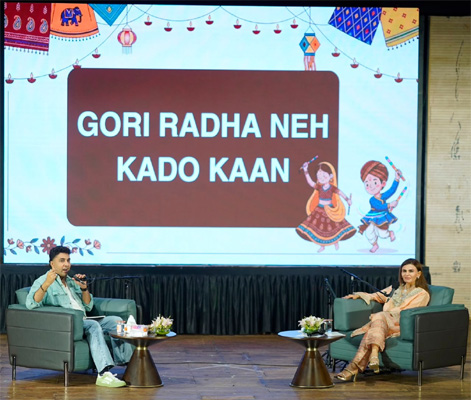
What happens when medicine meets music, rhythm meets devotion and a performance becomes a prayer? The answer unfolded not merely in words but in melodies at GLS University, where Dr. Parth Oza transformed a conversation into a compelling reflection on creativity, culture, spirituality and the search for purpose.
The latest edition of “Decoded with Chandni Kapadia”, hosted by Dr. Chandni Kapadia, Executive Director, GLS University, brought students face-to-face with the many-layered journey of Dr. Oza—a doctor, singer, actor, producer and music therapist whose career refuses to be confined to a single identity.
The conversation went beyond achievements and professional labels to explore the experiences, values and choices that have shaped the person behind the performer.
A life in many roles, one rhythm of purpose
Speaking about his journey from medicine and music therapy to singing, acting and production, Dr. Oza explained that every role opened a different window into his own personality.
Raised in a musical environment, he recalled how those early influences nurtured his passion while simultaneously encouraging him to develop an identity of his own.
For Oza, the journey has therefore never been about choosing between medicine and music, or between creativity and spirituality. It has been about allowing seemingly different worlds to enrich one another.
That philosophy became particularly evident when the conversation turned to Garba, a cultural form deeply woven into Gujarat’s social and spiritual fabric.
‘Garba is the purest form of devotional energy exchange’
For Dr. Oza, Garba is far more than spectacle, choreography or celebration. It is a spiritual experience rooted in devotion.
He emphasised the need to preserve its devotional essence even as Garba continues to evolve amid changing trends and increasingly elaborate celebrations.
“Garba is the purest form of devotional energy exchange. For me, when I perform Garba on stage, it becomes a form of meditation.”
The words acquired an added resonance when Oza followed them with soulful renditions of some of his popular Garba songs, turning the university gathering into an atmosphere where gaiety and piety seemed to compete—and ultimately merge—with each other.
He also reflected on “Jogni Jogmaya”, his widely loved song that gained immense popularity across digital platforms and became part of celebrations for thousands.
The journey of the song, he explained, offered an artist perhaps the most rewarding experience of all: watching something born in a studio cross the invisible boundary between creator and audience and become embedded in people’s emotions, celebrations and memories.
From Krishna to Kartal: Art as a window to the soul
The conversation travelled further into the spiritual dimensions of Oza’s creative life when he spoke about portraying Shri Krishna in the musical production “Rajadhiraaj”.
The experience, he said, deepened his understanding of spirituality, devotion and the delicate relationship between art and life.
He also offered insights into “Kartal”, a project close to his heart, underlining the significance of teamwork and collective effort in translating an artistic vision into reality.
The message was particularly relevant for students: creativity may begin with an individual spark, but meaningful work often demands the collective strength of people who share the vision and are willing to contribute their talents.
When medicine listens to music
Perhaps the most distinctive chapter of Oza’s journey is where his medical training intersects with his artistic calling—music therapy.
Sharing experiences from the medical music therapy department at Apollo Hospital, Chennai, he explained how music can contribute to emotional well-being and help individuals reconnect with themselves.
His appeal was simple yet profound: consciously make time to listen to music—not merely as background sound, but as an experience capable of influencing emotions, thoughts and inner balance.
The conversation then moved from music and achievement to something even more fundamental: character.
Dr. Oza told the students:
“Everyone has their own abilities, but if you continue becoming a good human being, no competition and nothing else can bring you down. You will remain strong in your own mind and your own self-esteem because you know that you are a good human being.”
In an age where achievement is often measured through comparison, the thought offered a different yardstick: self-worth need not depend upon defeating someone else.
Asked to sum up his own journey in one line, Oza answered with striking humility:
“Still a long way to go.”
That answer dovetailed naturally with another piece of advice that continues to guide him:
“Always display your best game and don’t worry about failure.”
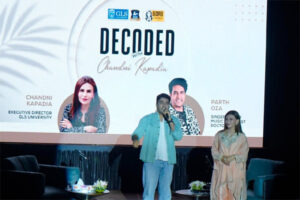
The session concluded with an animated interaction between Dr. Oza and students, leaving behind more than applause and musical memories. It encouraged the young audience to remain curious, embrace creativity, respect cultural roots and pursue their passions with sincerity.
Through “Decoded with Chandni Kapadia,” GLS University continues to create a platform where students encounter not merely accomplished personalities, but the stories behind their accomplishments—the struggles, beliefs, values and moments that give achievement its meaning.
And perhaps that was the most harmonious note of the evening: music can entertain, Garba can celebrate, spirituality can awaken and education can illuminate—but when all four meet, they can help a young mind discover not merely what to become, but who to become.