NE LEGAL BUREAU
NEW DELHI, AUG 16
How much Cauvery water must Karnataka release—and how quickly must Tamil Nadu receive it? The long-running interstate water dispute is heading back to the Supreme Court on Monday, with Tamil Nadu seeking urgent judicial intervention over what it calls a substantial shortfall in its due share.
- SC to hear Tamil Nadu plea on August 17 seeking immediate release of its due Cauvery share from Karnataka
- State claims 26.954 TMC is due at Biligundlu, sharply higher than 4.536 TMC allocated by CWMA
- CWRC had directed Karnataka to release 3,500 cusecs daily for 15 days; Tamil Nadu alleges actual flow was only 158–550 cusecs
- Karnataka, facing its own water concerns, has questioned the quantum; fresh CWMA directive has added another layer to the interstate dispute
- DMK has also approached SC seeking enforcement of the CWRC direction and monitoring of reservoir releases
- Hearing assumes significance as 2018 Cauvery verdict and statutory water-management mechanism come under judicial scrutiny
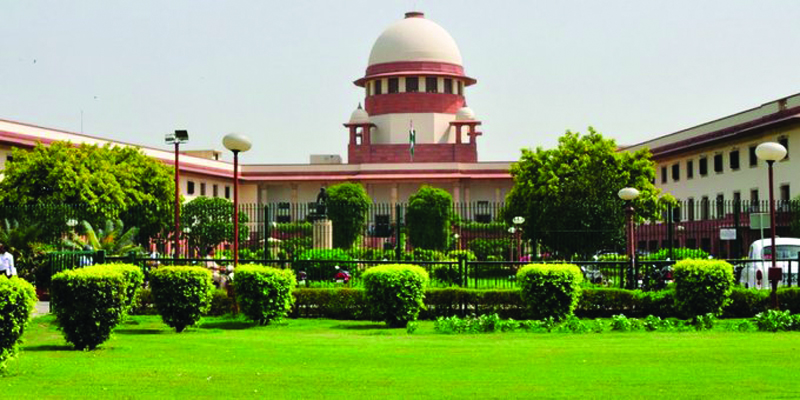
The Supreme Court is scheduled to hear the Tamil Nadu government’s plea on August 17 before a Bench of Justices Vikram Nath and Sandeep Mehta. The Court had on August 12 indicated that the petitions filed by Tamil Nadu and other parties, including the DMK, would be taken up on August 17. The matter has assumed renewed significance amid competing claims over reservoir levels, mandated releases and the implementation of the Cauvery water-sharing mechanism.
Tamil Nadu’s 26.954-TMC claim
Tamil Nadu, led by Chief Minister Joseph Vijay, moved the Supreme Court on August 3, alleging that it was not receiving its due share of Cauvery water during a rain-deficient year.
According to the State’s plea, the Cauvery Water Regulation Committee (CWRC) had on July 28 directed Karnataka to release 3,500 cusecs for 15 days from July 29. The direction was subsequently upheld by the Cauvery Water Management Authority (CWMA).
Tamil Nadu, however, alleged that the actual flow recorded at Biligundlu, the interstate gauging point, ranged only between 158 and 550 cusecs from July 29 to August 2—far below the directed quantum.
The State has now put the spotlight on a much larger claimed shortfall. It says that, following rainfall in the catchment areas of Karnataka’s KRS and Kabini reservoirs, its proportionate share that should have reached Biligundlu was 26.954 TMC.
“Accordingly, the Cauvery Water Management Authority order allocating 4.536 TMC is very less,” the Tamil Nadu government said in its August 3 statement.
It further alleged that Karnataka had “failed” to share Tamil Nadu’s due quantum of water.
Reservoir storage becomes key battleground
Tamil Nadu has relied heavily on reservoir data in pressing its case.
As on August 3, it said the combined storage in Karnataka’s Krishna Raja Sagara (KRS), Kabini, Harangi and Hemavathy reservoirs stood at 77.537 TMC, arguing that Karnataka would face no difficulty in releasing Tamil Nadu’s proportionate share.
The State has therefore asked the Supreme Court to intervene and ensure compliance with the applicable Cauvery water-sharing directions.
The issue is particularly sensitive because the Supreme Court’s 2018 judgment finally determined the inter-State water-sharing dispute, after which the Centre constituted the Cauvery Water Management Scheme, comprising the CWMA and CWRC, to implement the Court’s decree. The Supreme Court reiterated in a November 2025 order that grievances concerning non-implementation or improper implementation could be taken before the competent Cauvery authorities.
Karnataka faces a different water arithmetic
Karnataka has maintained that the quantum being sought is difficult to accommodate given its own water requirements and reservoir position.
The State has also been dealing with the CWMA’s subsequent direction for release of 12,000 cusecs daily to Tamil Nadu for 15 days from August 12, intensifying the political and legal dimensions of the dispute. Karnataka has questioned the quantum and has been considering its legal options.
The competing positions have also triggered political activity in Karnataka, including consultations involving the government and opposition parties.
DMK joins the legal battle
Tamil Nadu’s case is not the only matter before the Supreme Court.
The DMK has separately sought directions requiring Karnataka to comply with the CWRC’s July 28 direction, as affirmed by the CWMA, and to ensure a flow of 3,500 cusecs per day at Biligundlu for the stipulated period.
The party has also sought directions to make good an accumulated backlog and urged closer monitoring of Karnataka’s reservoir releases and the flow actually realised at Biligundlu.
What is at stake on Monday?
The immediate legal question before the Supreme Court is likely to revolve around compliance with the statutory Cauvery water-management mechanism and the quantum of water presently due to Tamil Nadu, against the backdrop of Karnataka’s competing claim over its own water needs.
The Court’s intervention could therefore have consequences beyond the immediate release sought by Tamil Nadu, particularly on how the CWMA/CWRC directions are implemented when reservoir inflows, rainfall and distress-sharing considerations change during the water year.
For Tamil Nadu, the plea is about securing what it describes as its “due share”. For Karnataka, the issue is balancing an inter-State obligation with the availability of water within its own basin.
The Cauvery, once again, is therefore at the centre of a legal test of rights, obligations, water availability and federal cooperation.