R ARIVANANTHAM
CHENNAI, AUG 19
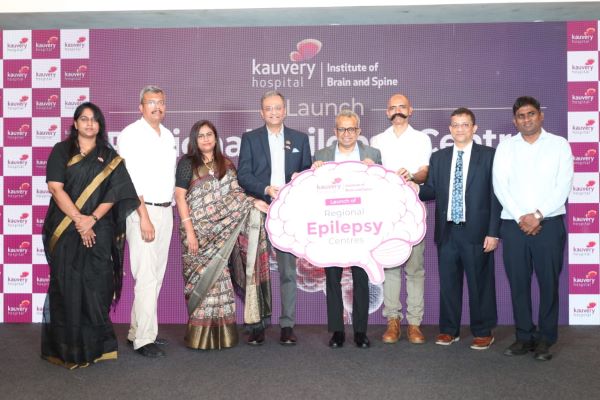
For millions living with epilepsy, the biggest battle is often fought not only inside the brain, but also against misunderstanding, stigma and delayed access to specialised care. Seeking to change that narrative, Kauvery Hospital has launched an Integrated Epilepsy-Care Network, bringing together Regional Epilepsy Centres across its three existing Chennai hospitals and extending the specialised care pathway to its upcoming 120-bedded exclusive Maternity and Child Care Hospital, Kauvery Ma in Radial Road which is scheduled to be declared open next week.
- Three Chennai hospitals, one integrated epilepsy-care pathway to bring specialised treatment closer to patients
- Regional Epilepsy Centres unite neurologists, neurosurgeons and allied specialists under a common clinical protocol
- Fortnightly multidisciplinary case reviews to strengthen diagnosis, identify complex cases and streamline referrals
- Uncontrolled seizures despite medication to be evaluated for advanced interventions, including epilepsy surgery
- Up to 75% of appropriately selected surgical patients can achieve complete seizure control, experts say
- With 12–15 million Indians living with epilepsy, Kauvery seeks to bridge the huge gap in access to epilepsy surgery
The initiative, built around a coordinated Regional Epilepsy Centre (K-REC) model, seeks to transform epilepsy management from fragmented consultations into a seamless continuum of diagnosis, advanced evaluation, surgery where required and long-term follow-up.
Addressing the press after launching the Integrated Epilepsy-Care Network, Dr Aravindan Selvaraj, Founder and Executive Director, Kauvery Group of Hospitals, said:
“It is the duty of everyone to dispel the social stigma on Epilepsy in the society, as it is completely curable if properly treated.”
The network brings neurologists, neuroradiologists, electrophysiologists, clinical psychologists, rehabilitation specialists and neurosurgeons under one coordinated framework, with the objective of ensuring that patients receive the right diagnosis and the most appropriate treatment at the right time.
One network, multiple neuroscience disciplines
Under K-REC, neurologist-led Regional Epilepsy Centres have been established at all three Kauvery hospitals in Chennai. The centres will function as interconnected units rather than isolated departments, enabling specialists to collectively evaluate complex epilepsy cases.
The teams from the three centres will meet virtually once every fortnight to discuss patients in detail, assess the complexity of individual cases and determine the appropriate treatment pathway.
A common epilepsy proforma has also been developed for standardised data collection, helping the teams maintain uniform clinical information and improve coordination across the network.
The initiative assumes significance because epilepsy is not a single, uniform neurological disorder. Correct identification and classification of the type and characteristics of epilepsy are critical to successful treatment. An incorrect diagnosis can result in ineffective medication and prolonged suffering.
When medicines fail, surgery can change the equation
Patients whose seizures remain uncontrolled despite appropriate medication will be referred to the epilepsy centre at Kauvery Hospital, Radial Road, for advanced evaluation.
Where investigations indicate a surgically treatable cause, patients will undergo further assessment to determine their suitability for epilepsy surgery. Once a surgical decision is made, treatment will be undertaken at the specialised centre, following which patients will return to their respective Regional Epilepsy Centres for continued follow-up and long-term care.
Experts pointed out that a small structural lesion or other abnormality in the brain can sometimes be responsible for persistent seizures and may render medication ineffective. Identifying such patients early can therefore open the door to potentially transformative surgical treatment.
Epilepsy surgery, in appropriately selected patients, can achieve complete seizure control in up to 75% of cases, besides significantly reducing dependence on anti-seizure medication.
India’s treatment gap remains enormous
The need for such a coordinated approach is underscored by the sheer scale of epilepsy in India. An estimated 12–15 million people, or around 1% of the population, live with epilepsy, commonly referred to as ‘fits’.
Despite advances in medical treatment, around 20–30% of patients continue to experience seizures. An estimated 1.3–1.5 million patients could potentially benefit from epilepsy surgery, yet fewer than 1,500 epilepsy surgeries are performed annually in India.
Poor identification of suitable surgical candidates and limited awareness about the availability and benefits of epilepsy surgery remain among the major reasons for this yawning gap.
K-REC seeks to identify the right patient at the right time
Dr Krish Sridhar, Group Mentor, Neurosciences & Director, Institute of Brain and Spine, Kauvery Hospital, Radial Road, said epilepsy was a complex neurological condition in which treatment success depended heavily on accurate diagnosis and classification.
“Epilepsy is a complex neurological condition, and the success of treatment depends on accurate diagnosis and classification. When seizures remain uncontrolled despite appropriate medication, it is important to identify whether there is an underlying structural abnormality or another surgically treatable cause. K-REC would bring together neurologists, neuroradiologists, electrophysiologists, neurosurgeons, psychologists and rehabilitation specialists to collectively evaluate such patients. This multidisciplinary approach will help us identify suitable candidates for epilepsy surgery at the right stage and offer them the possibility of better seizure control and improved quality of life.
From diagnosis to rehabilitation under one umbrella
Dr Aravindan Selvaraj said the launch of K-REC marked an important step towards strengthening comprehensive epilepsy care in the region.
“Our aim is to address the gap between the number of patients eligible for surgery and the number of patients who undergo surgery through a coordinated network of epilepsy centres, standardised protocols and regular multidisciplinary case discussions. By creating a seamless pathway from diagnosis and medical management to advanced evaluation, surgery and post-operative care, we hope to make specialised epilepsy care more accessible and ensure that patients receive the right treatment at the right time.”
The initiative thus seeks to place early recognition, precise diagnosis, multidisciplinary decision-making and continuity of care at the heart of epilepsy treatment—while simultaneously challenging the social perception that epilepsy is a condition that patients must simply learn to live with.
With the proposed expansion of the network to Kauvery Ma, the hospital group is also positioning the initiative to strengthen epilepsy-care access for women and children, creating a broader continuum of neurological care across its Chennai network.