NE HEALTH BUREAU
CHENNAI, SEPT 20
What does it take to give an 11-year-old child a new chance at life after one-and-a-half years on dialysis? At JIPMER, it took a mother’s extraordinary act of donation, the coordinated expertise of multiple medical teams and the creation of a dedicated paediatric transplant pathway. The Department of Paediatrics, Jawaharlal Institute of Postgraduate Medical Education & Research (JIPMER), has achieved a landmark by successfully performing its first paediatric kidney transplant, opening a new chapter in advanced kidney care for children in the public healthcare system.
The 11-year-old girl, who had end-stage kidney disease and had been undergoing dialysis for the preceding one-and-a-half years, received a kidney donated by her mother. Both mother and daughter have recovered well following the procedure.
- Landmark transplant gives new hope to children with end-stage kidney disease; 11-year-old girl receives kidney from mother
- Dedicated paediatric programme led by JIPMER’s Department of Paediatrics marks new chapter in advanced public healthcare
- Multidisciplinary team combines paediatrics, nephrology, urology, anaesthesia and transplant critical care
- Mother’s selfless donation highlights life-saving power of organ donation and family consent
- AIIMS New Delhi mentorship strengthens JIPMER’s capacity for sustainable paediatric transplantation
- Subsidised treatment and PM-JAY support could make complex transplant care accessible to more children
Beyond the medical milestone, the transplant places the spotlight on organ donation awareness, with the mother’s decision serving as a powerful example of how living donation within families can offer children suffering from end-stage kidney disease a potentially life-changing opportunity.
From dialysis to a new beginning
While JIPMER already has an established kidney transplantation programme and considerable experience in comprehensive transplant care for patients including adolescents and young adults, this procedure represents a distinct milestone.
It is the first paediatric kidney transplant in which JIPMER’s Department of Paediatrics took the lead in planning, coordinating and executing the transplant as a dedicated paediatric programme, in close collaboration with specialist teams across the institute.
The achievement therefore goes beyond a single successful operation. It represents the emergence of a structured paediatric transplant capability designed around the special medical and developmental needs of children.
A team effort far beyond the operating theatre
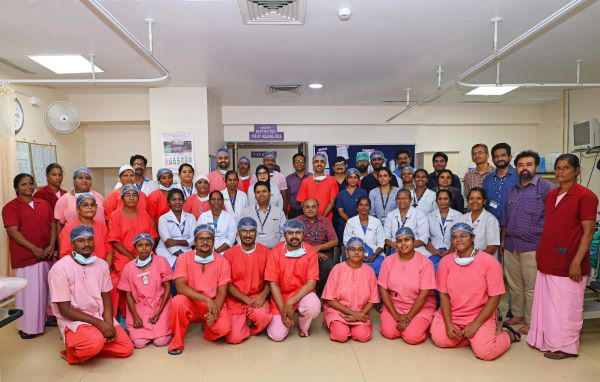
The transplant involved seamless multidisciplinary collaboration between the Department of Paediatrics and teams from Nephrology, Urology, Anaesthesia, Transplant ICU and nursing, along with transplant coordinators, dialysis technicians, dieticians, physiotherapists and other allied healthcare professionals.
Their coordinated efforts covered the entire transplant journey—from pre-transplant evaluation, dialysis and optimisation and donor assessment to transplantation, peri-operative management, immunosuppression, fluid and electrolyte management, nutritional care and post-transplant monitoring.
Dr Vir Singh Negi, Director, JIPMER, congratulated the multidisciplinary team and emphasised the specialised nature of paediatric transplantation.
“Paediatric kidney transplantation requires a high degree of clinical expertise, meticulous coordination and specialised care at every stage. The surgical procedure is only one part of the journey; immunosuppression, fluid and electrolyte management, nutrition, anaesthesia, intensive care and post-transplant monitoring all require careful adaptation to the needs of a growing child,” he said.
He added that the successful outcome reflected the “dedication, expertise and seamless teamwork” of clinicians, nurses and allied healthcare professionals across multiple departments.
Mother’s donation brings organ donation into focus
The transplant also carries a wider public-health message: organ donation can transform lives when families and communities come forward to support patients in need.
In this case, the mother’s kidney donation enabled her daughter to move beyond prolonged dialysis and receive a transplant. Her act of donation, undertaken in the context of stringent medical evaluation and transplant protocols, underlines the role that living donation can play in selected cases of paediatric kidney failure.
JIPMER’s achievement thus provides not only a medical milestone but also an opportunity to reinforce awareness about organ donation, transplant evaluation and the importance of timely referral of children with advanced kidney disease to specialised centres.
AIIMS mentorship strengthens new programme
The programme has also benefited from mentorship and clinical guidance provided by the Paediatric Nephrology team of AIIMS, New Delhi, under an outreach Partnership Program initiative of the International Paediatric Transplant Association (IPTA).
The experience gained through this partnership is expected to strengthen JIPMER’s ability to establish a sustainable and dedicated paediatric kidney transplant programme.
Dr Negi said the experience would “provide the foundation for a sustainable paediatric kidney transplant programme at JIPMER” and enable more children with end-stage kidney disease to access advanced transplant care within the public healthcare system.
Affordable transplant care brings hope closer to home
Affordability is another significant dimension of the milestone.
As a public healthcare institution, JIPMER provides highly subsidised healthcare services and essential medicines, helping reduce the financial burden associated with complex transplantation. Eligible beneficiaries may also receive financial assistance through PM-JAY and applicable government insurance schemes, potentially lowering out-of-pocket expenditure.
For families from economically disadvantaged backgrounds, such support can be critical in accessing sophisticated transplant care that might otherwise be financially difficult.
The successful transplant strengthens JIPMER’s commitment to comprehensive and specialised paediatric healthcare while expanding access to advanced transplant services closer to home for children with end-stage kidney disease in Puducherry and surrounding regions.