Experience meets the patient journey: Rheumatologists Dr. Ram Nath Misra and Dr. Sapan Pandya listen from the front row during the Myositis Awareness Programme in Ahmedabad on Monday, as experts and patients come together to deepen understanding of the rare inflammatory muscle disorder. — NE Photo
- 80% of patients in six-year Ahmedabad study achieved remission, underscoring the value of timely specialist care
- RAG, Myoin Society programme brings patients, caregivers and rheumatologists together under ‘Living Stronger with Myositis’
- Delayed rheumatology consultation beyond a year linked to chronic disease and greater disease-related damage
- Experts flag early warning signs, multi-organ complications, rehabilitation and long-term patient support
NE HEALTH BUREAU
AHMEDABAD, SEPT 21
When climbing stairs becomes difficult, rising from a chair turns into a struggle or unexplained fatigue refuses to go away, the body may be signalling far more than ageing or lack of fitness. For people with myositis, recognising those early whispers can make a critical difference to the course of the disease.
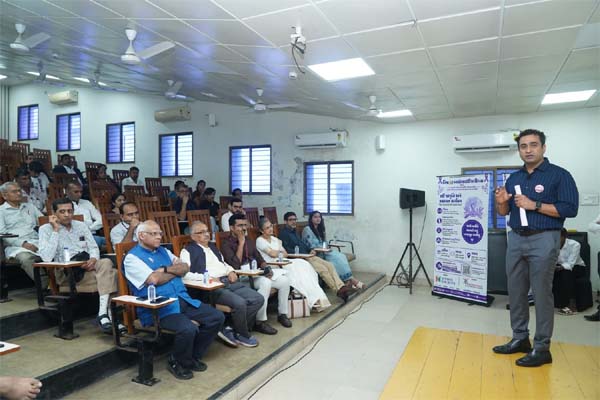
Marking World Myositis Day, the Rheumatology Association Gujarat (RAG), in association with the Myoin Society and supported by Antardhwani, organised a Patient Awareness & Support Programme at Smt. NHL Municipal Medical College, Ahmedabad, under the theme “Living Stronger with Myositis.”
The programme brought together patients, caregivers, families and rheumatology experts, with the focus firmly on early diagnosis, timely specialist intervention, multidisciplinary care, rehabilitation and sustained support for people living with myositis.
Myositis is a group of rare inflammatory muscle disorders that can cause progressive muscle weakness and may also involve the skin, lungs, joints and swallowing muscles. Because its early symptoms can resemble ordinary fatigue or reduced physical fitness, diagnosis may sometimes be delayed.
Ahmedabad evidence: 80% remission
The programme highlighted Gujarat-specific evidence on the importance of early specialist care. A six-year study conducted from July 2016 to July 2022 at Niruj Rheumatology Clinic, Ahmedabad, followed 40 patients with idiopathic inflammatory myositis for an average of 44 months.
The study found that 32 patients, or 80%, achieved remission, while five died and three continued to have active disease. It also reported an association between rheumatologist consultation delayed beyond one year, chronic disease and greater disease-related damage.
The finding provided a powerful local backdrop to discussions on why unexplained muscle weakness and other warning signs should not be ignored.
Dr. Anuj Shukla, Secretary, Rheumatology Association Gujarat, said, “Early symptoms of myositis can easily be overlooked. Timely evaluation by a rheumatologist is important for early diagnosis and appropriate management, while patient and caregiver awareness can provide much-needed support.”
Dr. Vishnu Sharma, President, Rheumatology Association Gujarat, said, “Myositis can affect multiple organs, making coordinated care important. Greater awareness can help reduce diagnostic delays and support comprehensive treatment.”
Beyond muscles: a multi-organ disease
Experts stressed that myositis is not simply a muscle disorder. Depending on the subtype and individual patient, complications can involve the lungs and swallowing system, regular monitoring and coordinated treatment particularly important.
Dr. Vineeta Shobha, Rheumatologist, said, “Myositis can vary significantly between patients. Regular monitoring, appropriate treatment and attention to complications such as lung and swallowing involvement are essential for long-term care.”
The programme covered early warning signs, medicines, safe exercise, nutrition, fatigue and pain management, and lung- and swallowing-related complications. A multidisciplinary expert interaction and open-house session allowed patients and caregivers to engage directly with specialists and share their experiences.
Knowledge as part of treatment
The patient-centric discussions also underscored the role of education in helping families navigate a rare and often misunderstood disease.
Dr. Ram Nath Misra, Rheumatologist, said, “Patient education is an important part of myositis care. Understanding the condition, treatment and rehabilitation can help patients and families manage the journey with greater confidence.”
Globally, idiopathic inflammatory myopathies (IIMs) have an estimated prevalence of 2–25 cases per 100,000 people and an incidence of 0.2–2 per 100,000 person-years, according to a 2023 review in Nature Reviews Rheumatology. Indian studies involving 250 IIM patients and 103 antibody-positive patients have also documented dermatomyositis as the predominant subtype and reported distinct clinical patterns across antibody groups.
Through “Living Stronger with Myositis,” RAG and the Myoin Society reiterated that the fight against myositis extends beyond prescribing medicines. Recognising symptoms early, reaching a specialist without prolonged delay, monitoring complications, embracing rehabilitation and building informed patient-support networks can all shape the long-term journey.