- Iranian dhow intercepted west of Lakshadweep after coordinated sea-air surveillance and hot pursuit
- Heroin and methamphetamine recovered; five Pakistani nationals apprehended in September 25 operation
- Dhow, contraband and crew escorted to Mumbai for joint interrogation and further legal proceedings
- Operation underscores growing importance of intelligence-led maritime surveillance against transnational narcotics networks
NE DEFENCE BUREAU
AHMEDABAD, SEPT 30
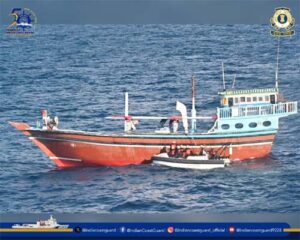
An intelligence-led sea-air operation in the Arabian Sea has dealt a major blow to a suspected transnational narcotics smuggling attempt, with the Indian Coast Guard and Gujarat Anti-Terrorism Squad (ATS) intercepting an Iranian dhow carrying approximately 526 kg of heroin and methamphetamine valued at more than ₹3,000 crore in the international market.
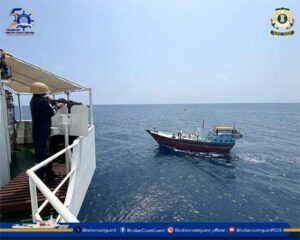
The operation was mounted on September 25, west of Lakshadweep, after actionable intelligence triggered coordinated surveillance of the suspicious vessel. The Indian Coast Guard maintained surveillance before launching a hot pursuit and boarding operation, according to officials.
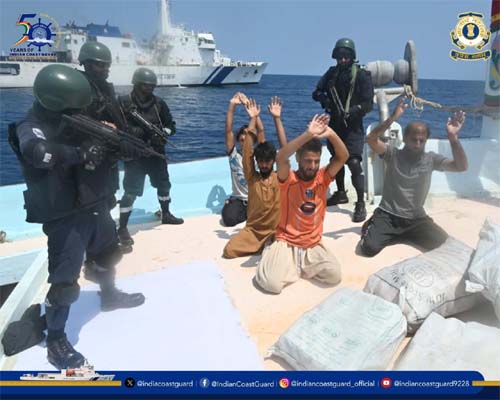
Five Pakistani nationals found operating the vessel were apprehended during the operation. The seizure and arrests are now being subjected to further investigation to establish the origin, intended destination and wider network, if any, behind the consignment.
A high-seas interception
The operation demonstrates the significance of combining maritime surveillance with intelligence inputs from specialised law-enforcement agencies.
The Coast Guard, working in coordination with the Gujarat ATS, tracked the Iranian dhow before intercepting it in the Arabian Sea. The seized contraband comprised heroin and methamphetamine, with the total quantity estimated at around 526 kg. Its international-market value has been put at more than ₹3,000 crore.
The agencies subsequently escorted the vessel and seized material to Mumbai, where the crew and contraband are to undergo joint interrogation and further legal proceedings.
Following the money and the route
The significance of the seizure extends beyond the quantity of drugs recovered.
Maritime narcotics trafficking can involve multiple jurisdictions, vessels, intermediaries and landing points. Establishing the source of the consignment, its intended destination, financiers, handlers and possible downstream distribution network will therefore be central to the investigation.
The apprehension of five Pakistani nationals is a factual element of the case; their individual roles and any wider criminal links remain matters for the ongoing investigation and legal process.
Sea-air surveillance in focus
The operation also highlights the increasing importance of persistent surveillance across India’s maritime approaches.
Rather than relying solely on physical interception, the operation involved intelligence-led monitoring followed by coordinated sea-air surveillance and a pursuit before boarding the vessel. Such capabilities are particularly significant given the vastness of India’s maritime domain and the difficulty of detecting suspicious vessels operating far from the coastline.
The latest seizure also comes amid continued efforts by Indian agencies to disrupt maritime narcotics trafficking. In February 2026, the Coast Guard and Gujarat ATS jointly intercepted a speedboat near the international maritime boundary and seized approximately 203 kg of suspected narcotics.
From the Arabian Sea to the national drug-control grid
The latest operation adds to the wider national campaign against narcotics trafficking, in which maritime agencies, the Gujarat ATS, the Narcotics Control Bureau and other enforcement bodies have increasingly relied on intelligence sharing and coordinated operations.
The Union government has set a Nasha Mukt Bharat 2029 target, with the fight against narcotics being framed as both a public-health and national-security priority.
For the agencies involved in the latest Arabian Sea operation, however, the immediate task now goes beyond the seizure itself: to reconstruct the entire chain behind the 526-kg consignment and determine who financed it, who was meant to receive it and how the maritime route was being exploited.
The dhow may have been stopped at sea—but the investigation into the network behind the cargo has only begun.