NE NEWS SERVICE
CHENNAI, SEPT 29
What can an ancient Tamil irrigation system, a thousand-year-old temple and a modern sustainable community teach the world about human longevity?
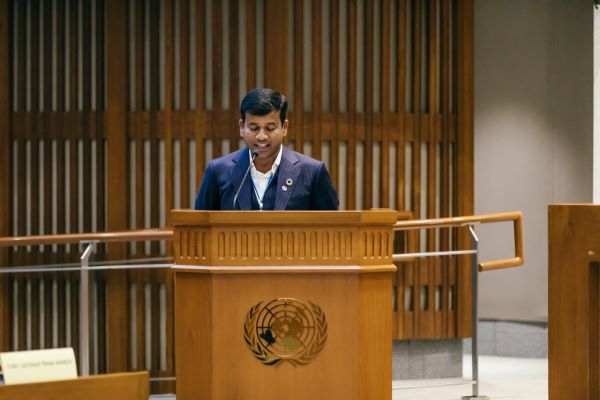
That was the thought-provoking thread running through Dr. Sathish Kumar Santhanam’s address at UNESCO’s Second World Summit on Sustainable Health and Well-Being 2026, where the Founder and Managing Director of DAC Developers carried a distinctly Tamil perspective into a global conversation on resilience, sustainability and the future of human well-being.
- DAC Developers founder Sathish Kumar Santhanam takes Tamil wisdom and built-environment resilience to UNESCO’s Second World Summit on Sustainable Health and Well-Being
- ‘The next leap in human longevity will not come from medicine alone’
- Kallanai, Brihadisvara Temple showcased as enduring lessons in engineering, precision and public purpose
- Water security, clean energy, food resilience, technology and affordability placed at heart of future communities
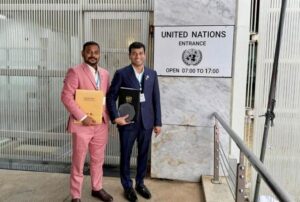
Speaking on “From Our Roots to Our Future: Building for Generations” at the Asia-Pacific Headquarters of the United Nations, Sathish Kumar Santhanam argued that the spaces people inhabit are not merely physical structures but powerful determinants of how communities live, adapt and thrive.
His central message was succinct:
“The next leap in human longevity will not come from medicine alone. It will come from the built world we choose to create today.”
Ancient engineering, modern lessons
Drawing upon Tamil Nadu’s extraordinary architectural and engineering heritage, he cited Kallanai (Grand Anicut) as an enduring example of foresight, engineering excellence and public purpose.
Built across the Cauvery, the ancient water-management structure was presented as more than a monument to engineering—it was an illustration of how infrastructure designed with long-term public needs in mind can serve generations.
He also invoked the Brihadisvara Temple at Thanjavur, highlighting its precision, scientific knowledge, architectural intelligence and timeless design as lessons that continue to resonate centuries later.
The underlying message was that sustainability is not simply a contemporary technological concept. It can also be found in civilisations that designed infrastructure and built environments with longevity, resourcefulness and collective welfare at their core.
‘Yaadhum Oore; Yaavarum Kelir’
Adding a cultural dimension to the global discussion, Sathish Kumar Santhanam recalled the celebrated Tamil Sangam-era expression “Yaadhum Oore; Yaavarum Kelir”, attributed to poet Kaniyan Pungundranar.
He also recalled former President A.P.J. Abdul Kalam’s invocation of the same ideal during his address to the European Parliament.
The phrase—often rendered as “Every place is our home. Everyone is our kin”—provided a philosophical bridge between Tamil heritage and the summit’s international focus on inclusive human well-being.
The message, in essence, was that the communities of tomorrow must be designed not merely for individual comfort but for shared prosperity, belonging and resilience.
What should tomorrow’s communities look like?
The address placed future-ready communities at the centre of the sustainability debate, identifying several interconnected priorities: water security, clean energy, food resilience, technology, nature, affordability and human connection.
Rather than treating these as isolated development objectives, the address linked them to the everyday quality of life of future generations.
A resilient community, in this vision, would need to conserve and secure water, reduce dependence on unsustainable energy systems, strengthen food security, embrace appropriate technology and preserve its relationship with nature—while remaining accessible and affordable.
Beyond buildings: building for generations
For DAC Developers, the message also represented a broader philosophy of development: that the built environment should contribute to healthier, safer and more inclusive communities.
Sathish Kumar Santhanam underscored the need to move beyond conventional notions of construction and think in terms of inter-generational resilience—creating places capable of supporting changing social, environmental and economic needs over decades.
His intervention at the UN-backed global summit thus connected three seemingly distant worlds: ancient Tamil wisdom, contemporary sustainability and the future of human well-being.
The larger proposition was clear: the buildings and communities created today will influence not only how people live, but also how successfully future generations respond to climate pressures, resource constraints and changing patterns of human settlement.
Rooted in heritage. Built for generations.