- Saurabh Desai’s 15-year photographic odyssey moves beyond breathtaking landscapes to capture people, culture, memories and a changing Himalayan way of life
- 412 photographs bring together Ladakh, Zanskar and Spiti in an intimate visual journey
- From monks and mountain families to rope bridges and remote landscapes, the exhibition asks what development means for a civilisation rooted in nature
- ‘JULLEY’—a word of love, respect and welcome—becomes a conversation between Ladakh and the wider world
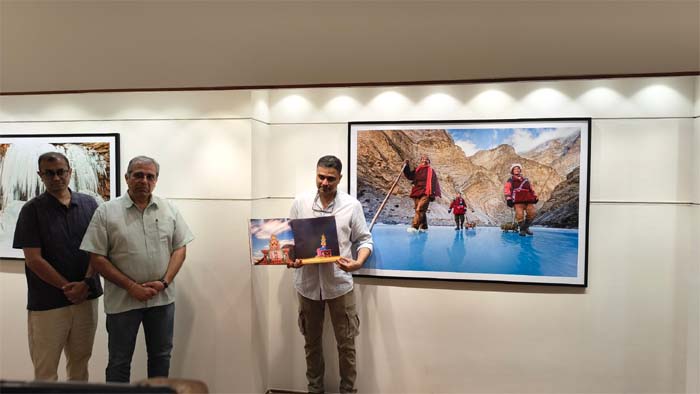
- Photo exhibition at Satya Art Gallery, Ahmedabad, from October 2 to 31; book launch on Gandhi Jayanti
R MANICKAVASAGAM
AHMEDABAD, OCT 1
“If there is one lesson these mountains have gifted me, it is this: We cannot conquer nature, we can only belong.”
That reflection by photographer Saurabh Desai perhaps captures the soul of JULLEY better than any conventional description of a coffee-table book.
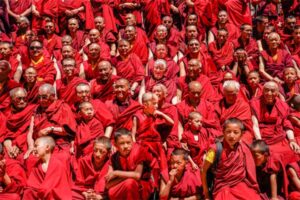
With 412 photographs distilled from a remarkable 15-year journey across Ladakh, Zanskar and Spiti, JULLEY is not merely an album of Himalayan grandeur. It is an invitation to look again—to move beyond the familiar postcard images of snow-capped peaks, turquoise lakes and sweeping valleys and discover the people, faith, memories, hospitality and everyday resilience that give the high-altitude landscape its human heartbeat.
Desai’s book and accompanying photo exhibition will open at Navajivan Trust’s Satya Art Gallery in Ahmedabad on October 2, coinciding with Gandhi Jayanti, and will remain on view until October 31, from noon to 9 pm.
For a photographer accustomed to the drama of wildlife and the wilderness, Ladakh presented a different proposition.
Asked why he chose Ladakh for this photographic journey, Desai said: “Ladakh is portrayed through its spectacular mountains and landscapes. Actually, JULLEY is an attempt to shift the spotlight from the geography of Ladakh to its people, culture, memories, hospitality and changing way of life. It is ultimately a conversation between Ladakh and the wider world.”
That conversation unfolds frame by frame.
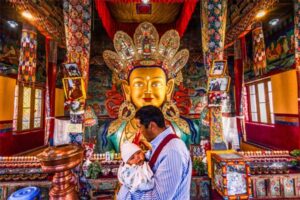
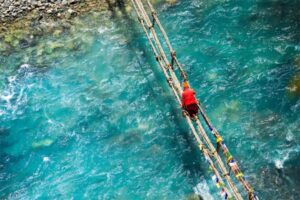
A monk at a monastery. A father and son standing at the feet of Lord Buddha. A Ladakhi negotiating a river on a rope bridge. Children and young people finding their own rhythm in the mountains. Families living alongside an unforgiving but magnificent terrain. Each photograph becomes a fragment of a larger story.
And that is what makes JULLEY particularly relevant at a time when Ladakh itself is negotiating the delicate intersection of tourism, connectivity, infrastructure, employment, modern education and cultural continuity.
The official Ladakh Tourism portal describes the Union Territory as a confluence of culture, nature and adventure, highlighting its ancient monasteries, festivals, tribal communities, heritage, wildlife and growing emphasis on eco-tourism. It also stresses responsible travel, local conservation and mindful engagement with the region.
Desai has witnessed that transition from close quarters.
Asked what changes he has observed among Ladakhi youth as tourism, infrastructure development, modern education and employment opportunities expand, he said: “Being the border state, the government is giving more thrust to infrastructure development like roads, healthcare and education. Youth like these much-needed development activities.”
The observation points to a larger question running silently through JULLEY: Can development expand horizons without diminishing roots?
There are no easy answers. But the photographs make the question difficult to ignore.
Ladakh’s official tourism narrative itself recognises the economic significance of tourism, particularly for employment and economic activity in remote areas. At the same time, its current tourism framework places increasing emphasis on responsible tourism and heritage conservation.
The region’s cultural inheritance is equally visible. Ladakh Tourism identifies monasteries, festivals, rituals, traditional communities and heritage sites as integral to its identity. Monastic festivals, for instance, continue to preserve spiritual traditions through ritual performances and masked dances.
Desai’s camera enters that world not as an outsider hunting for exotic images, but as a traveller who has repeatedly returned.
“The book ‘JULLEY’ and this photo exhibition reflect my 15-year journey across Ladakh, Zanskar, and Spiti—capturing various visits, natural landscapes, and stories collected along the way,” he said.
That repeated return appears to have changed the photographer as much as it has enriched the photographs.
“Ladakh has not only taught me photography, but it has also given me a new perspective on living alongside nature and life itself. ‘JULLEY’ is my humble tribute to the beauty and serene life of Ladakh,” Desai said.
The title itself carries the warmth of the project.
Julley is a familiar expression of greeting, welcome, affection and respect in Ladakh. In Desai’s hands, the word acquires another dimension: an invitation to establish a human connection between the viewer and the people behind the landscape.
That distinction matters.
A mountain can be photographed in a second. Understanding the person who lives beneath it may take years.
A monastery can be visually spectacular. Understanding what it means to generations of believers requires patience.
A rope bridge can make a dramatic photograph. Understanding why people cross it tells a much deeper story about geography, necessity and resilience.
This is where JULLEY moves from photography into visual anthropology—not claiming to document everything about Ladakh, but offering intimate windows into lives that can easily disappear behind the overwhelming spectacle of the Himalayas.
The timing of the exhibition is significant too. In 2026, Ladakh has continued to place emphasis on tourism, cultural outreach, heritage conservation and youth opportunities. The administration has also been strengthening heritage protection, with new heritage-conservation measures and protected monuments announced during the year.
Against that evolving backdrop, JULLEY becomes more than a collection of photographs. It becomes a visual record of a region in transition.
For Ahmedabad’s art lovers, photographers, travellers and students, the exhibition offers an opportunity to encounter Ladakh without immediately reaching for a travel itinerary.
For those who have visited Ladakh, it may evoke memories.
For those who have never been there, it may challenge the familiar tourist imagination.
And for anyone concerned about the relationship between development and ecology, it may leave behind a more fundamental question:
When roads become wider, technology reaches deeper and tourism grows, what must remain untouched—not merely in the mountains, but in the memory and identity of the people who call them home?
Desai does not appear to answer that question for the viewer.
Instead, he lets Ladakh speak.
Through a monk’s stillness.
Through a child’s curiosity.
Through a family’s faith.
Through a traveller’s encounter.
Through a rope bridge suspended over a river.
And through mountains that seem to remind every visitor of the same truth:
Nature is not a backdrop to human life. It is part of it.
That is perhaps the quiet power of JULLEY.
It does not simply ask the viewer to see Ladakh.
It asks the viewer to see Ladakh differently.