
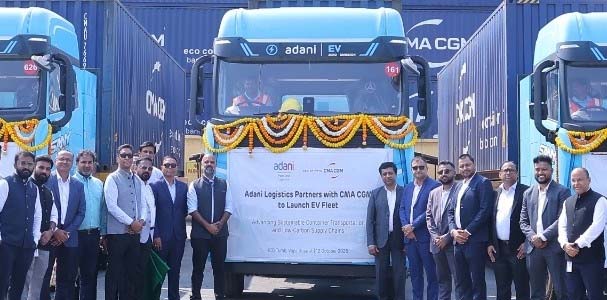
- Tumb depot in Vapi to anchor electric-truck deployment for container deliveries
- CMA CGM becomes the first shipping line to use the newly deployed fleet
- Store-door delivery model connects inland depot directly with factories and warehouses
- Electric trucks promise zero tailpipe emissions, with overall carbon savings dependent on the power mix
- Partnership signals a push towards cleaner road freight across Gujarat’s logistics network
NE BUSINESS BUREAU
VAPI (GUJARAT), OCT 15
India’s container logistics chain is shifting gears towards electric mobility, with Adani Logistics Limited (ALL) partnering global shipping and logistics group CMA CGM to deploy electric trucks for container deliveries from its Inland Container Depot (ICD) at Tumb in Vapi, Gujarat. The initiative extends electric mobility beyond ports and shipping terminals to the crucial inland road-freight leg connecting container depots with customers’ factories and warehouses.
Adani Logistics, part of Adani Ports and Special Economic Zone Limited (APSEZ), India’s largest integrated transport operator, is positioning the deployment within what the company describes as India’s largest truck fleet for container movement. The initiative seeks to integrate electric vehicles into routine container transportation rather than confining them to limited pilot operations.
CMA CGM has become the first shipping line to use the newly deployed electric fleet, with its containers forming the first consignment transported during Wednesday’s flag-off ceremony.
Bringing electric mobility to the store door
Under the store-door delivery model, containers are transported by road from the inland depot directly to customers’ designated premises. By incorporating electric trucks into this segment, the partnership seeks to extend cleaner mobility across the supply chain, linking inland container handling with the final delivery destination.
The collaboration combines Adani Logistics’ inland transportation operations with CMA CGM’s global shipping network, bringing electric vehicles into the movement of shipping containers from depot to destination.
The move is significant because road transportation remains an essential link between ports, inland container depots, industrial facilities and warehouses. Electrifying this segment offers logistics operators an opportunity to reduce local air pollution while advancing efforts to lower the environmental footprint of freight movement.
Zero tailpipe emissions, but the power mix matters
Electric trucks produce no tailpipe emissions while operating, potentially improving air quality along delivery routes compared with conventional diesel-powered vehicles. However, the overall reduction in greenhouse gas emissions depends on the electricity used to charge the vehicles, alongside factors such as vehicle utilisation and charging efficiency.
The deployment also underscores the operational considerations involved in scaling up electric freight transportation. Charging infrastructure, vehicle range, payload requirements and delivery schedules must be aligned to ensure that electric trucks can meet customers’ requirements without compromising the reliability of container movement.
For logistics operators, the challenge is to make electric mobility commercially viable while maintaining the speed, capacity and predictability demanded by modern supply chains.
A step towards cleaner freight in Gujarat
The Tumb deployment marks a step towards integrating lower-emission road transportation into Gujarat’s logistics network. By bringing a shipping line and an inland logistics operator together, the initiative illustrates how collaboration across the supply chain can help accelerate the adoption of alternative vehicle technologies.
The longer-term impact will depend on how effectively electric trucks can be incorporated into regular freight operations and whether the model can be expanded across additional routes and delivery points.
As India seeks to make its logistics ecosystem more efficient and sustainable, initiatives such as this could help bring electric mobility into one of freight transportation’s most critical links: the journey from the container depot to the customer’s doorstep.