
NE BUSINESS BUREAU
ANAND, MAY 13
In a move set to impact millions of Indian households and tea stalls alike, Gujarat Cooperative Milk Marketing Federation, which markets dairy products under the iconic Amul brand, on Tuesday announced a ₹2 per litre increase in fresh pouch milk prices across major variants and packs with effect from May 14, 2026.
- Amul raises fresh pouch milk prices by ₹2 per litre across India from May 14
- GCMMF says hike driven by soaring cattle feed, fuel and packaging costs
- Milk prices remained untouched for nearly one year since May 2025
- Farmer procurement prices increased by ₹30 per kg fat to support dairy producers
- Amul says nearly 80 paise of every consumer rupee goes directly to milk farmers
The price revision, though moderate compared to prevailing food inflation levels, signals mounting pressure on India’s dairy supply chain amid rising operational and production costs.
The cooperative dairy giant said the increase translates to roughly 2.5 to 3.5 per cent per litre and comes after nearly a year of price stability, with no hike implemented since May 2025.
Rising Costs Force Dairy Price Revision
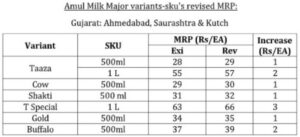
Amul attributed the latest increase to a sharp rise in key input costs, including cattle feed, milk packaging film and fuel, all of which have significantly raised the cost of milk procurement and distribution across the country.
The federation also highlighted that its member unions had increased procurement prices paid to dairy farmers by ₹30 per kg fat — a 3.7 per cent increase over May 2025 levels — to ensure sustainable income support for milk producers.
Industry experts say rising fodder costs, transportation expenses and inflationary pressure across rural supply chains have been steadily squeezing dairy cooperatives over the past several months.
Human Impact Beyond the Numbers
The milk price hike is expected to ripple through household budgets, particularly among middle-class and lower-income families where milk remains an essential daily staple.
From morning tea vendors and small eateries to families dependent on milk for children and elderly nutrition, the revision is likely to have a visible impact on everyday expenses.
However, Amul maintained that the increase was necessary to protect the interests of dairy farmers who form the backbone of India’s vast cooperative milk ecosystem.
“Amul as a policy passes on almost 80 paise of every rupee paid by consumers for milk and milk products to the milk producers,” the federation said in a statement.
Supporting India’s Dairy Farmers
The cooperative added that the revised pricing structure would help sustain remunerative milk prices for dairy farmers while encouraging higher milk production at a time when input costs continue to rise sharply.
India remains the world’s largest milk producer, with cooperative movements like Amul playing a critical role in supporting rural livelihoods and women-led dairy economies across multiple states.
Analysts note that despite the increase, Amul’s milk prices continue to remain relatively competitive compared to several private dairy brands in urban markets.
Inflation Concerns Persist
The latest hike also comes amid broader concerns over food inflation and rising household consumption costs across India.
Economists say dairy products have remained relatively insulated compared to volatile vegetable and fuel prices, but sustained increases in production expenses are now beginning to reflect in retail pricing.
Consumers in several cities are expected to see revised prices for popular variants including toned milk, full cream milk and buffalo milk from Wednesday morning.