
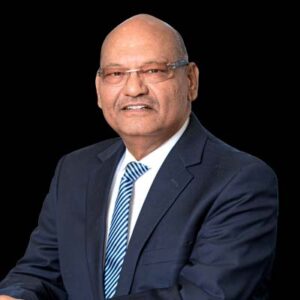
- Vedanta chairman urges government and industry to join hands to accelerate economic growth and generate employment on a massive scale
- Calls for wider privatisation across natural resources, energy, manufacturing and heavy industries, with no retrenchment and threefold job growth
- Advocates public share distribution in government-owned enterprises as an alternative to corporate acquisitions
- Wants lengthy approvals replaced with self-certification, simpler regulations and compliance-based audits to fast-track business expansion
- Sees exploration-led startups in minerals, metals and hydrocarbons as a new engine of entrepreneurship and domestic resource development
NE BUSINESS BUREAU
CHENNAI, NOV 22
Can privatisation, regulatory trust and exploration entrepreneurship together become the catalysts for India’s next employment revolution? Vedanta Group Chairman Anil Agarwal believes they can, calling for a concerted national effort by the government, industry and citizens to translate Prime Minister Narendra Modi’s vision of economic transformation into large-scale job creation, higher incomes and stronger domestic capabilities.
Reflecting on the Prime Minister’s address to industry at the Federation of Indian Chambers of Commerce and Industry (FICCI), Agarwal, in a recent social media post, has outlined an ambitious agenda centred on three major priorities: wider privatisation, a decisive shift towards self-certification and a vibrant exploration ecosystem driven by startups and young entrepreneurs.
At the heart of his proposal is a call to unlock the potential of government-owned enterprises across natural resources, energy, manufacturing and heavy industry through greater private-sector participation. He believes professional management, improved productivity and fresh investment can help these enterprises become more competitive while generating substantial employment opportunities and strengthening the MSME ecosystem.
However, Agarwal has proposed two important conditions to accompany privatisation: no retrenchment and a threefold increase in employment. The objective, as outlined in his post, is not merely a change in ownership or management but a broader economic transformation in which privatisation translates into more jobs and opportunities.
He has also suggested wider public share distribution as an alternative to corporate acquisitions. Under this approach, citizens could participate in the ownership of government enterprises, while proceeds from privatisation could be channelled towards reducing government debt and financing infrastructure development.
Trust over red tape
Agarwal has placed equal emphasis on transforming the regulatory environment, drawing inspiration from the Prime Minister’s focus on trust between the government and industry.
He has advocated replacing lengthy approval procedures and multiple clearances with self-certification and simpler regulations. Instead of making businesses navigate cumbersome permissions before commencing operations, the government should establish clear rules and allow enterprises to begin and expand operations through self-certification, backed by periodic audits and accountability.
Such a shift, he believes, could significantly reduce compliance burdens, encourage investment and enable emerging industries to establish themselves and scale up faster.
Exploration: The next startup frontier
A particularly significant element of Agarwal’s proposal is his emphasis on exploration as an untapped entrepreneurial opportunity for India’s young talent.
He has identified minerals, metals and hydrocarbons as sectors in which startups and young entrepreneurs could play a transformative role by undertaking exploration and discovering new resources.
His suggested model would enable exploration startups to sell their discoveries to established companies such as Oil and Natural Gas Corporation (ONGC) and Hindustan Zinc, which possess the financial resources, technical expertise and infrastructure required for large-scale mining, processing and commercial development.
This division of responsibilities could create an ecosystem in which smaller enterprises concentrate on innovation and resource discovery, while established companies take forward capital-intensive extraction and processing. Agarwal believes such an approach could encourage hundreds of startups, open up new entrepreneurial avenues and strengthen India’s domestic resource base.
A national movement for jobs and growth
In concluding his post, Agarwal has called for industry, government and citizens to unite behind a collective national mission built around privatisation, self-certification and exploration.
Drawing a parallel with the historic Jai Jawan, Jai Kisan movement, which helped galvanise the country’s efforts towards food self-sufficiency, he has advocated a similar collective endeavour to create employment, raise incomes and strengthen the Indian rupee.
His central message is that India’s next phase of economic growth must be driven by a partnership in which government creates an enabling policy environment, industry invests and innovates, and entrepreneurs unlock new opportunities.
The proposed agenda, if translated into policy and implemented with safeguards, could open up a wider debate on how India can combine private investment, citizen participation, regulatory reform and entrepreneurial innovation to build a more productive and employment-intensive economy.