
- Chief Minister Vijay holds high-level consultations with legal and police officials ahead of November 24 observance
- Supreme Court allows one-time lighting at disputed Deepathoon but stays relevant findings of Madras High Court
- HR&CE Commissioner seeks review and stay, citing irreversible consequences of implementing interim order
- Restricted temple team alone permitted; public access, processions and demonstrations barred
- VCK defends government’s position, while BJP and DMK step up criticism
- Administration faces delicate task of enforcing judicial directions while protecting religious freedom and communal harmony
NE NEWS SERVICE
CHENNAI, NOV 23
A judicially mandated religious observance, a State government’s bid to secure a review and an increasingly polarised political debate have converged to place Tamil Nadu Chief Minister C Joseph Vijay in a delicate constitutional and administrative position on the eve of Karthigai Deepam.
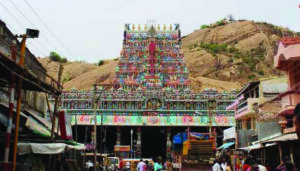
With the Supreme Court permitting the lighting of the ceremonial lamp at the disputed Deepathoon atop Thirupparankundram hill in Madurai on November 24 as a one-time measure, the Vijay government on Monday held high-level consultations with senior legal and police officials to determine its next course of action.
Law Minister R Nirmal Kumar, Advocate General Vijay Narayan and Director General of Police Mahesh Kumar Aggarwal attended the meeting at the Secretariat in Chennai. The discussions centred on the legal implications of the November 20 interim order, the State’s review petition and security arrangements for Tuesday’s observance.
The immediate challenge for the government is particularly sensitive: the Supreme Court’s direction remains operative even as the State has sought its reconsideration. Filing a review petition does not automatically suspend an order, making compliance with the subsisting judicial directions and the maintenance of public order critical responsibilities.
SC’s one-time permission with stringent safeguards
In its November 20 interim order, a Bench of Justices Aravind Kumar and Vipul M Pancholi permitted the lighting of the Karthigai Deepam at the stone pillar identified as the Deepathoon on November 24.
However, the permission was expressly confined to this year’s festival and was not an adjudication recognising any established customary, religious or proprietary right over the disputed location.
The Supreme Court also stayed the relevant findings in the Madras High Court’s January 6, 2026 judgment, pending further consideration of the matter.
The apex court prescribed stringent conditions for the ceremony. The lamp must be lit exclusively by a restricted team authorised by the temple administration. The District Collector, Madurai, has been designated the nodal officer and tasked with finalising the team’s composition in consultation with the temple Executive Officer, Archaeological Survey of India and the Commissioner of Police.
The order also makes it clear that members of the general public cannot accompany the authorised team. Processions, public congregations, demonstrations, slogan-raising and activities unrelated to the ceremonial lighting have been prohibited at the site.
The administration must regulate access and ensure that the observance does not interfere with worship at the customary locations or lawful access to the dargah and mosque. No permanent construction, excavation or structural alteration is permitted.
The District Collector has also been directed to submit a compliance report within three days of the festival.
Significantly, the Supreme Court has kept the larger questions concerning religious rights, customary practices and enforceable claims open for adjudication. The one-time permission cannot be cited as proof of an established custom or as a basis for claiming similar permission in subsequent years.
State seeks review, cites irreversible consequences
The Tamil Nadu government’s Hindu Religious and Charitable Endowments (HR&CE) Commissioner moved the Supreme Court on November 21, seeking review of the interim order and a stay on its implementation.
The review petition argues that the interim arrangement effectively grants the petitioners the relief they had sought for the current year, even though the State’s substantive challenge remains to be adjudicated.
The State has also questioned the grant of such relief without a prima facie determination of the claimed right to light the lamp at the disputed pillar.
Its central concern is that once the ceremony is performed, the consequences cannot be reversed, even if the State eventually succeeds in the proceedings.
The petition draws attention to the Supreme Court’s own observation that the performance of the ceremony, once undertaken, cannot be undone.
The review plea had not been listed for hearing on Monday, leaving the November 20 directions in force as the administration prepared for Tuesday’s festival.
The larger case is expected to be taken up by the Supreme Court in the second week of January 2027.
Police vigilance as festival approaches
Meanwhile, security has been strengthened at Thirupparankundram, with 100 police personnel deployed in the area ahead of the festival.
Deputy Commissioner of Police A G Inigo Divyan inspected arrangements at the hilltop, the dargah and surrounding areas amid heightened vigilance.
The Supreme Court’s restrictions on public access and demonstrations make coordination among the district administration, police, temple authorities and archaeological officials particularly important.
The challenge is not merely to facilitate the ceremonial lighting but also to ensure that the observance does not disrupt worship or access at neighbouring religious sites.
VCK defends government’s stand; & DMK criticise
Backing the State government’s decision to file a review petition, VCK leader and State Minister Vanni Arasu described the move as important for protecting secularism in accordance with the Constitution.
Speaking to reporters in Chennai, he said VCK president Thol Thirumavalavan had already welcomed the government’s decision and would participate in a peace gathering in Madurai later on Monday.
Maintaining that devotees had traditionally lit the lamp at the customary location, Vanni Arasu argued that the government was reflecting the sentiments of the people.
He also challenged allegations that the State was disregarding judicial authority, questioning whether the BJP had accepted and respected the Supreme Court’s verdict concerning the Sabarimala Ayyappa temple. He accused the party of adopting selective positions on judicial pronouncements.
The minister rejected the Opposition leader’s charge that the six-month-old TVK government had taken Tamil Nadu backwards by 100 years, maintaining that the present administration had followed the same position as its predecessor on the Thirupparankundram issue.
Responding to Tamil Nadu BJP president Nainar Nagenthran’s remarks questioning why the government was agitated over lighting the lamp at the Deepathoon, Vanni Arasu contended that the dispute concerned the demand to light the lamp on a survey stone instead of the customary pillar.
He accused the BJP, RSS and Sangh Parivar of attempting to foment tension, violence and communal unrest, while hurting the sentiments of Hindu devotees.
These allegations represent the VCK leader’s political position and have not been independently established.
The BJP, meanwhile, has criticised the government’s review move, with Nagenthran questioning its opposition to the Supreme Court’s one-time permission. The DMK has also attacked the TVK government, alleging that it failed to argue the case effectively before the apex court.
A test that goes beyond party politics
The Thirupparankundram dispute has evolved from a disagreement over the location of a religious ritual into a wider legal and political contest involving the interpretation of religious rights, the authority of temple administration, the protection of neighbouring places of worship and the limits of interim judicial relief.
For the Vijay government, the immediate test is to ensure that the Supreme Court’s operative directions are implemented without confrontation, while pursuing its legal objections through the appropriate judicial process.
Equally important is the protection of the religious rights and sentiments of all communities, without allowing political mobilisation to turn a sensitive religious observance into a law-and-order flashpoint.
The Supreme Court has deliberately confined its permission to a one-time arrangement and left the substantive issues open. The State’s review plea, in turn, seeks to prevent what it considers irreversible consequences before those issues are finally adjudicated.
As Madurai prepares for Tuesday’s observance, the credibility of the administration will be judged not by political rhetoric but by its ability to uphold the rule of law, protect religious coexistence and maintain peace.