- Gujarat outreach gives observers from 32 countries a glimpse of India beyond its combat aircraft and military capabilities
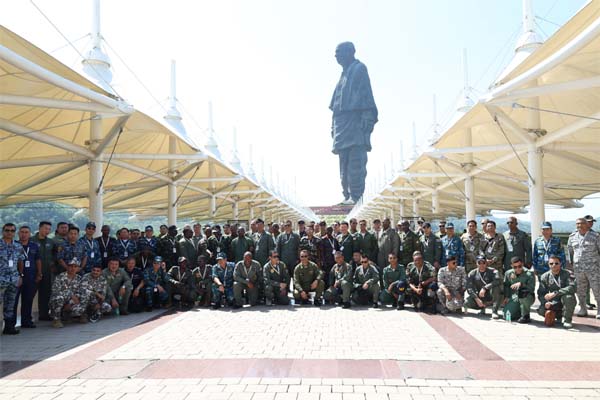
- Statue of Unity showcases the enduring idea of national unity as Tarang Shakti expands its diplomatic canvas
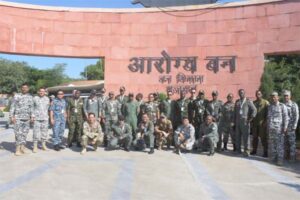
- Arogya Van offers a window into India’s holistic approach to wellness, tradition and sustainable living
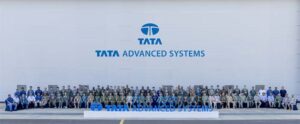
- Visit to Tata Advanced Systems’ C-295 facility highlights India’s growing aerospace manufacturing ecosystem
- IAF says Tarang Shakti is built around “Power in Partnership”, with interoperability, mutual learning and stronger defence relationships at its core
NE DEFENCE BUREAU
NEW DELHI, OCT 3
From the towering Statue of Unity to the green expanse of Arogya Van and the assembly lines of the Tata Advanced Systems Limited (TASL) C-295 facility in Vadodara, India offered observers from 32 countries a carefully curated tour of a nation seeking to project its identity beyond the battlefield.
As part of Exercise Tarang Shakti 2026, the observers visited the three Gujarat landmarks, getting a glimpse of India’s diverse strengths — its national unity, traditional and holistic wellness ethos, and rapidly expanding indigenous aerospace and defence manufacturing capabilities.
The Gujarat outreach added a distinctly broader dimension to the multinational air exercise being hosted by the Indian Air Force from September 26 to October 12 at Air Force Station Jodhpur and adjoining air bases.
The second edition of Tarang Shakti brings together foreign air forces participating with air assets and 32 nations as observers. The exercise is themed “Power in Partnership”, with emphasis on interoperability, operational learning and professional exchange.
From a monument to a message
The Statue of Unity at Kevadia was more than a tourist stop for the international observers.
The monument, dedicated to Sardar Vallabhbhai Patel, provided an imposing backdrop to the idea of unity that underpins India’s national narrative — an especially resonant message in a multinational exercise bringing together air forces and observers from across the world.
The Gujarat visit demonstrated that defence engagement need not remain confined to air bases, aircraft and operational briefings.
By exposing foreign observers to India’s heritage and national symbols, the IAF has broadened the meaning of military-to-military engagement into an exercise in mutual familiarity and cultural understanding.
That approach is consistent with the wider architecture of Tarang Shakti 2026, which includes professional, cultural and outreach activities alongside flying operations. The Ministry of Defence has said these engagements are intended to promote professional exchange, interaction and camaraderie among participating contingents.
Wellness enters the defence diplomacy canvas
The visit to Arogya Van added another layer to the Gujarat itinerary.
For international observers accustomed to viewing India principally through its military platforms, the destination offered an insight into the country’s traditional knowledge systems and holistic approach to wellness.
The symbolism was striking: a multinational military exercise centred on sophisticated air warfare also creating space for an encounter with a distinctly Indian concept of wellbeing.
It reinforced the broader message that India’s engagement with partner countries is not restricted to hardware, exercises and operational procedures but can encompass culture, heritage, wellness and people-to-people understanding.
Inside India’s C-295 manufacturing story
If the Statue of Unity represented India’s national identity and Arogya Van its wellness and cultural traditions, the Tata Advanced Systems Limited C-295 facility in Vadodara represented the other face of contemporary India — its ambition to build sophisticated aerospace systems domestically.
The industrial visit gave the 32 observer nations an opportunity to see India’s growing aerospace manufacturing ecosystem at close quarters.
The C-295 programme is particularly significant in the context of India’s efforts to expand indigenous aerospace capabilities and deepen private-sector participation in defence manufacturing.
The Ministry of Defence has said Tarang Shakti 2026 provides India an opportunity to demonstrate its operational capabilities and highlight its growing indigenous aerospace and defence capabilities.
For the observers, the juxtaposition was perhaps the most telling part of the Gujarat itinerary: a national monument representing unity, a wellness destination rooted in Indian traditions and a modern aerospace facility representing industrial ambition.
‘Power in Partnership’ takes a wider meaning
The IAF’s stated objective for Tarang Shakti extends beyond flying together.
Vice Chief of the Air Staff Air Marshal Ashutosh Dixit has described the exercise as an opportunity to “learn from each other, operate with each other, and prepare for the air warfare challenges of tomorrow.”
The exercise covers a wide range of air operations, including counter-air, air defence, reconnaissance, airlift and air-to-air refuelling, besides complex mission sets.
The presence of 32 observer nations gives the exercise an additional diplomatic dimension.
The participating foreign air forces include Australia, the US, UAE, France, Germany, Sri Lanka and Bangladesh, with sophisticated platforms including the F-35 Lightning II, Rafale, F-16, A400M, MRTT and C-130 variants taking part.
But the Gujarat tour suggested that the larger message of Tarang Shakti is not confined to the aircraft flying over Rajasthan.
A different kind of air-power outreach
The Gujarat engagement offered a glimpse of an evolving model of defence diplomacy — one in which military interoperability and cultural familiarity reinforce each other.
For the 32 observer nations, the tour moved seamlessly from India’s history to its wellness traditions and then to its aerospace manufacturing ambitions.
Different experiences, one shared purpose: building stronger partnerships.
And that may ultimately be the most enduring takeaway from Tarang Shakti 2026 — the strongest partnerships are built not only by flying together, but also by understanding the country with which one is learning to fly.