R. ARIVANANTHAM
CHENNAI/NEW DELHI, MAY 3
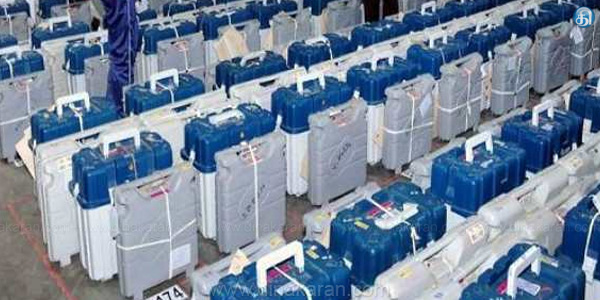
As India braces for counting day across multiple states, the Election Commission of India (ECI) has put in place an unprecedented multi-layered security architecture to ensure smooth, transparent and tamper-proof vote counting, even as political parties intensify last-minute strategies to prevent post-poll horse-trading.
- ECI Rolls Out Three-Tier Security Cover Across 62 Counting Centres in Tamil Nadu
- TVK, DMK, AIADMK Activate Parallel War Rooms Amid Horse-Trading Fears
- Pondicherry, Goa Parties Watch Closely as Post-Poll Alliances Take Shape
- QR-Based Entry System, CAPF Deployment, Micro-Observers Tighten Election Grid
- Assam, Bengal, Kerala Results Add National Political Heat to Counting Day
- Exit Poll Buzz, Internal Alliance Strains and Candidate Protection Dominate Narrative
Chief Electoral Officer, Tamil Nadu, Archana Patnaik confirmed that all arrangements are in place for counting at 62 designated centres across the state.
“All arrangements are in place, including a comprehensive three-tier security plan, for counting of votes on May 4 at the 62 designated counting centres across the state,” she said.
TN Political Arena on High Alert
Tamil Nadu’s political battleground remains volatile with Dravida Munnetra Kazhagam, All India Anna Dravida Munnetra Kazhagam, Tamilaga Vettri Kazhagam and Naam Tamilar Katchi all positioning themselves for a decisive verdict.
TVK, led by Vijay, has reportedly activated a tight internal monitoring system across all 234 candidates, amid fears of post-result poaching attempts.
Party insiders say candidates have been instructed to remain in constant contact with leadership, while a secure communication channel has been established to prevent external influence during counting.
Multi-State Political Pressure Builds
Beyond Tamil Nadu, similar high-voltage anticipation is visible across Assam, West Bengal and Kerala, where alliances and rival blocs are preparing for unpredictable outcomes.
In Assam, both NDA and opposition camps are closely watching seat swings, while West Bengal’s fiercely contested political landscape has triggered heightened security and scrutiny over EVM storage and counting protocols.
Pondicherry and Goa Add Regional Layers
Regional political observers note that parties in Puducherry and Goa are also tracking outcomes in neighbouring states, as post-result alignment possibilities gain momentum.
Local party units in both regions are believed to be assessing coalition scenarios depending on national and regional spillover effects, particularly in the event of closely fought mandates.
EC’s Fortress-Like Security Framework
The ECI has deployed a massive security apparatus, including over 1.25 lakh personnel across states, micro-observers, and counting staff.
A three-tier security system has been implemented:
- Outer perimeter secured by state police
- Entry zones monitored by State Armed Police
- Inner sanctums and EVM strong rooms guarded by CAPF units
Additionally, 234 Counting Observers and QR-based ECINET identity verification have been introduced to prevent unauthorised access.
“Comprehensive security arrangements have been made to ensure that counting is conducted in a peaceful, transparent and orderly manner,” an ECI official said.
Political Alliances Under Stress Test
In Tamil Nadu, internal strains within the Secular Progressive Alliance have reportedly intensified over seat-sharing and leadership roles, while Congress demands for greater power-sharing continue to surface.
Meanwhile, AIADMK and BJP units are also said to be actively monitoring post-counting scenarios, keeping alliance doors strategically open.
National Political Ripple Effect
From Kerala to Bengal, leaders across parties have expressed confidence ahead of results, while also preparing for coalition recalibration depending on outcomes.
Observers say the results could reshape not just state governments but also national alliance equations, with smaller parties and regional players playing a decisive balancing role.
Countdown to Verdict
With EVMs set to open at 8 AM, India’s electoral machinery enters its final phase of a closely watched democratic exercise—one that will determine not just winners, but the architecture of power across several states.