R ARIVANANTHAM
CHENNAI, SEPT 7
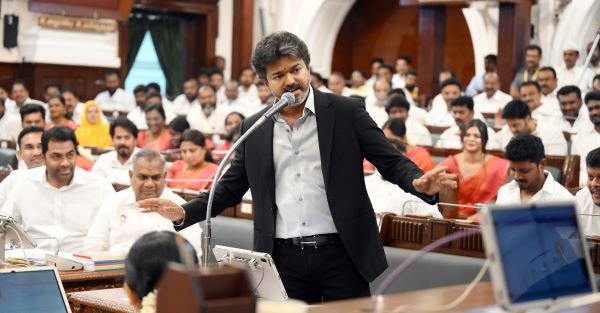
The Tamil Nadu Assembly on Monday witnessed anything but routine business, as Chief Minister C Joseph Vijay transformed the debate on police grants into a fiery political reckoning, placing alleged corruption in the previous DMK regime under the spotlight and reading from Enforcement Directorate (ED) and Directorate of Vigilance and Anti-Corruption (DVAC) documents.
மாண்புமிகு தமிழ்நாடு முதலமைச்சர் திரு.ச.ஜோசப் விஜய் அவர்கள் இன்று (7.9.2026) தமிழ்நாடு சட்டமன்றப் பேரவையில், 2026-2027 ஆம் ஆண்டிற்கான காவல்துறை, தீயணைப்பு மற்றும் மீட்புப் பணிகள் துறை மானியக் கோரிக்கைகள் மீதான விவாதத்திற்குப் பதிலளித்து உரையாற்றினார்.#CMJosephVijay pic.twitter.com/Ju4JYmdIse
— CMOTamilNadu (@CMOTamilnadu) September 7, 2026
Vijay accused the previous government of allowing an alleged network of political intermediaries and private players to exploit state machinery, particularly in the state-run liquor retailer TASMAC. His charges triggered uproar from the DMK benches, with Opposition members storming the Well and eventually walking out after Leader of Opposition Udhayanidhi Stalin was denied permission to respond.
- CM cites ED and DVAC findings to target previous DMK regime over alleged TASMAC irregularities and ‘party fund’ collections
- Vijay alleges organised network exploited state machinery for extortion, tender manipulation and illicit transfers
- ‘Karur gang’ allegedly collected excess cash from liquor consumers and bar owners; Senthil Balaji, brother Ashok Kumar figure in CM’s charges
- DMK storms Well, seeks right to respond; Opposition walks out after Speaker denies Udhayanidhi Stalin permission to reply
- ‘God, nature and people will always be on our side,’ declares Vijay as political temperature soars in Assembly
‘Karur Gang’ at centre of TASMAC charges
Reading from documents cited as ED findings, Vijay alleged that an “organised crime syndicate”, referred to as the “Karur gang”, operated during the 2021–25 period, allegedly using political and administrative influence to collect money from liquor consumers and bar owners.
He alleged that the network operated across the Karur and Coimbatore regions and “systematically collect[ed] excess cash from liquor consumers and extorted local bar owners”, while official channels were allegedly bypassed.
Vijay also referred to an alleged “unauthorised power broker” who, according to the material he cited, wielded influence over official transfers and administrative postings in return for financial considerations. He linked the allegations to the tenure of former minister V Senthil Balaji, who held the relevant portfolio during the previous regime.
Senthil Balaji, Ashok Kumar figure in CM’s attack
Vijay specifically named V Ashok Kumar, brother of Senthil Balaji, while alleging fraud, bid manipulation and illicit money transfers in connection with state transport and procurement contracts.
The Chief Minister also invoked allegations relating to the collection of “party funds”, citing ED material to claim that contractors were allegedly made to pay a percentage of contract values. Other reports on his Assembly speech said Vijay alleged collections of up to 10% of contract values.
Vijay described the alleged pattern as “scientific corruption”, arguing that scrutiny of files from only a couple of departments had thrown up serious questions and asking what a wider examination could reveal.
The allegations are political claims made by the Chief Minister based on documents cited in the House and should not be read as judicial findings.
Assembly erupts as DMK demands right to reply
The political temperature rose sharply when Udhayanidhi and other DMK legislators sought permission to respond. With the Speaker declining to allow an immediate reply, DMK members entered the Well, raised slogans and displayed pamphlets before staging a walkout.
Outside the House, Udhayanidhi described the Chief Minister’s allegations as “baseless charges” and objected to the Opposition being denied an opportunity to respond.
The Speaker, J C D Prabhakar, maintained that the Opposition was attempting to prevent the Chief Minister from completing his reply, telling protesting members that “the people are watching the live stream.”
The confrontation turned the Assembly proceedings into a dramatic political exchange, with the ruling side and Opposition offering sharply contrasting narratives over corruption, accountability and the conduct of the House.
Vijay invokes history—and his own political mandate
Vijay widened his speech beyond the immediate corruption allegations, drawing parallels with historic political transitions associated with C N Annadurai in 1967, M G Ramachandran in 1977 and N T Rama Rao in 1983.
He portrayed the 2026 election victory of the two-year-old Tamilaga Vettri Kazhagam (TVK) as another significant political turning point, placing his rise in the context of earlier watershed changes in Tamil Nadu and the then-unified Andhra Pradesh.
Ending on a distinctly personal and defiant note, Vijay declared:
“God, nature, and the people will always be on our side,” asserting that political strategies against his government would ultimately fail in the face of public scrutiny and anti-corruption investigations.
Vijay was replying to the debate on the demands for grants for the Police and Home Department, which he holds, when the political fireworks unfolded.