
NE LEGAL BUREAU
NEW DELHI, OCT 5
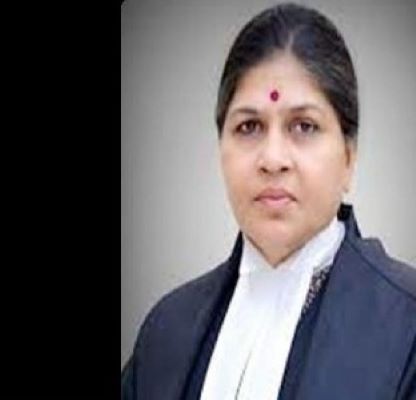
From the Allahabad High Court to the Gujarat High Court and now to the Supreme Court, Justice Sunita Agarwal’s judicial journey has traversed three important stages of India’s judicial architecture—culminating in her elevation to the country’s apex court at a time when the Supreme Court is moving close to its full sanctioned strength.
The President of India has appointed Justice Sunita Agarwal, Chief Justice of the Gujarat High Court; Justice Devendra Kumar Upadhyaya, Chief Justice of the Delhi High Court; and Justice Aparesh Kumar Singh, Chief Justice of the Telangana High Court, as Judges of the Supreme Court of India.
- Gujarat High Court Chief Justice among three HC Chief Justices elevated to Supreme Court
- Her Allahabad roots and Gujarat tenure create a distinctive judicial link to the apex court
- Known in Gujarat legal circles for firm integrity, judicial discipline and an empathetic, motherly approach
- Two of the three newly appointed SC judges have Allahabad High Court as their parent court
- Elevations take Supreme Court’s working strength to 37 against sanctioned strength of 38
The official notification states: “In exercise of the powers conferred by the Constitution of India, the President of India is pleased to appoint the following Chief Justices of High Courts as Judges of the Supreme Court of India.”
The three names had been recommended by the Supreme Court Collegium on September 28, 2026, and the appointments were notified by the Centre on Monday.
Gujarat’s Chief Justice moves to the apex court
For Gujarat’s legal fraternity, the elevation marks the culmination of Justice Agarwal’s more than three-year tenure as Chief Justice of the Gujarat High Court and brings to the Supreme Court a judge whose judicial career has been rooted in the Allahabad High Court.
Justice Agarwal served as a judge of the Allahabad High Court from November 21, 2011, to July 22, 2023, before taking oath as Chief Justice of the Gujarat High Court on July 23, 2023. The Allahabad High Court records that she had practised mainly on the civil side before being elevated as an Additional Judge in 2011 and becoming a permanent judge in 2013.
The Supreme Court Collegium, while recommending her as Gujarat Chief Justice in 2023, had specifically noted the principle that appointment of High Court Chief Justices is based on “seniority subject to merit and integrity”, and recorded her more than 11 years of judicial experience at the Allahabad High Court.
In Gujarat, her tenure has also acquired a distinct human dimension. Among sections of the Gujarat legal fraternity, Justice Agarwal came to be regarded for combining a firm insistence on integrity and judicial discipline with an empathetic, almost motherly approach towards members of the Bar and litigants.
That combination of firmness and accessibility became one of the distinguishing impressions of her tenure: strict where judicial standards and institutional discipline were concerned, but empathetic in dealing with people appearing before the court.
Allahabad–Gujarat link runs deep
The Allahabad connection is particularly significant because Justice Devendra Kumar Upadhyaya, Chief Justice of the Delhi High Court, also has the Allahabad High Court as his parent High Court.
Justice Upadhyaya was elevated to the Allahabad High Court in 2011 and became a permanent judge in 2013. He subsequently served as Chief Justice of the Bombay High Court before taking charge as Chief Justice of the Delhi High Court in January 2025.
Justice Sunita Agarwal leaves behind a Gujarat tenure marked, in the perception of sections of the State’s legal fraternity, by a rare combination of judicial firmness and human empathy. From Allahabad’s long judicial tradition to Gujarat’s High Court and now the Supreme Court, her elevation adds another chapter to a judicial journey that connects two major High Courts with the apex court.
Thus, two of the three Chief Justices now elevated to the Supreme Court have their parent judicial roots in Allahabad, while one of them—Justice Agarwal—has headed the Gujarat High Court since July 2023.
Justice Aparesh Kumar Singh, the third appointee, has the Jharkhand High Court as his parent court and has served in different judicial capacities before heading the Telangana High Court.
A new chapter for women in the Supreme Court
Justice Agarwal’s elevation also adds to the representation of women on the Supreme Court Bench.
With her appointment, the apex court will have three women judges currently serving on the Bench, according to reports on the appointments.
Her elevation comes after a career spanning more than three decades in the legal and judicial system. She enrolled as an advocate in 1990, practised at Allahabad and was elevated to the Bench in 2011.
Her experience has extended across civil, criminal, service, land acquisition, constitutional and other jurisdictions. The Gujarat State Legal Services Authority profile also records her extensive administrative and legal-services responsibilities during her Allahabad tenure, including work relating to family courts, jail reforms, criminal-case monitoring and legal services.
Her Gujarat tenure has similarly involved institutional and administrative responsibilities alongside judicial work.
Supreme Court moves closer to full strength
The three appointments will take the Supreme Court’s effective working strength from 34 to 37 judges, against a sanctioned strength of 38, leaving only one vacancy once the new judges formally take oath.
The appointments therefore have significance beyond the individual careers of the three judges, strengthening the apex court at a time when its sanctioned strength has been expanded to 38.
Delhi High Court gets additional judge
In a separate notification, the President has appointed Gurvinder Pal Singh, Judicial Officer, as an Additional Judge of the Delhi High Court, after consultation with the Chief Justice of India.
The notification states that the President, “in exercise of the power conferred by the Constitution of India, after consultation with Chief Justice of India,” is pleased to appoint Gurvinder Pal Singh as an Additional Judge of the Delhi High Court.
For Gujarat, however, Monday’s judicial appointments carry a particular resonance.