NE BUSINESS BUREAU
MUMBAI, AUG 20
What if buying a sofa, wardrobe or dining table could begin not with a catalogue, but with a digital picture of your own home? What if customers could see how furniture would look in their actual room, change its configuration, adapt it to available space—and make the decision with considerably greater confidence before placing the order?
- E-commerce business surges 14-fold in three years, now contributing 15% to Interio’s furniture business
- AI-powered recommendations, 3D visualisation and Room Planner help customers see before they buy
- Digital engagement tools deliver a 6% improvement in conversion rates across Interio’s technology-enabled retail ecosystem
- Delivery and installation network expands from 1,200 to more than 20,000 pincodes, with 24-hour service across State capitals
- UPMODS offers 2,450+ configurations, allowing furniture to evolve with changing family needs instead of being replaced
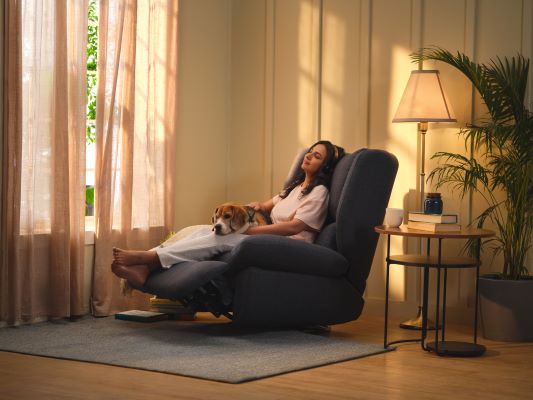
That is the transformation taking shape at Interio by Godrej, which is combining artificial intelligence, 3D visualisation, digital design tools and physical retail to make furniture shopping more personalised, interactive and responsive to the way Indians increasingly live.
The furniture brand of the Godrej Enterprises Group has seen its e-commerce business grow 14-fold over the past three years, with online sales now contributing 15% of its furniture business. At the same time, its delivery and installation network has expanded dramatically—from 1,200 to more than 20,000 pincodes.
The shift signals a larger change in the furniture industry: from selling products to helping consumers design spaces.
When AI meets the living room
Interio’s technology-led transformation is built around a simple consumer proposition—make it easier to imagine the finished room before making the purchase.
AI-powered recommendations, 3D visualisation, Room Planner and configurable furniture solutions are being integrated across the customer journey. These digital engagement tools have contributed to a 6% improvement in conversion rates, according to the company.
The technology is being deployed across 137 stores in 20 cities, connecting physical retail with digital engagement and design consultation.
Following its rebranding, Interio has been moving away from a conventional product-led retail model towards an experience-led approach, in which stores, online platforms and design consultations work together rather than functioning as separate channels.
The objective is particularly relevant in India’s rapidly changing urban housing environment, where smaller homes, evolving family structures, multi-functional spaces and changing lifestyles are influencing furniture choices.
“Furniture purchase is increasingly becoming a decision…”

Dr Dev Narayan Sarkar, Senior Vice President and Head of Consumer Business, Interio, said:
“Furniture purchase is increasingly becoming a decision about how people want to use and experience their home space.”
He said the way Indians live and buy furniture is changing as urbanisation expands beyond the larger metros and households adapt to new spaces and evolving needs.
“Consumers are looking for furniture that works within their homes, serves multiple purposes and can adapt as their requirements change,” Sarkar said.
According to him, the shift is pushing Interio beyond a conventional product-led approach.
“This is driving us to move beyond a product-led approach towards more personalised and technology-enabled experiences.”
He added: “With digital visualisation, design consultation and configurable furniture, Interio is helping customers make decisions based on their space, lifestyle and changing requirements.”
The comments point to a fundamental change in consumer behaviour: furniture is increasingly being viewed not as a static purchase, but as part of a living, evolving home environment.
See it. Configure it. Then buy it
One of Interio’s key technology offerings is its 3D Room Planner and 3D Configurator, which allow customers and store teams to create room layouts using actual dimensions, visualise furniture in both 2D and 3D and experiment with different configurations before finalising a purchase.
For consumers, the technology addresses one of the perennial challenges of furniture shopping: Will this piece actually fit my room—and will it look right once it is there?
The Measure & Recommend solution takes that concept further by helping customers identify furniture options based on available dimensions and layout requirements.
Instead of asking consumers to mentally translate catalogue measurements into their homes, the technology attempts to bring the home itself into the buying process.
Upmods: Furniture that grows with the family
Interio’s technology push is complemented by a modular approach to furniture through UPMODS, a platform offering more than 2,450 configuration combinations.
The concept is built around adaptability.
Consumers can modify, expand and upgrade furniture as their needs change instead of discarding an entire product and purchasing a replacement.
For a young family, for instance, furniture requirements can change as children grow, work arrangements evolve or additional storage becomes necessary. A modular system can potentially accommodate those changes without requiring a complete overhaul of the room.
This approach also addresses a broader consumer concern: how to make a furniture purchase remain relevant as lifestyles change.
From 1,200 to 20,000+ pincodes
Digital transformation alone cannot complete the furniture-buying journey. The product still has to reach the customer’s doorstep—and be installed properly.
Interio has expanded its delivery and installation footprint from 1,200 pincodes to more than 20,000 pincodes, while enabling 24-hour delivery and installation across State capitals.
The expansion reflects the company’s effort to match digital discovery and purchasing with physical fulfilment.
Its growing e-commerce business—now 14 times larger than three years ago—has consequently required an operational infrastructure capable of supporting a significantly wider customer base.
The technology doesn’t stop at the customer’s screen
Interio’s technology transformation extends beyond what consumers see.
The company is investing in Robotic Process Automation (RPA), integrated supply-chain platforms and connected technology systems to improve operational efficiency, communication and fulfilment.
The strategic objective is to connect the digital front end with the operational back end.
In other words, a smoother digital shopping experience must ultimately translate into better order processing, supply-chain coordination, delivery and installation.
That integration could become increasingly important as online furniture sales grow and consumers expect the same level of convenience from large-ticket purchases that they have become accustomed to in other e-commerce categories.
From product retailer to space experience partner
Interio’s evolution reflects a broader transformation underway in India’s home-furnishing market.
The traditional furniture journey generally began with a product: a bed, sofa, wardrobe or table.
The emerging model begins with the space, lifestyle and requirement.
That means asking what the consumer wants the room to do, how much space is available, how the family may use it in the future and whether furniture can adapt accordingly.
AI recommendations, 3D visualisation, digital room planning, physical design consultations and modular products are consequently becoming parts of one connected proposition.
Interio’s 14-fold e-commerce growth suggests consumers are responding to that proposition.
The bigger test, however, will be whether technology can continue to make furniture buying less uncertain, more personalised and genuinely more convenient as India’s homes and lifestyles continue to evolve.
For Interio, the ambition appears clear: the future of furniture may not be about selling more pieces—it may be about helping people create better spaces.