- Sports administrator with 10+ years of experience appointed Regional Director, SAI Regional Centre Gandhinagar
- Singh brings rare grassroots-to-elite sporting experience spanning Khelo India, TOPS, Olympic and Paralympic campaigns and sports science
- Former SAI Media Division head has worked across athlete development, major Games, injury management and national sports programmes
- Athlete-first strategy to drive talent identification, training, sports science and podium pathways across Gujarat and Rajasthan
NE SPORTS BUREAU
GANDHINAGAR, SEPT 1
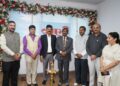
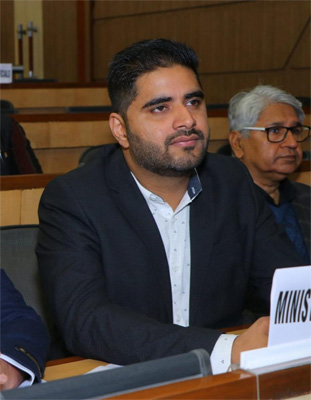
From launching India’s first Khelo India School Games to working behind the scenes of Olympic and Paralympic preparations, Prashant Singh has travelled through almost every layer of India’s modern sporting ecosystem. He now brings that unusual breadth of experience to the field, taking charge as Regional Director of the Sports Authority of India (SAI) Regional Centre, Gandhinagar, with responsibility for SAI’s regional operations across Gujarat and Rajasthan.
Singh, who hails from Lucknow, Uttar Pradesh, brings more than 10 years of experience in sports administration, with a career spanning sports policy and programme implementation, grassroots and elite athlete development, major sporting events, sports science, athlete-support systems, communications, public engagement and institutional development.
His appointment comes with a mandate that goes beyond administration: strengthen the sporting pipeline from talent identification to podium performance across two major sporting states.
From Khelo India’s first school games to the national sporting pipeline
Singh has been closely associated with the Khelo India Scheme since its inception, including the launch and conduct of the first-ever Khelo India School Games in 2018.
Having worked across more than 10 editions of Khelo India Games and the 36th National Games in various functional capacities, he has contributed to developing systems and SOPs for planning and conducting multidisciplinary national sporting events.
That experience has given him a ground-level understanding of the complex machinery required to turn sporting ambition into organised competition—from athlete identification and logistics to event management and institutional coordination.
His association with Khelo India has also extended to strengthening the domestic competition ecosystem, including initiatives such as the Khelo India Women’s League and the evolution of the Khelo India Revamped Scheme.
Elite sport: From TOPS to Olympic and Paralympic campaigns
Singh’s experience extends well into high-performance sport.
He has held significant responsibilities within the Target Olympic Podium Scheme (TOPS) and the Olympic Cell, including work involving Priority Olympic Disciplines—sports identified for their high medal potential at the Olympic Games.
He has also served as Sports Development Officer for disciplines including Athletics, Wrestling, Hockey, Cycling, Fencing and Judo.
His assignments have included contributing to the preparation of Indian teams for the Commonwealth Games 2022, Asian Games and Asian Para Games 2023, and Paris Olympics and Paralympics 2024.
The combination of grassroots and elite-sport experience gives his new assignment a particularly broad canvas: spot the talent early, build the system around it and create a pathway towards international performance.
Sports science, injury management join the performance equation
Singh also played a key role in establishing the Central Athlete Injury Management System (CAIMS) in 2021, aimed at strengthening injury prevention, diagnosis and rehabilitation systems for elite and developmental athletes.
The initiative contributed to the wider strengthening and evolution of India’s sports science and athlete-support ecosystem under the National Centre for Sports Science and Research (NCSSR) framework.
This experience is significant as Indian sport increasingly moves towards a high-performance model in which medals depend not only on coaching and competition exposure, but also on sports science, nutrition, physiotherapy, injury prevention, recovery and data-led athlete support.
From sporting fields to the national communications arena
Singh’s portfolio has not been confined to athlete development.
From 2022 onwards, he headed the Media Division of SAI, overseeing communications, marketing and publicity and playing a key role in conceptualising and executing major national campaigns.
These included #Cheer4India during the Tokyo Olympic cycle, as well as campaigns around the Commonwealth Games 2022, Asian Games and Asian Para Games 2023, and Paris Olympics and Paralympics 2024.
He also contributed to the revival and expansion of the Fit India Movement, including the Sundays on Cycle campaign, which developed into a nationwide public-participation initiative.
The experience has given Singh an additional understanding of a critical dimension of modern sport: building public engagement around athletes and turning sporting participation into a movement.
A wider national sports policy mandate
Singh has also served as Officer on Special Duty to the Director General, SAI, and worked closely with the Olympic Cell on strategic initiatives, including India’s bids and preparations related to the 2030 Commonwealth Games and 2036 Olympic Games.
He was also associated with the successful conduct of the IOC Session 2023 in Mumbai.
His wider assignments have included major national sports initiatives such as Khelo Bharat Niti and the National Sports Governance Act 2025, besides strategic assignments involving the Ministry of Youth Affairs & Sports and SAI.
Before taking over as Regional Director, Singh was already posted in Gandhinagar in a senior management role, overseeing implementation and functioning of various SAI and Ministry of Youth Affairs & Sports schemes across Gujarat and Rajasthan.
Now, the athlete-first test
As Regional Director, SAI Regional Centre Gandhinagar, Singh will lead the regional sporting ecosystem across Gujarat and Rajasthan, with an emphasis on an athlete-first approach.
His priorities will include strengthening training and development systems, expanding talent-identification and development pathways, leveraging sports science and athlete-support systems, and creating greater opportunities for podium-level performance.
For Gujarat and Rajasthan, his appointment brings together an unusually wide range of experience—grassroots sport, elite athlete development, sports policy, major sporting events, sports science, communications and sports administration.
The challenge now is to convert that experience into outcomes on the ground.
For the next generation of athletes in the two states, the ultimate measure will not be the number of programmes administered or events conducted.
It will be how many promising youngsters are identified, how many receive the right support at the right time—and how many eventually find their way to the podium.