- NCDFI conclave in Anand celebrates four decades of dairy-defence partnership and charts a stronger supply chain for troops
- 117 dairy cooperatives part of ₹1,627-crore institutional partnership with Defence in 2025-26
- Fresh milk supplies surge to 18.48 crore litres; combined fresh and UHT supplies touch 22.60 crore litres
- Ten border and North-Eastern cooperatives supply 6.44 crore litres of fresh milk to 196 Army units
- Army-NCDFI dialogue focuses on fresh-milk expansion, cold chains, local procurement, digital coordination and resilient logistics
NE COOPERATIVE BUREAU
ANAND, AUG 11
From village milk producers to soldiers stationed in some of the country’s most inhospitable terrains, a four-decade-old partnership is creating a unique “farmers-to-frontlines” supply chain — combining nutrition security for the armed forces with assured markets and livelihoods for dairy farmers.
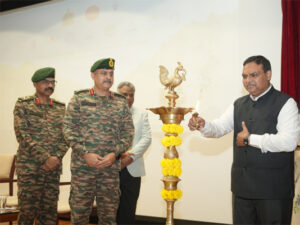
The National Cooperative Dairy Federation of India Ltd. (NCDFI) brought this partnership into sharp focus at its Cooperative Conclave on Dairy-Defence Partnership, held under the theme “From Farmers to Frontlines” at the Dr Verghese Kurien Auditorium, NDDB, Anand, on August 10, 2026.
The conclave recognised the contribution of dairy cooperatives supplying quality milk and milk products to Defence establishments, particularly in remote, border and high-altitude areas, while exploring how the partnership can evolve to meet the changing operational requirements of India’s armed forces.
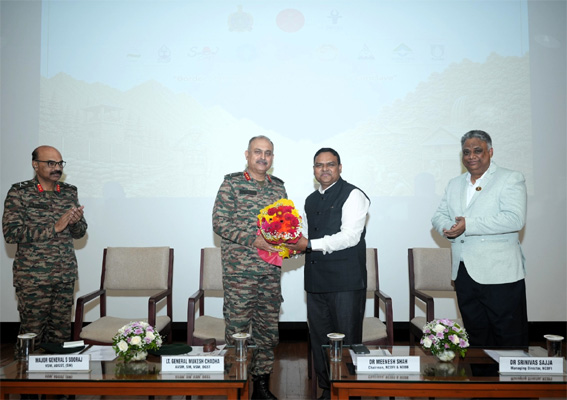
The programme was graced by Lt Gen Mukesh Chadha, AVSM, SM, VSM, Director General of Supplies and Transport (DGST), Indian Army, and Dr Meenesh Shah, Chairman, NCDFI & NDDB. Maj Gen S Sooraj, VSM, Additional Director General Supplies & Transport, senior Army officials and Managing Directors of dairy cooperatives from border and North-Eastern States also participated.
Four decades, 117 cooperatives and a ₹1,627-crore supply chain
What began as an institutional association between NCDFI and the Ministry of Defence in 1984 has evolved into a large cooperative supply network spanning 117 dairy cooperatives.
The partnership recorded a contract value of ₹1,627 crore in 2025-26, underlining the scale of dairy cooperatives’ role in meeting the requirements of Defence establishments.
Fresh-milk supplies rose to 18.48 crore litres in 2025-26, while combined supplies of fresh and UHT milk reached 22.60 crore litres.
The border and North-Eastern component is particularly significant. Ten dairy cooperatives from these regions supplied 6.44 crore litres of fresh milk to 196 Army units during 2025-26, strengthening the link between local milk production and national defence requirements.
The conclave also highlighted the potential to expand fresh-milk supplies wherever local procurement, processing, cold-chain and logistical conditions permit.
Such expansion could reduce dependence on UHT milk in locations where fresh milk can be supplied reliably, while retaining long-life products for operationally challenging areas.
At present, UHT milk supplies amount to 4.11 crore litres, underlining its continuing importance in locations where long-life products remain operationally essential.
“A stronger dairy-cooperative presence can create local livelihoods”
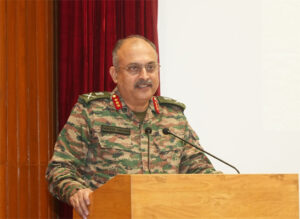
Addressing the gathering, Lt Gen Mukesh Chadha appreciated NCDFI and its member cooperatives for ensuring reliable supplies to troops operating in difficult terrains.
He also complimented NDDB for its focused efforts in border areas to organise, promote and strengthen dairy cooperatives, thereby supporting local milk production.
Lt Gen Chadha underlined that a stronger dairy-cooperative presence in border areas could go well beyond milk supply.
It could create sustainable markets, generate local employment and livelihood opportunities and contribute to reverse migration, while simultaneously strengthening supply chains serving security personnel.
He called for greater availability of fresh milk and closer coordination between the Army and NCDFI to assess requirements and build appropriate local capacities.
At the same time, he stressed that adequate capacity for long-life milk must continue wherever operational requirements make it essential.
The message was clear: the future supply chain should be more local wherever feasible, but never at the cost of operational reliability.
Dr Meenesh Shah: Every litre connects farmers and the nation’s defenders
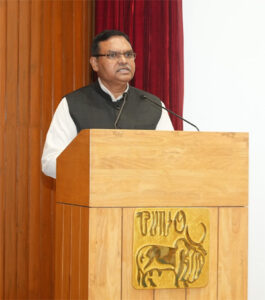
Dr Meenesh Shah highlighted the multi-layered benefits of the dairy-defence partnership.
For Defence establishments, the partnership provides dependable supplies and resilient local supply chains.
For dairy cooperatives, it creates assured institutional markets and better utilisation of infrastructure.
And for dairy farmers, it opens wider markets and provides a more regular income stream.
Dr Shah commended the cooperatives for strengthening milk procurement, processing, cold storage and supply-chain systems in border and North-Eastern regions.
He observed that every additional litre supplied brings dairy farmers and personnel serving the nation closer together, capturing the larger cooperative philosophy behind the partnership.
From UHT to fresh: The next supply-chain shift
The conclave facilitated detailed dialogue on operational experiences, emerging requirements and the future of cooperative supplies to the Indian Army, Indo-Tibetan Border Police and Assam Rifles.
Representatives of participating cooperatives shared their experiences of operating in difficult terrain, their impact on farmers, operational constraints and opportunities for wider collaboration.
A key area of discussion was the gradual transition towards fresh-milk supplies wherever local ecosystems can reliably support them.
Such a shift would require more than simply increasing procurement.
It would demand coordinated investment and planning across local dairy procurement, processing capacity, refrigeration, cold chains, transportation and last-mile logistics.
Where those conditions cannot be guaranteed, UHT and other long-life products would continue to provide the operational resilience required by troops deployed in remote locations.
The next frontier: smarter, stronger and more resilient cooperative logistics
The conclave concluded with a renewed commitment to strengthen the entire dairy-defence supply chain.
The priorities identified include better demand visibility, product-wise capacity mapping, stronger alternate supply arrangements, improved quality and cold-chain systems, digital coordination, diversification of the product basket and development of sustainable logistics.
The gathering also acknowledged the contribution of Government and NDDB support in strengthening cooperative institutions and dairy infrastructure.
The partnership thus moves into its next phase with an objective that goes beyond supplying milk.
It seeks to create a resilient local economic ecosystem in border and remote regions, strengthen dairy farmers’ market access, improve supply security for the armed forces and deepen the cooperative model in some of India’s most strategically important geographies.
From the dairy farm to the defence frontline, the message from Anand is simple: every drop can serve two nations — the farmer’s economy and the soldier’s strength.